Is Sea Trekking The Same As Snuba?
Sea trekking and snuba are two different paid add-ons in Aruba. This guide separates the helmet walk from the hose dive and shows where plain snorkeling still fits.
No, sea trekking and snuba are not the same. Sea trekking is a helmet walk: you wear a weighted helmet fed air from the surface and walk on a fixed underwater path. Snuba is a bridge to scuba: you swim freely while breathing through a regulator connected to a raft floating above you. In Aruba both are paid add-ons at De Palm Island, not stand-alone tours on this site's covered listings.
The confusion is understandable. Both activities promise the headline attraction of scuba, breathing underwater, without the certification course. Both are sold at the same venue in Aruba, De Palm Island, where the operator's own page lists Sea Trek and Snuba as paid add-ons to the day pass rather than as separate bookings. And neither one appears in the covered listings here, which are snorkel products, from the catamaran sails out of Palm Beach to the glass bottom boats running out of Malmok.
But the experiences underneath the surface are quite different. A sea trekker stays upright, walks, and stays connected to a guided route. A snuba diver swims horizontally, follows a leader, and can change depth within a limited range. One is closer to a walk; the other is closer to a dive. Neither is simply "snorkeling with extras," and neither replaces the other.
For readers who want to be underwater with less commitment, the covered listings still have plenty to offer. The glass bottom boat run by Malmok Charters shows the Antilla wreck, Boca Catalina and Tres Trapi in 1 hour 30 minutes from $60 per person, rated 5.0 from 47 reviews. It is a practical fallback for anyone who decides mid-planning that a helmet or a hose sounds like more than they want.
What Is Sea Trekking Exactly?
Sea trekking is a guided underwater walk wearing a helmet that keeps your head dry. Air is pumped from the surface through a hose into the helmet, and weights keep you on your feet on a marked path. You wear a helmet and walk along a custom underwater walkway rather than swim, and non-swimmers can take part.
The helmet is the whole product. It sits on your shoulders like an old diving bell, holds a pocket of air around your head, and lets you breathe through your nose as normal. Because you walk rather than swim, sea trekking is often pitched at people who cannot swim at all, or who want to stay dry from the neck up while still seeing fish and reef structure around them.
In Aruba, sea trekking is offered at De Palm Island as a paid add-on, per the operator's own pages. The entry ticket there covers the lunch buffet and grill station, an open bar, snorkel gear and complimentary reef snorkel tours offered twice daily; Sea Trek is a paid upgrade, sold separately. No price, minimum age or depth figure is carried here, so check the operator's live listing for those details before booking.
The trade-off is freedom. A sea trek follows a fixed route at a fixed depth set by the operator's platform. It is an experience built for accessibility and spectacle, not exploration. If the goal is to drift over a reef at your own pace, sea trekking will feel like a very controlled introduction rather than the thing itself. For a dry alternative, glass bottom boat trips with Malmok Charters glide over Aruba's snorkel sites from $60 per person, so non-swimmers can watch the reef without getting wet.
What Is Snuba Exactly?
Snuba is a hybrid of snorkeling and scuba. You breathe through a regulator, like a diver, but your air tank sits on a raft at the surface and feeds you through a long hose, so you swim untethered by a tank on your back within the hose's range. You swim, you dive down a little, and you follow a guide the whole time.
The appeal is the middle ground. Snorkelers are locked to the surface; scuba divers need certification and heavy gear. A snuba participant gets a taste of diving on a single outing, with the raft doing the carrying. The hose limits how deep and how far you can go, which is precisely the point: the constraint is the safety system. Guides lead small groups and keep everyone within reach.
Snuba in Aruba is likewise found at De Palm Island as a paid add-on, per the operator's page. As with Sea Trek, no price, age or depth figure is printed here. Readers weighing snuba against scuba more broadly can compare the two in the related piece on snuba versus scuba safety, which works through the same question for certified and uncertified divers.
Snuba demands more of you than sea trekking does. You need to be comfortable swimming, comfortable with a regulator in your mouth, and comfortable ducking your head below the surface. It rewards that with movement: drifting over reef, dropping toward coral heads, following a guide rather than a path. For some visitors that is the whole holiday in one outing.
How Do Sea Trekking And Snuba Compare Side By Side?
Sea trekking keeps you vertical, walking and dry-headed; snuba keeps you horizontal, swimming and wet. Sea trekking needs no swimming ability, snuba does. Both are guided, both use surface-supplied air through a hose, and both are paid add-ons at De Palm Island in Aruba. The choice comes down to whether you want a walk or a swim.
The table below lays out the differences as general definitions. Since neither product carries a price, depth or age figure here, the rows stick to what the operator's own page states and how the two activities work in principle.
| Aspect | Sea Trekking | Snuba |
|---|---|---|
| Body position | Upright, walking | Horizontal, swimming |
| Head and face | Dry, helmet keeps air around the head | Wet, regulator in the mouth |
| Air supply | Surface-fed through a hose into a helmet | Surface tank on a raft, hose to a regulator |
| Swimming needed | No | Yes |
| Movement range | Fixed path set by the operator | Limited by hose length, guided group |
| Closest cousin | Helmet diving, the old diving bell | Scuba diving on a leash |
| Where sold in Aruba | Paid add-on at De Palm Island | Paid add-on at De Palm Island |
One practical difference worth sitting with: sea trekking is a spectator experience of a small patch, while snuba is a participation experience of a slightly larger one. Neither gives you the miles. A catamaran snorkel sail, by contrast, covers several sites in one morning; the Pelican morning sail with champagne brunch runs 4 hours from $85 per person, rated 4.7 from 2,238 reviews, and stops at Malmok, Boca Catalina and the Antilla wreck. That is the most reviewed listing covered on this site, and its review count is exactly why it holds that title.
Which Option Suits Non-Swimmers And Nervous Beginners?
Sea trekking is the usual pick for non-swimmers, since walking replaces swimming entirely. Snuba requires real comfort in the water. For non-swimmers who want neither helmet nor hose, a glass bottom boat shows marine life with no water contact at all, and shore spots like Baby Beach offer shallow, lagoon-style water for cautious first attempts.
The honest framing is that "non-swimmer" covers a wide range of people. Someone who cannot float is a different case from someone who swims badly and knows it. Sea trekking serves both: the helmet does the breathing, the path does the navigation, the water is at the operator's chosen depth. Snuba serves neither well, because a regulator only helps you breathe, not stay calm or move efficiently.
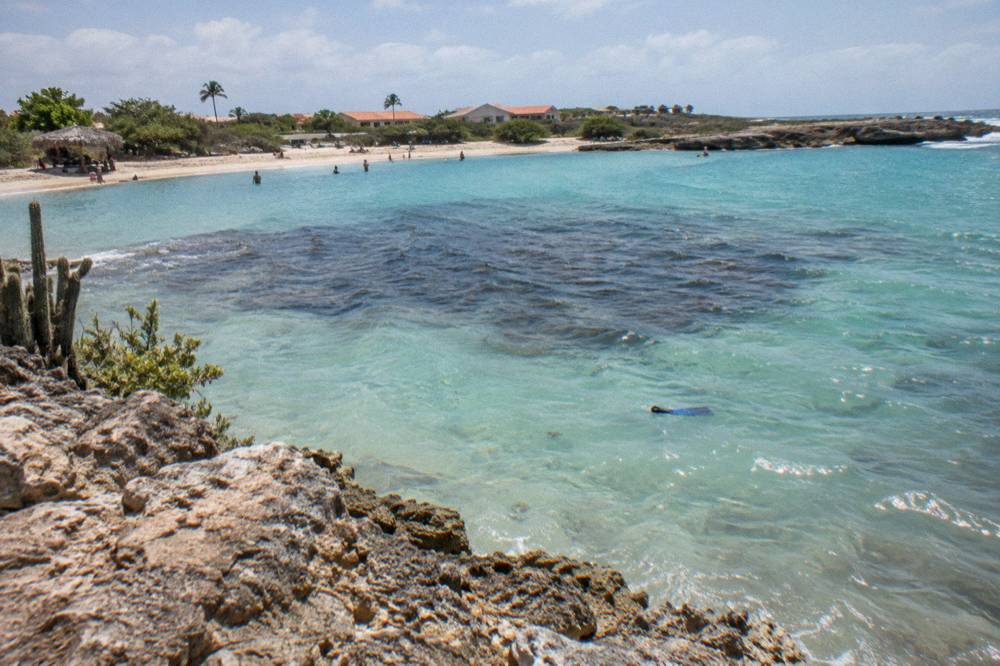
Between the two poles, Aruba's shore geography does a lot of quiet work. Aruba's west and south coasts are calm and protected, good for swimming and snorkeling, while the east and north coasts face open sea with stronger wind, per the tourism authority's beaches page. Baby Beach on the southeast tip is a shallow, lagoon-style bay described as ideal for kids and beginner snorkelers, and no entry fee applies to shore snorkeling there or at Mangel Halto, Boca Catalina or Arashi.
For beginners who want a boat but not a hose, small-group tours are the gentlest entry covered here. The turtle spotting snorkel tour with hotel pickup runs with up to 6 guests from $99 per person, rated 4.2 from 25 reviews, and includes beginner snorkel instruction plus round-trip hotel pickup. That group size means a guide's attention is not spread across a full catamaran load. More non-swimmer options are worked through in the glass bottom boat and non-swimmer guide.
One glass-bottom boat option is still new and has only a handful of reviews, so it is best judged on the live listing rather than its early ratings. A more established run of the same trip, rated 5.0 from 47 reviews, covers the same three stops in 1 hour 30 minutes from $60 per person, and is linked from its tour page on this site.
Where Do You Find Sea Trekking And Snuba In Aruba?
Both Sea Trek and Snuba are sold as paid add-ons at De Palm Island, reached by the ferry included in the day pass, per the operator's own pages. Neither appears as a stand-alone tour in the listings covered on this site. The rest of Aruba's underwater market, from catamaran sails to sea scooter tours, runs on plain snorkeling.
De Palm Island is a private island operation off Aruba's coast, and its day pass bundles a lot: ferry transfer, lunch, an open bar for adults, snorkel gear and two guided snorkel tours daily, plus a water park. Sea Trek and Snuba sit on top of that as extras. The split matters for budgeting, because a family comparing a snorkel sail against "snuba" is really comparing a stand-alone tour against an add-on inside a full-day venue ticket. The broader question of whether that venue is worth it is handled in the guide to De Palm Island snorkeling.
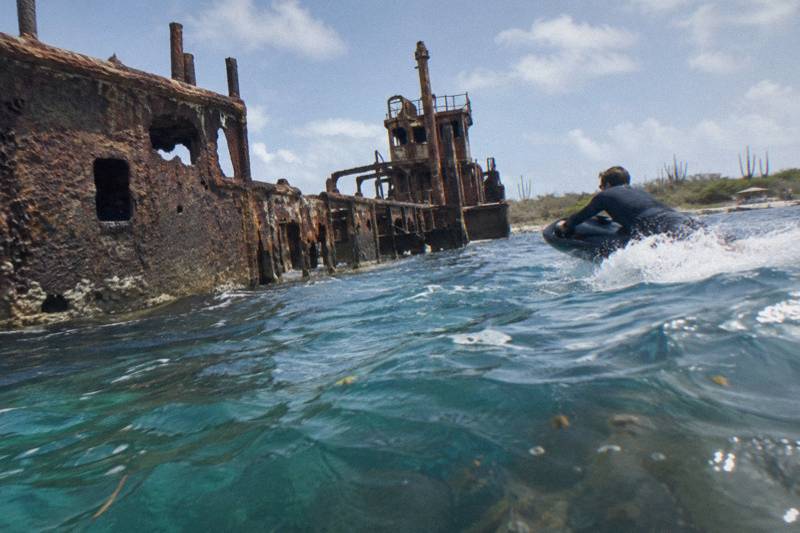
Everywhere else among the tours covered here, snorkeling is the mode. The wreck of the SS Antilla, a German cargo ship scuttled in January 1940, is the anchor stop for many of them. According to the Antilla Shipwreck Aruba site, the wreck lies on its port side with its highest points about 15 feet below the surface, accessible to snorkelers in calm conditions. The Banana Adventure catamaran pairs the wreck with a turtle swim at Tres Trapi, from $65 per person, rated 4.8 from 231 reviews, with hotel pickup listed on its line. For a tighter budget, the Malmok Charters glass bottom boat covers the wreck from the surface in 1 hour 30 minutes.
Motorized alternatives blur the line in their own way. The Antilla wreck Seabob tour uses underwater scooters with up to 15 guests, from $120 per person, rated 4.9 from 225 reviews, and lists hotel or port pickup. It is still snorkeling at heart, breathing through a snorkel, but the scooter changes the effort equation entirely.
What Does Snorkeling Offer That Neither Sea Trekking Nor Snuba Does?
Snorkeling offers range, simplicity and price. A single catamaran sail visits two or three different sites in a morning; a helmet walk or hose dive stays in one spot. Snorkel tours on this site start from $57 per person with gear included, need no add-on venue, and pair naturally with meals, open bars and island sightseeing.
Range is the honest answer. The Red Sail half-day tour with Caribbean lunch, from $107 per person and rated 4.8 from 860 reviews, makes three snorkel stops from a luxury catamaran with an open bar and a lunch buffet. The Palm Pleasure morning sail, from $124 per person with a lunch buffet, covers the Antilla, Boca Catalina and Arashi. No helmet path or snuba hose delivers that variety, because both are bound to one location and one depth band.
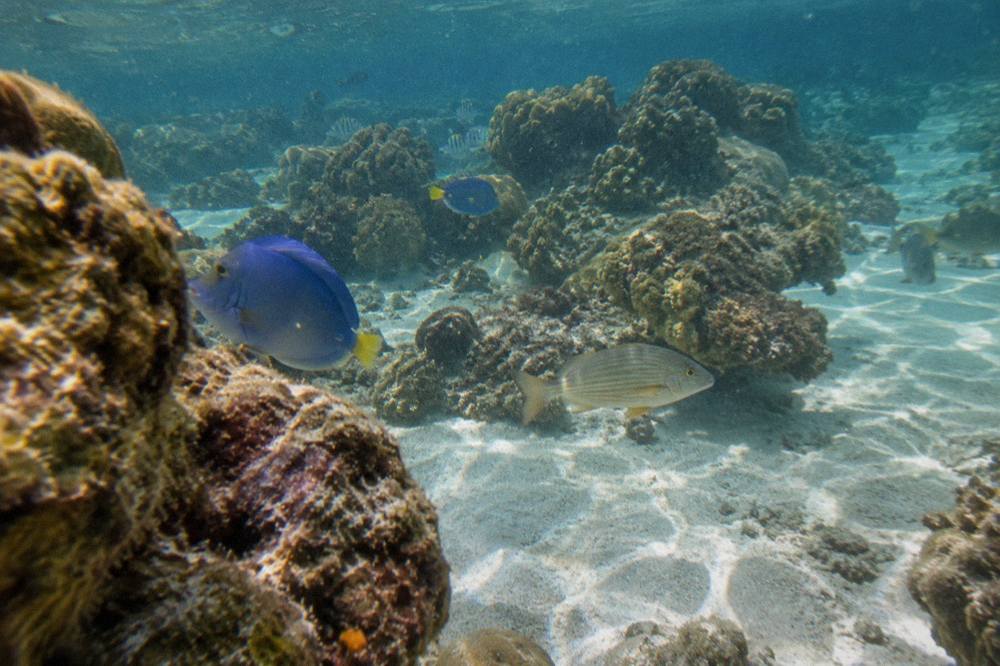
Simplicity is the second. Snorkeling has one skill, breathe through a tube, look down. Sea trekking and snuba each add a briefing, specialized gear and a tighter guide ratio, which is part of why they are priced as add-ons rather than as the main event. And snorkeling is where the ecology lives: Aruba's reef rules ask visitors not to feed marine life, not to touch or pick up sea creatures, to leave shells, sand and coral in place, and to use mineral-based reef-safe sunscreen, since sunscreens containing oxybenzone are banned, per the tourism authority's responsible-guest guidance. Those rules apply at depth too, but a snorkeler on the surface is simply well placed to follow them.
Beach-hop tours extend the range further. The Mangel Halto and Baby Beach guided tour by open-air bus, from $57 per person and rated 4.5 from 308 reviews, lists hotel pickup and covers two of the island's calmest shore sites in a 5-hour loop. The Nautilus version with up to 8 guests runs 4 hours from $115 per person. Neither requires anything beyond a swimsuit and the gear the listing includes, so the price you see is close to the price you pay.
How Do You Choose Between Sea Trekking, Snuba And Snorkeling?
Choose sea trekking to stay dry and walk, snuba to taste diving while swimming, and snorkeling for variety, value and freedom. If breathing underwater is the dream, snuba is the closer match to scuba. If fish-watching with zero swim skills is the goal, sea trekking wins. If the answer is "a bit of everything," a multi-stop snorkel tour from this site's listings is the stronger buy.
A useful test is what you would say afterward. A sea trekker describes the helmet and the path. A snuba diver describes breathing underwater for the first time. A snorkeler describes the places: the wreck, the turtle, the reef, the bay. Match the story you want to the product, and the choice mostly makes itself.
For confident swimmers who still want a motor assist, the sea scooter option at Mangel Halto is worth a look. Aruba Bob's small-group tour takes up to 6 guests, from $100 per person, rated 5.0 from 438 reviews, with pictures included in the listing. That group size and that rating pool together make it one of the most dependable small-format bookings covered here.
Timing and weather matter less than visitors fear but more than brochures imply. Aruba sits outside the hurricane belt and has had no direct hurricane hit since 1851, per the tourism authority, though the season runs 1 June to 30 November and storms can still bring rain, gusts or flat calm. Sea temperature in Oranjestad averages 26.1 C (79.0 F) in the coldest month, February, and 29.2 C (84.6 F) in the warmest, October, per seatemperature data. Any of the three activities is available year-round; the Aruba meteorological service marine forecast shows wind speed, wave height by coast and shower chances worth checking the morning of a boat day, since protected south and west sections run calmer than north-facing coasts.
Budget is the final filter, and price basis deserves care. Shared trips here are priced per person, and only two of the four private charters quote a full-boat rate, among them the Malmok private boat at from $900 per group for up to 10 guests over 3 hours, rated 5.0 from 41 reviews. Never weigh a per-group price against a per-person one as if they were the same basis. Sea Trek and Snuba, as add-ons, stack on top of a venue day pass whose price is not printed here, so request the full arithmetic from the operator's live listing before comparing it against a $57 snorkel bus loop or a $60 glass bottom run. This site's Aruba Snorkeling Tours comparison pages carry the full figures for every covered listing.
Common Questions About Sea Trekking And Snuba
Is Sea Trekking The Same As Snuba?
No. Sea trekking is a helmet walk with surface-supplied air and no swimming. Snuba is swimming with a regulator fed from a raft on the surface. Both are paid add-ons at De Palm Island in Aruba, per the operator's page, and neither is a stand-alone tour on this site's covered listings.
Do You Need To Swim For Sea Trekking?
No. The helmet keeps your head in an air pocket and you walk a fixed path set by the operator. That is the main reason sea trekking is pitched at non-swimmers. Snuba, by contrast, requires real swimming comfort since you move through the water horizontally behind a guide.
Where Can You Book Sea Trekking Or Snuba In Aruba?
Both are listed as paid add-ons at De Palm Island, on top of a day pass that includes the ferry, lunch, an open bar for adults, snorkel gear and two guided snorkel tours daily. No price, age or depth figure is carried here; check the operator's live listing for current details before booking.
Is Snuba Safer Than Snorkeling?
No safety verdict is made here. Snuba keeps the tank at the surface and the diver within hose range of a guide, while snorkeling keeps you on the surface entirely. The comparison between snuba and scuba, including what each asks of an uncertified diver, is covered in the related snuba safety article on this site.
Can Non-Swimmers See Aruba's Reefs Without Getting In The Water?
Yes. A glass bottom boat tour from Malmok covers the Antilla wreck, Boca Catalina and Tres Trapi from $60 per person with gear and drinks on the listing, and the glass panels in the hull give you a dry look at the reef without getting in the water. Both let you see the reef dry.
Is Snuba Worth It If You Already Snorkel Well?
It depends on what you want next. If the pull is toward scuba, snuba is a low-commitment taste of breathing underwater. If you enjoy covering several sites in one trip, a multi-stop catamaran snorkel sail offers range no hose dive can match, and the listings covered here carry many of those.