Options For Non-Swimmers Who Want To See The Reef
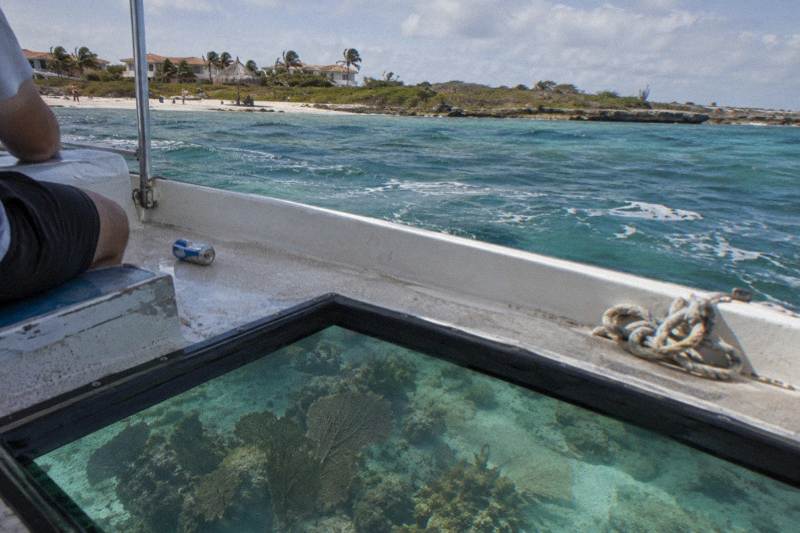
Not everyone who travels to Aruba swims, and the island's reef does not require a mask to be seen. Glass bottom boats, helmet walks and easy shore stops give non-swimmers several genuine ways to look in on the fish, including two short glass bottom trips that visit the same three snorkel sites the boats use.
Short answer
The clearest option for a non-swimmer is an Aruba glass bottom boat trip: Malmok Charters runs a 1.5 hour trip from Malmok for from $60 per person, visiting the Antilla wreck, Boca Catalina and Tres Trapi. Alternatives include the Sea Trek helmet walk on De Palm Island and shallow shore stops such as Baby Beach.
Not everyone who visits Aruba swims, and the island has quietly built answers for that. Two glass bottom boat trips run from Malmok to the same reef sites the snorkel boats use, a helmet walk on De Palm Island lets walkers stand on the sea floor with air piped down to them, and a handful of calm public beaches put colorful reef fish within a few steps of sand. This guide lays out what each option actually involves, what the listings state, and how to choose between them. The anchor option for most non-swimmers is the glass bottom boat trip from Malmok Charters, a 1 hour 30 minute run for from $60 per person that carries up to 10 guests past the Antilla wreck, Boca Catalina and Tres Trapi without anyone needing to leave the deck. If others in your group would rather get in the water themselves, the guide to snorkeling in Aruba covers the beaches, wrecks and turtle swims worth packing a mask for.
Can You See Aruba's Reef Without Swimming?
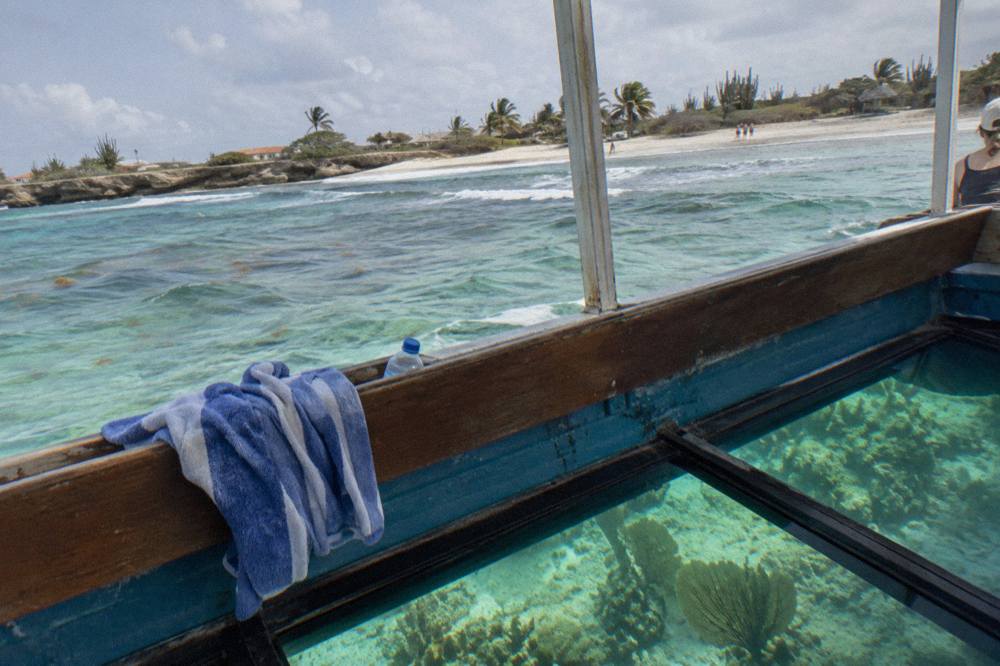
Yes, and in several distinct ways: glass bottom boats carry you over the reef with the water framed beneath your seat, a Sea Trek helmet walk on De Palm Island stands you on the sea floor breathing piped air, and calm shore bays such as Baby Beach and Boca Catalina put reef fish within wading distance. The choice comes down to how close to the water you want to be, and each path has a real, bookable listing behind it.
The reef in question is real and close. Aruba's west and south coasts are the calm, protected sides of the island according to the official beaches page, which is also where the tour boats concentrate: Boca Catalina, Malmok, Tres Trapi and the Antilla wreck all sit along that sheltered stretch north of Palm Beach. The aruba.com beaches guide notes that every beach on the island is public and open to everyone, which matters here because it means a non-swimmer's day is not gated behind a resort pass or an entry fee.
What surprises many first-time visitors is how shallow the good viewing is. According to the Antilla Shipwreck Aruba site, the highest points of the Antilla wreck, the bow and superstructure, sit roughly 15 feet below the surface, which places them squarely in a glass bottom boat's viewing window rather than in diver territory. Typical visibility around the wreck runs 50 to 100 feet. A boat with a glass panel glides over that and the reef bays next to it, and the fish come into view without a single stroke of swimming.
The non-swimmer paths divide into three families, and this guide treats them in order of popularity:
- Glass bottom boat: stay fully dry on deck, reef and wreck pass beneath a viewing panel. Two listings cover this, both from Malmok Charters.
- Partial water contact: helmet walks (Sea Trek) on De Palm Island, where you stand underwater with air supplied from the surface, or shallow wading at calm shore bays.
- Not-in-the-water alternatives: a shore-based snorkel tour by open-air bus, which visits beaches where a non-swimmer can stay in the shallows.
Each of those has trade-offs in price, duration and how much water touches you, and the sections below give the actual numbers from the listings covered here. For travelers weighing the standard boat trips too, the comparison in shore snorkeling versus a boat tour explains what a snorkel sail demands of a guest.
What Does An Aruba Glass Bottom Boat Trip Actually Include?
Both glass bottom listings cover a 1.5 hour trip for from $60 per person, departing from the Malmok area and visiting three sites: the Antilla shipwreck, Boca Catalina and Tres Trapi. Snorkel gear is included on each, bottled water and sodas are listed, and up to 10 guests ride along. The two listings are separate products sold on different listings, so check each live listing for its own departure details.
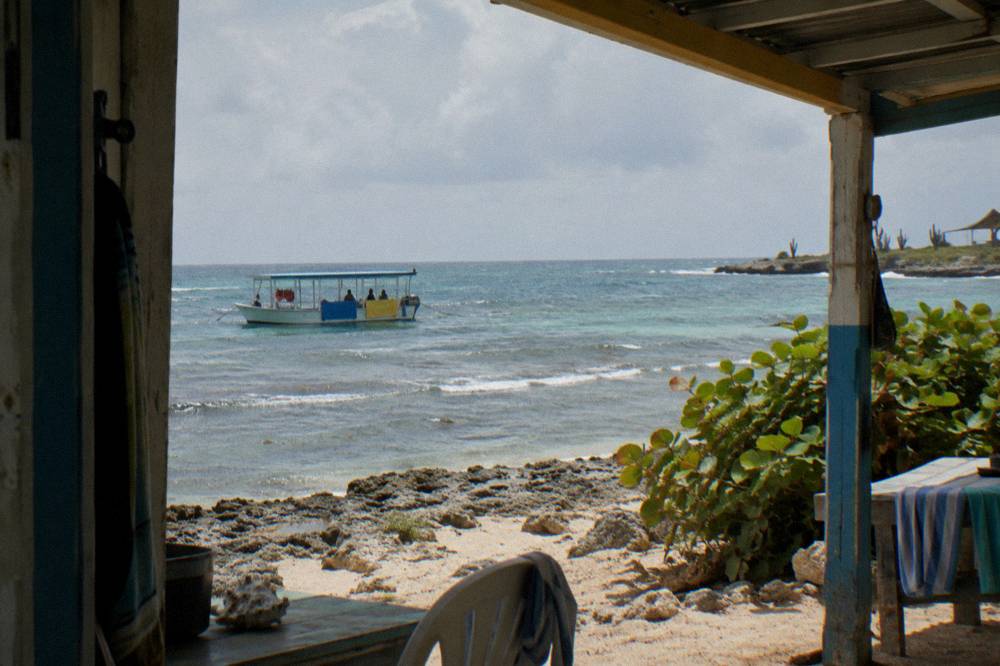
The headline trip is Aruba Snorkel Sites by Glass Bottom Boat from Malmok Charters, rated 5.0 from 47 reviews, from $60 per person, running 1 hour 30 minutes from the Island Cabana hut at Malmok. The listing states the inclusions plainly: use of snorkelling equipment, bottled water, and soda. The vessel is a glass bottom boat, and the trip carries up to 10 guests.
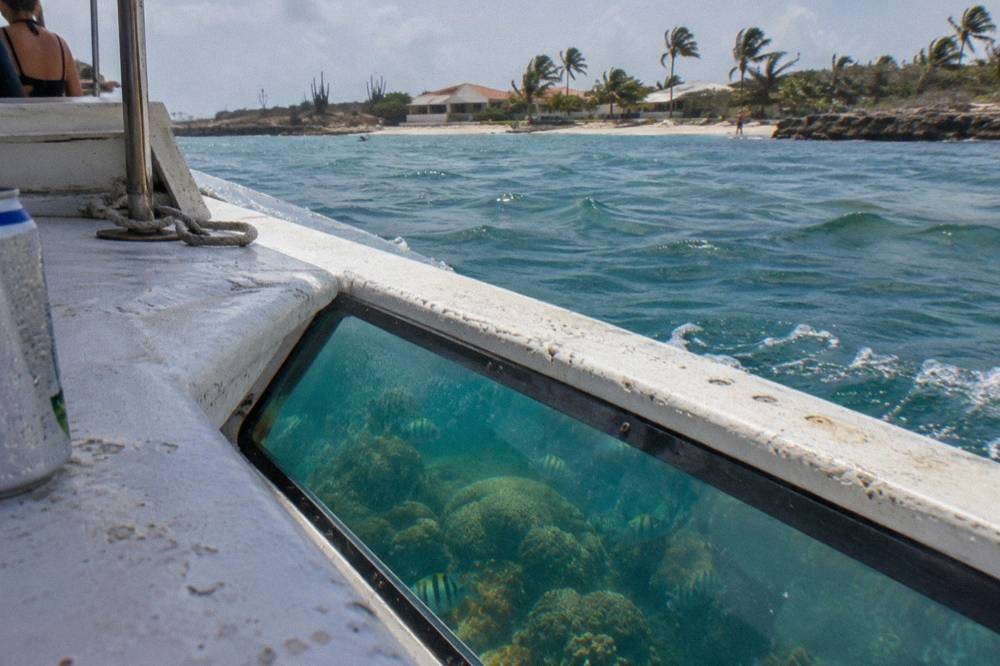
A second listing under the same title, also operated by Malmok Charters, runs the identical route and price: 1.5 hours, from $60 per person, Antilla, Boca Catalina and Tres Trapi, departing from the Island Cabana on L.G. Smith Blvd in Noord. It carries 13 reviews, which makes it a thinly reviewed listing, so no star rating claim belongs to it. Its stated inclusions are snorkeling gear, a bottle of water, sodas and an experienced captain. Because the two products are similar on paper, the practical difference for a buyer is schedule and departure point, and both are worth checking on the live listings before booking.
Here is how the two glass bottom trips compare on the details that matter to a non-swimmer:
| Detail | Glass Bottom Boat (5.0 from 47 reviews) | Glass Bottom Boat (13 reviews, no star claim) |
|---|---|---|
| Price | from $60 per person | from $60 per person |
| Duration | 1 hour 30 minutes | 1.5 hours |
| Sites | Antilla, Boca Catalina, Tres Trapi | Antilla, Boca Catalina, Tres Trapi |
| Departure | Island Cabana hut, Malmok | Island Cabana, L.G. Smith Blvd, Noord |
| Group size | up to 10 guests | not stated on the listing |
| Listed inclusions | snorkel gear, bottled water, soda | snorkel gear, water, sodas, captain |
| Cancellation | free cancellation listed | free cancellation listed |
One point worth stating directly: neither glass bottom listing states anything about life jackets or flotation, and neither needs to for its core purpose, since guests stay aboard. Gear and flotation details are on the live listing if you want them. The trips are short, the sites are close together along the sheltered coast, and the whole experience is built around viewing rather than swimming.
If a dry deck sounds right but 90 minutes feels short, the same family of thinking extends to longer sails. The Pelican Iconic Sail and Snorkel Experience runs 2 hours 30 minutes from Pelican Pier on Palm Beach, from $67 per person, rated 4.8 from 531 reviews, with an open bar and snacks listed and gear included; a non-swimmer can ride it as a boat trip and let companions snorkel at the stops. That is a different product from the glass bottom boat, not a competing version of it, and the duration difference is the listing's own total either way.

Which Glass Bottom Boat Trip Should You Book?
Book the 5.0-rated Malmok Charters listing if review depth matters to you, since it carries 47 reviews against the sister listing's 13, and both cost from $60 per person for the same three sites. Pick by departure point and schedule: one leaves from the Island Cabana hut at Malmok, the other from L.G. Smith Blvd in Noord, and both list free cancellation.
Review depth is the honest discriminator here. A 5.0 from 47 reviews is a rating with some standing; 13 reviews is a thinly reviewed listing where the score, whatever it shows, tells you little. Both are run by the same operator over the same route, so the difference is not the experience but the confidence you can place in the description. Neither listing is "popular" in any verifiable sense, and nothing here should be read as ranking one above the other on quality.
Practical factors do the real sorting:
| If you... | Then lean toward | Why |
|---|---|---|
| Want the most-reviewed glass bottom listing | The 47-review trip | 5.0 from 47 reviews carries more standing than 13 |
| Are staying near Palm Beach or the high-rises | Malmok departure | Malmok sits at the north end of the hotel strip |
| Want a longer, drier boat experience | Pelican Iconic Sail | 2.5 hours, open bar, from $67 per person |
| Are combining with swimmers in your group | Either glass bottom trip | Snorkel gear is listed on both |
| Have cruise passengers with you | Check times against the ship | Half-day sails can clash with all-aboard times |
That last row deserves its own sentence: cruise passengers should always check the trip's return time against the ship's all-aboard time, and no tour should be assumed to fit a ship's schedule. The cruise passenger snorkel guide covers that planning in detail. For cruise visitors who do not swim at all, the glass bottom boat's short 1.5 hour window is one of the easier formats to fit into a port day.
Booking mechanics are simple on this route. Free cancellation is listed on both glass bottom trips, and prices are per person, shared. There is no hotel pickup on either listing, so plan the short ride to the Island Cabana yourself. Water and sodas are included; meals are not, which is consistent with a 90-minute outing rather than a half-day.
What Other Options Exist For Non-Swimmers In Aruba?
Beyond the glass bottom boat, non-swimmers can stand on the sea floor on the Sea Trek helmet walk at De Palm Island or join the open-air bus beach tour that visits Mangel Halto and Baby Beach, from $57 per person, where staying in the shallows is a legitimate way to see fish. Each differs in water contact, price basis and duration.
The Sea Trek helmet walk is the most immersive of the three. De Palm Island's day pass covers the ferry ride over, a lunch buffet, an open bar for adults, snorkel gear and guided reef snorkel tours run twice a day, plus beach and water-play facilities, with Sea Trek and SNUBA available as paid add-ons. The helmet format means walking on the bottom with air piped into a helmet, so no swimming skill and no mask are involved. Ages, prices and check-in times for the add-ons are on the operator's own pages, and this site's Sea Trek helmet walk guide walks through the format in full.
The glass bottom boat option suits non-swimmers and families, keeping everyone dry on deck while the reef passes beneath the viewing panels. It is not a snorkel product and carries no reef etiquette or gear decisions at all, which is exactly why some travelers pick it.
The open-air bus tour is the sleeper option. Aruba Mangel Halto and Baby Beach Snorkeling Guided Tour, from El Tours & Transfers, runs 5 hours for from $57 per person, rated 4.5 from 308 reviews, with hotel pickup listed and snorkel gear included, up to 45 guests. Its two stops suit beginners and cautious swimmers: Baby Beach is a shallow, lagoon-style bay, and Mangel Halto offers calm water beside the mangroves. A companion listing from Nautilus Dive Center Aruba covers the same two beaches in a group of up to 8, from $115 per person with hotel pickup listed, rated 4.6 from 76 reviews, and a second Nautilus listing runs 5 hours for from $95 per person with pickup included, rated 4.6 from 112 reviews. The bus version is the sociable, cheaper one; the dive-center versions are the small-group ones.
Set side by side, the non-swimmer formats look like this:
| Option | Water contact | Price basis | Duration | Best for |
|---|---|---|---|---|
| Glass bottom boat | None | from $60 per person | 1.5 hours | Reef and wreck viewing in a short window |
| Sea Trek helmet walk | Full, but standing | paid add-on to the island pass | check the operator page | Walking on the sea floor |
| Second glass bottom listing | None | from $60 per person | 1.5 hours | Staying fully dry with a thinly reviewed listing |
| Open-air bus beach tour | Optional wading | from $57 per person | 5 hours | Combining sightseeing with shallow bays |
| Pelican Iconic Sail | Optional snorkel stops | from $67 per person | 2 hours 30 minutes | Riding a sail with swimmers in the group |
Where Can Non-Swimmers Enjoy The Water From Shore?
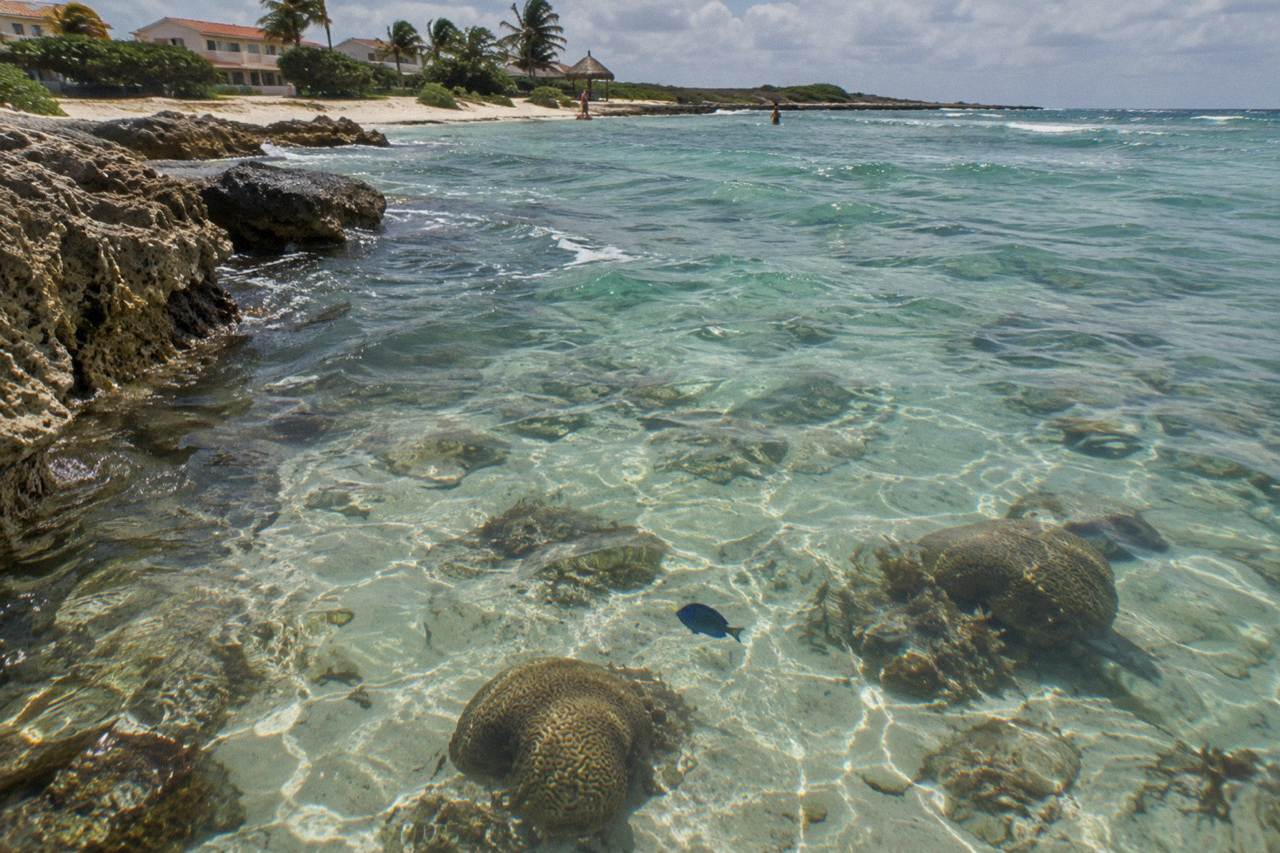
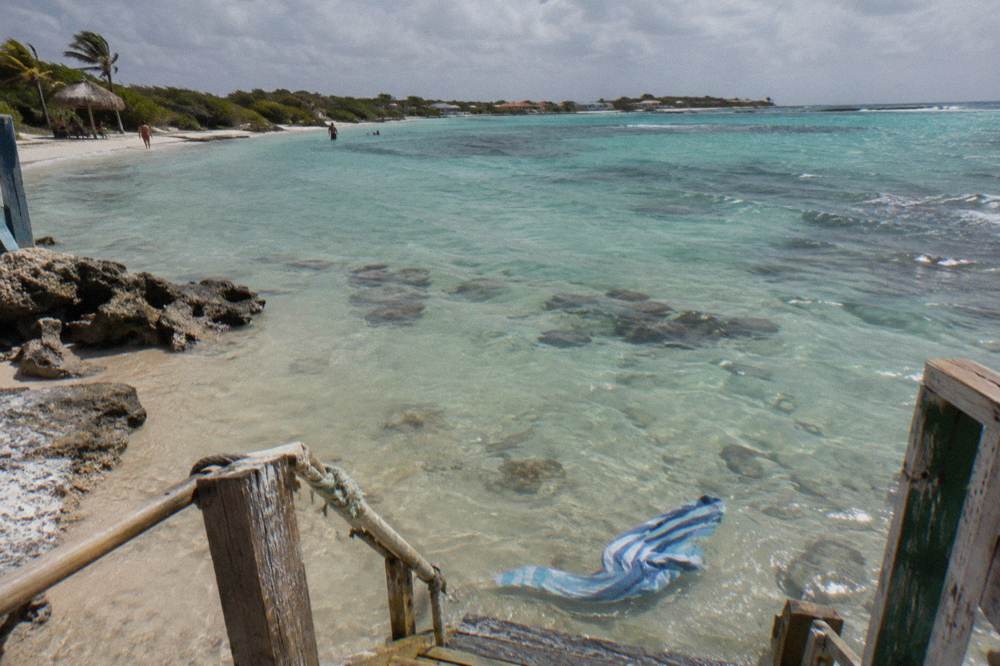
Baby Beach, Mangel Halto, Boca Catalina and Arashi are the four official-page standouts for calm, protected water: Baby Beach is a shallow, lagoon-style bay described as ideal for kids and beginner snorkelers, Mangel Halto is calm with mangroves around it, Boca Catalina has gentle waves and reef fish just offshore, and Arashi is noted for visibility. All are public and free to enter.
The calm-water logic is geographic. Aruba's west and south coasts face sheltered water, while the east and north coasts face open sea with stronger wind, per the official beaches page. Every spot in the paragraph above sits on the calm side, which is also why the tour boats cluster there. For a non-swimmer, that geography matters more than any gear choice: the same protection that keeps the snorkel boats comfortable keeps the shallows gentle.
What each spot offers a non-swimmer differs:
| Beach | Character (per aruba.com) | Non-swimmer angle |
|---|---|---|
| Baby Beach | Shallow, lagoon-style bay, southeast tip | Ideal for kids and beginner snorkelers, very shallow water |
| Mangel Halto | Quiet, mangroves, calm water | Snorkeling without crowds close to shore |
| Boca Catalina | Small bay, gentle waves, colorful reef fish offshore | Fish visible near the surface in calm conditions |
| Arashi Beach | Near the California Lighthouse, great visibility | Clear water makes viewing from the surface easier |
Gear and entry are simple at these spots. Shore snorkeling is possible at Boca Catalina, Arashi and Mangel Halto with reefs close to the beach, but you bring your own gear. There are no entry fees at any of them. Hotel palapas and loungers that are set up and in use belong to hotel guests under the current temporary beach guidelines, but the beach itself, swimming and finding your own spot in the sand stay open to everyone. The free snorkeling in Aruba guide covers the public-beach picture in more depth.
Two cautions belong here, stated without any safety verdict. Conditions at any beach change day to day, and the Aruba meteorological service's marine forecast shows wind, wave height by coast and shower chances worth checking on the morning you go. And the island's reef rules apply from the sand as much as from a boat: do not feed fish or turtles, do not touch or pick up marine life, leave shells, sand and coral in nature, and use mineral-based reef-safe sunscreen, since sunscreens containing oxybenzone are banned in Aruba. The reef-safe sunscreen guide lists what that means in practice.
What Should Non-Swimmers Know Before Booking Any Of This?
Compare three things before you pay: the price basis (per person versus per group), what the listing actually states about inclusions, and the trip's own stated duration against your day's schedule. Every listing on this page prices per person, but two private charters elsewhere on the site price per group, so never compare the two bases as if equal. Free cancellation is listed on every product named here, and no tour guarantees wildlife or weather.
Start with the fee that applies before you even reach the water. Visitors arriving by air pay a $20 Sustainability Fee through the ED Card, with residents, children under 8, repeat visitors who paid in the same calendar year and cruise ship passengers exempt, per the official entry requirements page. It is a small line item, but it surprises travelers who budget only for tours.
Then read the listing you are actually booking. Duration figures in this guide are each listing's own total, and similar-sounding products from one operator are genuinely different listings: Pelican alone sells a 2.5 hour sail, a 4 hour morning sail and a two-stop cruise, each priced separately. The same discipline applies to inclusions. On the glass bottom trips, water and sodas are listed; meals are not. On the Pelican Iconic Sail, an open bar and snacks are listed along with gear. Nowhere on this page should you assume hotel pickup: it is listed on the open-air bus tour and the Nautilus tours, and not listed on either glass bottom trip or the Pelican sail.
Weather deserves one honest paragraph. Aruba sits outside the hurricane belt and has had no direct hurricane hit since 1851, according to the Aruba Tourism Authority, with the season running 1 June to 30 November; storms can still bring rain, gusts or calm, and trips can be affected, so no operator's schedule is a promise. Sea temperature is rarely the problem: monthly averages run from about 79 F in February, the coldest month, to about 84.6 F in October, the warmest, per seatemperature.org's Oranjestad readings. The water temperature by month guide has the full table.
| Month | Avg sea temp (F) | Rainy days (1 mm+) | Mean wind (m/s) |
|---|---|---|---|
| February | 79.0 | 4.5 | 7.6 |
| April | 80.1 | 1.5 | 7.7 |
| July | 81.3 | 4.1 | 8.1 |
| September | 84.0 | 3.3 | 6.8 |
| October | 84.6 | 7.3 | 5.8 |
| December | 81.1 | 11.0 | 6.4 |
October is the warmest water of the year but one of the wetter months; March and April combine warm seas with the fewest rainy days. Wind is steadier in the mid-year months and softer in October through November, which shapes how bumpy any boat ride feels.
Common Questions About Glass Bottom Boat Options For Non-Swimmers
Can You See The Antilla Shipwreck Without Swimming?
Yes. Both glass bottom boat listings visit the Antilla wreck, and the wreck's highest points sit roughly 15 feet below the surface according to the Antilla Shipwreck Aruba site, placing them in clear view from a boat's glass panel.
How Much Does An Aruba Glass Bottom Boat Tour Cost?
From $60 per person for 1.5 hours, on both glass bottom listings operated by Malmok Charters, covering the Antilla wreck, Boca Catalina and Tres Trapi with water and sodas included.
Do Glass Bottom Boat Tours Include Snorkeling?
Snorkel gear is listed as included on both glass bottom trips, so companions who swim can snorkel at the stops while non-swimmers stay aboard. Gear and flotation details are on each live listing.
What Can Non-Swimmers Do In Aruba Besides A Glass Bottom Boat?
The Sea Trek helmet walk on De Palm Island stands you on the sea floor with piped air, while shallow public bays such as Baby Beach and Mangel Halto allow fish viewing from the shallows.
Is There Hotel Pickup On The Glass Bottom Boat Tours?
No. Neither glass bottom listing states hotel pickup; both depart from the Island Cabana location near Malmok. Hotel pickup is listed on the open-air bus beach tour and the Nautilus beach tours.
Which Beaches In Aruba Are Best For Non-Swimmers?
Per the official beaches page, Baby Beach is a shallow lagoon-style bay ideal for kids and beginners, Mangel Halto is calm and quiet, Boca Catalina has gentle waves with reef fish offshore, and Arashi is noted for visibility. All are public and free to enter.