Sea Trek Helmet Walking In Aruba For Non-Swimmers
Sea Trek helmet walking gets marketed to non-swimmers, but in Aruba it exists mainly as a paid add-on at one private island. Here is what the listings actually cover, and what non-swimmers can book from the tours this site lists.
Short answer
Sea Trek in Aruba is listed by De Palm Island as a paid add-on to its day pass, not as a standalone tour, and no Sea Trek listing appears among the tours covered here. Non-swimmers can instead book a glass bottom boat from $60 per person or a sail-and-snorkel cruise.
Helmet walking sounds like the perfect answer for a traveler who cannot swim: a sealed helmet, an air supply, a walk along the sea floor. In Aruba the reality is narrower than the marketing suggests. Sea Trek helmet walking is offered only at De Palm Island, as a paid upgrade separate from the entry ticket. No Sea Trek tour appears among the boat and beach snorkel options covered here. That leaves a real gap for non-swimmers, and this guide fills it honestly: what helmet walking is, where it is sold in Aruba, and which listed trips, the glass bottom boats, the sail-and-snorkel cruises and the calm-water beach tours, actually work for someone who wants to see fish without swimming.
What Is Sea Trek Helmet Walking?
Sea Trek helmet walking is an underwater activity in which a walker wears a weighted helmet that keeps an air pocket around the head, breathing normally while walking on a submerged trail or platform, typically held by a guide rail, with no swimming skill involved. Operators run it at dedicated marine parks and private islands rather than from public beaches. The helmet seals at the shoulders, air is pumped from the surface, and participants descend a ladder or ramp to a set depth, then walk a fixed route. It is a cousin of Snuba, which this site covers separately in the Aruba Snuba guide, but the two are not the same thing: Snuba swims with a long hose to a surface raft, Sea Trek walks.
Because the walker never has to float or kick, helmet walking is aimed squarely at people who cannot swim, who are nervous in open water, or who want to keep glasses or contact lenses on. That promise is why the question comes up so often for Aruba trips, where so much of the island's tourism is built around the water. The trade-off is that it is a controlled, staged experience in a fixed location, not a tour of Aruba's reefs and wrecks. You see the spot the operator has prepared, not Boca Catalina's reef fish or the Antilla shipwreck.
In Aruba specifically, the operator pages state that De Palm Island lists Sea Trek as a paid add-on on top of its day pass. The day pass itself includes ferry transfer, lunch, an open bar for adults, snorkel gear and two guided snorkel tours daily, plus a water park; Sea Trek and Snuba cost extra. No price, minimum age or check-in time for the add-on is published on the pages verified here, so treat any figure you see elsewhere as unconfirmed and ask the operator directly. De Palm Island is a private island destination, not one of the tours this site lists, and this site's De Palm Island snorkeling guide covers it in full.
Where Can You Do Sea Trek In Aruba?
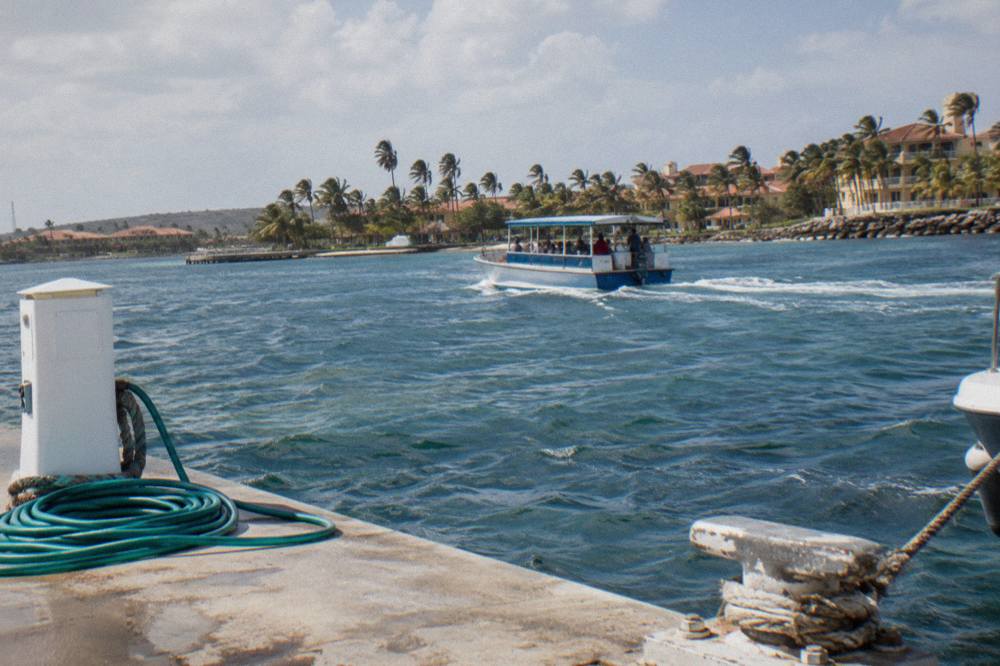
In Aruba, Sea Trek helmet walking is listed at De Palm Island, a private island in the harbor reached by the operator's own ferry from Oranjestad, as a paid add-on to the island day pass; no covered tour on this site carries a helmet walk. That is the whole map. Unlike destinations where several marine parks compete on helmet dives, Aruba's offering is concentrated in one place, run by De Palm Tours, the same company behind the Palm Pleasure catamaran that departs De Palm Pier. The add-on model matters for planning: you buy the day pass first, then pay more for the helmet walk, and the ferry schedule sets your day. If you're weighing that add-on against snuba, the Sea Trek versus snuba comparison explains how the helmet walk and the hose dive differ.
The location also shapes who it suits. De Palm Island sits a short ferry ride from the cruise terminal area, which makes it reachable for passengers on a port day, though the site's snorkel tours for cruise passengers guide advises checking your ship's all-aboard time before committing to any island outing. Families with mixed swim abilities often pick the island for exactly this reason: strong swimmers take the guided snorkel tours included in the pass, non-swimmers consider the helmet walk, and small children get the water park.
If your heart is set on a helmet walk, book through the operator's own channels and confirm the add-on price, the depth of the walk and any health screening before you pay. The pages verified here publish none of those figures, and Aruba's visitor guidance gives no snorkel-specific regulation for helmet equipment. What this site can say from its own listings: the alternative for non-swimmers who still want the reef is real, bookable and often cheaper, starting with the glass bottom boats below.
Can Non-Swimmers Join A Sea Trek Helmet Walk?
Helmet walking is designed for non-swimmers, since the walker stays upright on a sea floor trail with air supplied from the surface, but whether an individual can join depends on the operator's own screening, which the pages verified here do not publish, so ask De Palm Island directly about age, depth and health limits. This site will not guess at minimum ages, depth ratings or medical restrictions, because none of them are printed on the verified operator pages. What can be said is the general shape of the activity: no swimming, no floating, a guide rail and staff supervision. Anyone with ear, sinus, heart or respiratory concerns should raise them with the operator before booking, the same advice that applies to Snuba and scuba.
For cruise passengers the arithmetic is different again. A helmet walk plus island day takes hours, and the ferry times must match the ship. The cruise guidance this site publishes is blunt: check your ship's all-aboard time, never assume an outing fits. Non-swimmers on a short port day often do better with a short listed trip, and the Glass Bottom Boat run by Malmok Charters is 1 hour 30 minutes, from $60 per person, rating 5.0 from 47 reviews, up to 10 guests, covering the Antilla wreck, Boca Catalina and Tres Trapi with snorkel gear, bottled water and sodas included. For this guide, the related tour is: Check availability beside its full tour page.
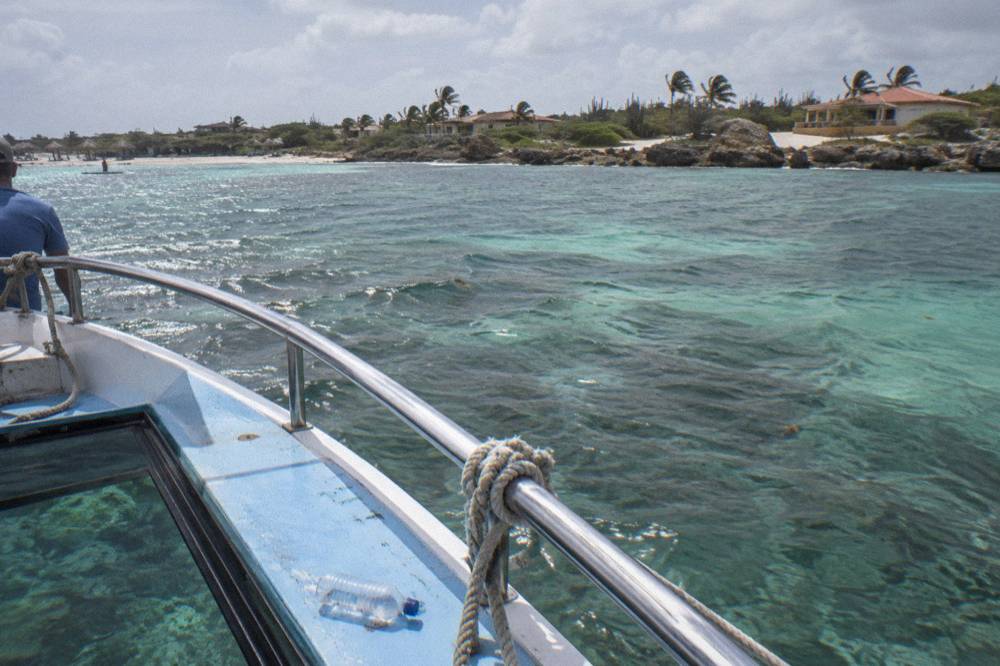
One honest caution on the word "non-swimmer": boat-based snorkel tours are not automatically non-swimmer tours. Life jackets and floating support are listed on several sail-and-snorkel cruises, but a listing's inclusion line is the limit of the claim. The Pelican morning sail with champagne brunch, from $85 per person, rating 4.7 from 2,238 reviews, includes snorkel gear, and the open sea is still the open sea. If you cannot swim at all, the glass bottom boat is the cleaner answer, and the non-swimmer options and glass bottom boats guide walks through it in detail.
What Are The Alternatives To Sea Trek For Non-Swimmers?
The listed alternatives for non-swimmers are the glass bottom boats, which require no water contact at all, the calm-water beach tours to Mangel Halto and Baby Beach, where shallow bays let you stand while you look, and the sail-and-snorkel cruises with life jackets and crew support, which suit confident floaters rather than true non-swimmers. Each works at a different comfort level, and the comparison below uses only what each listing states.
| Option | Best for | Water contact | Listed from | Group size |
|---|---|---|---|---|
| Glass Bottom Boat (Malmok Charters, 5595542p4) | Zero swimming, wreck viewing | None required | $60 per person | Up to 10 guests |
| Glass Bottom Boat (Malmok Charters, 1381136) | Same route, thinly reviewed | None required | $60 per person | Not stated |
| Mangel Halto and Baby Beach bus tour (El Tours) | Standing-depth bays | Optional, shallow | $57 per person | Up to 45 guests |
| Iconic Sail and Snorkel (Pelican) | Confident floaters with life jackets | Yes, snorkeling | $67 per person | Up to 60 guests |
| Sea Scooters at Mangel Halto (Aruba Bob) | Assisted glide in calm water | Yes, scooter-assisted | $100 per person | Up to 6 guests |
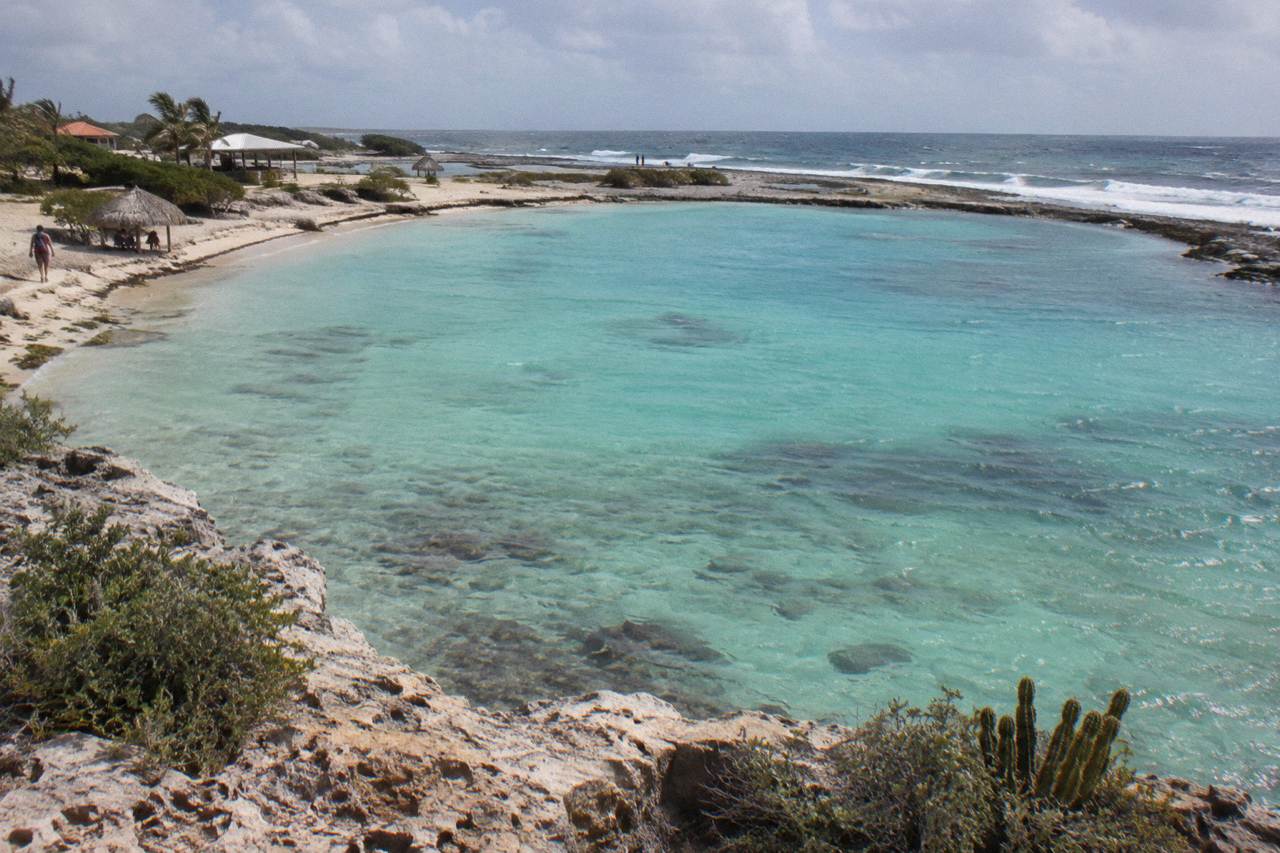
The bus tour deserves more attention than it gets. El Tours' Mangel Halto and Baby Beach trip, from $57 per person, rating 4.5 from 308 reviews, includes hotel pickup, gear and transport in an open air bus for a 5 hour day. Baby Beach is described by the Aruba tourism site as a shallow, lagoon-style bay ideal for kids and beginner snorkelers, and Mangel Halto as calm water with mangroves and no crowds, per the official Aruba beaches page. A non-swimmer can still see fish at either spot. For a deeper look at the spots, see the Mangel Halto snorkeling guide and Baby Beach snorkeling guide.
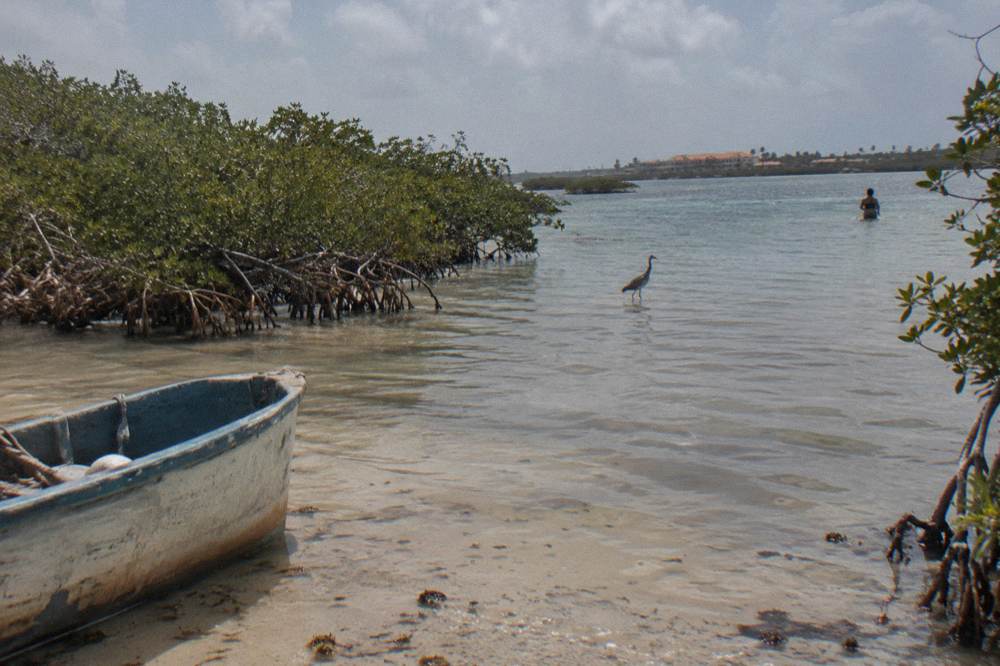
The beach-hop listing that pairs best with a nervous swimmer is the smaller Nautilus version, Mangel Halto and Baby Beach with pickup, from $95 per person, rating 4.6 from 112 reviews, up to 10 guests, with gear, water and a snack. The operator runs the same two bays with a dive-center eye, and the small group size means more attention per guest. Whichever you pick, remember the island's reef rules from Aruba's responsible guest guidance: do not touch or feed marine life, leave shells and coral in place, and use mineral reef-safe sunscreen, since sunscreens containing oxybenzone are banned.
How Does A Glass Bottom Boat Compare To Helmet Walking?
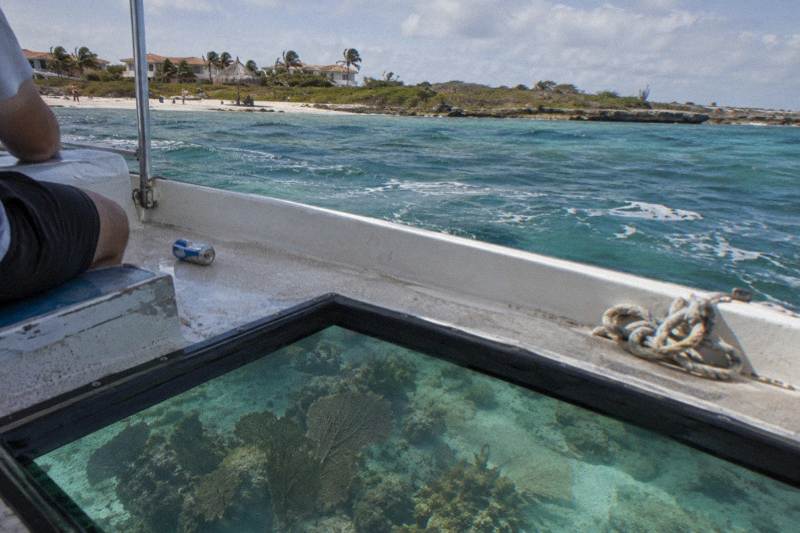
A glass bottom boat shows you the reef and the Antilla wreck through a viewing window in the hull with zero water contact, while a helmet walk puts you under the surface standing on the sea floor, so the boat is the better listed fit for non-swimmers who want to see Aruba's underwater sights without any screening process or add-on fees. The difference is immersion versus observation, and in Aruba the observation route is unusually strong, because the two listed glass bottom trips visit the three signature sights of the northwest coast: the Antilla wreck, Boca Catalina and Tres Trapi.
The primary listing, the Malmok Charters glass bottom boat with the 5.0 rating from 47 reviews, runs 1 hour 30 minutes from the Island Cabana hut at Malmok, up to 10 guests, snorkel gear, bottled water and sodas listed. A sibling listing of the same route, the 1.5 hour version from $60 per person, is thinly reviewed with 13 reviews, so it carries no star claim here, but it is the same operator on the same water. The Aruba Snorkeling Tours comparison pages treat them as different products, because they are: separate listings, separate lines, book the one whose time and price fit.
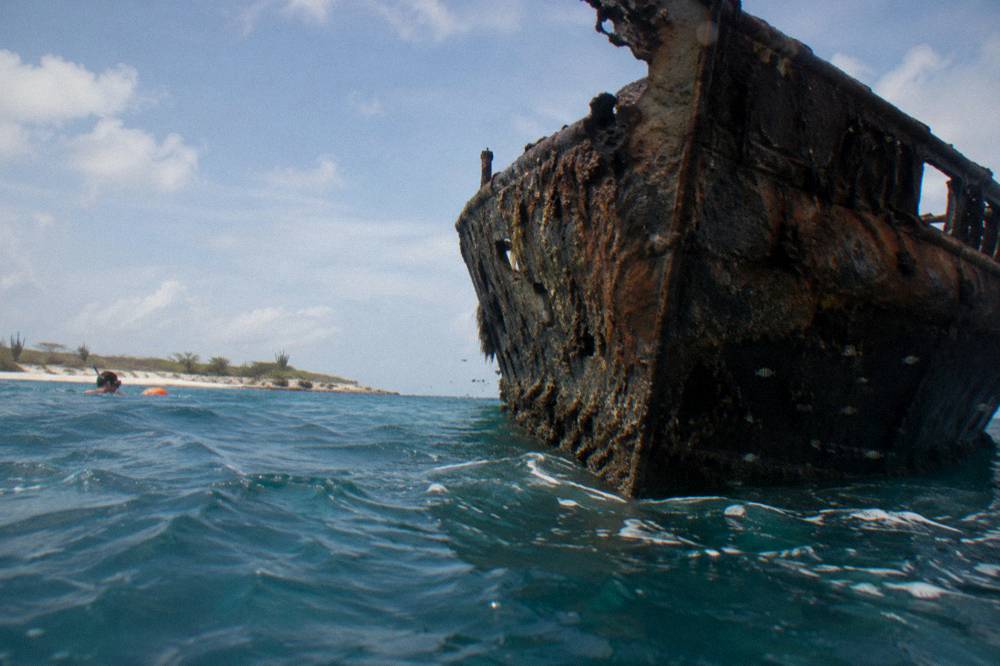
What you actually see from the hull window is worth setting expectations for. The Antilla is a 398.3 ft German cargo ship scuttled in January 1940, and according to the Antilla Shipwreck Aruba site its bow and superstructure rise to about 15 feet below the surface, which is exactly why it works for surface viewing: the wreck sits close enough to the top that a snorkeler drifting overhead gets a real look. The Antilla shipwreck snorkeling guide covers the history and the sightlines in depth.
Two glass bottom listings on the same route, honestly compared:
| Listing | Duration | From | Rating and reviews | Guests |
|---|---|---|---|---|
| Glass Bottom Boat (5595542p4) | 1 hour 30 minutes | $60 per person | 5.0 from 47 reviews | Up to 10 |
| Glass Bottom Boat (1381136) | 1.5 hours | $60 per person | Thinly reviewed, 13 reviews | Not stated |
When Is The Best Time For A Helmet Walk Or Boat Trip?
The sea is warmest and flattest for helmet walks and boat trips in Aruba's late summer and autumn months, with sea surface temperature peaking near 29.2 C in October and rainfall lowest in March and April, while wind runs strongest from May through July, which is when the protected west and south coasts matter most. The monthly water temperatures below come from long-term averages for Oranjestad, and they show why Aruba is a year-round water destination: the coldest month, February, still averages 26.1 C (79.0 F).
| Month | Sea temp C (F) | Rainfall mm | Rainy days |
|---|---|---|---|
| Jan | 26.9 (80.4) | 44.0 | 10.8 |
| Mar | 26.2 (79.2) | 10.0 | 2.0 |
| May | 27.6 (81.7) | 14.1 | 1.7 |
| Jul | 27.4 (81.3) | 19.6 | 4.1 |
| Sep | 28.9 (84.0) | 42.9 | 3.3 |
| Oct | 29.2 (84.6) | 76.5 | 7.3 |

Rain is the smaller story, wind is the bigger one. Aruba's mean wind speed runs 8.7 m/s in June against 5.8 m/s in October, and the tourism authority notes Aruba sits outside the hurricane belt with no direct hurricane hit since 1851, though the season from 1 June to 30 November can still bring rain, gusts or flat calms. For a glass bottom boat or a helmet walk, check the Aruba meteorological service's marine forecast the morning of your trip: it publishes wind in knots and wave height by coast, and the west and south coasts where the listed trips run are the protected sides of the island. The best time to snorkel guide and weather and hurricane season guide expand on this.
One fee to fold into any Aruba trip budget: visitors arriving by air pay a $20 Sustainability Fee through the ED Card, per the official entry requirements page, with residents, children under 8 and cruise ship passengers exempt. It has nothing to do with tours, but it surprises first-time flyers.
What Should You Know Before Booking A Helmet Walk Or Boat Tour?
Before booking, confirm the helmet walk's add-on price, age and health screening directly with the operator since none is published here, and compare per-person and per-group pricing carefully on private trips. For boat tours, check the cancellation terms on the live listing before you commit. Free cancellation shows on many of the Aruba snorkel tours compared here, but each operator sets its own policy, so read the exact terms on the page you book from. It removes most of the risk from booking ahead of a trip, since weather and plans change.
Read the fine print on what each listing actually includes rather than assuming. The Pelican Iconic Sail and Snorkel, from $67 per person, rating 4.8 from 531 reviews, lists an open bar, snacks and gear for 2 hours 30 minutes, but no meal and no hotel pickup. The Red Sail Half-Day with Caribbean Lunch, from $107 per person, rating 4.8 from 860 reviews, lists a lunch buffet, open bar, instruction on request and up to 75 guests on a luxury catamaran. Neither is a helmet walk, and neither pretends to be: they are floating snorkel platforms, and that is their value for a cautious swimmer.
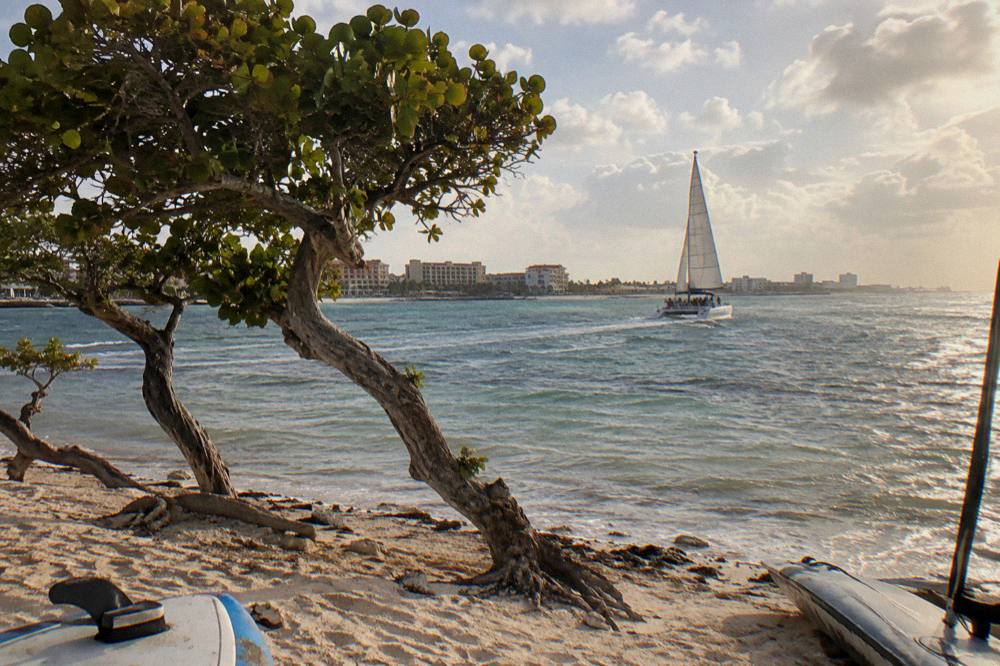
Private options price differently, and the basis matters more than the number. The Malmok private boat trip is from $900 per group for up to 10 guests over 3 hours, rating 5.0 from 41 reviews, covering the Antilla, Boca Catalina and Tres Trapi, while the Octopus private snorkel excursion is from $140 per person, 4.9 from 610 reviews, with rum punch and hotel pickup listed. One is priced for the whole boat, the other per person even though it is private, and comparing them head to head without naming that difference would be misleading. The private snorkel charters guide untangles it fully.
For a non-swimmer weighing everything on this page, the practical ranking is short. First, the glass bottom boat: no swimming, the wreck and two reef bays, an hour and a half, from $60 per person. Second, the shallow-bay beach tours at Mangel Halto and Baby Beach, where standing depth is the norm. Third, the De Palm Island day pass with its paid Sea Trek add-on, if helmet walking is the experience you came for and you confirm the details with the operator first. The sail-and-snorkel cruises come fourth only because they ask for more water confidence than a true non-swimmer may have, even with a life jacket.
The pattern across all of it: Aruba rewards travelers who match the trip to the swimmer, not the brochure.
Common Questions About Sea Trek Helmet Walking In Aruba
Can You Do Sea Trek In Aruba If You Can't Swim?
Yes, helmet walking is designed for non-swimmers, and in Aruba it is listed at De Palm Island as a paid add-on to the island day pass. The pages verified here publish no age, depth or health figures, so confirm screening requirements with the operator before booking.
How Much Does Sea Trek Cost In Aruba?
No Sea Trek price is published on the pages verified here, so this site prints none. It is a paid add-on on top of the De Palm Island day pass, and the day pass's own price is likewise not printed here. Ask the operator for the current add-on figure.
What Can Non-Swimmers Do Instead Of Sea Trek In Aruba?
Listed options include the glass bottom boat from Malmok Charters, from $60 per person, which requires no water contact and passes the Antilla wreck, Boca Catalina and Tres Trapi, plus shallow-bay beach tours at Mangel Halto and Baby Beach where standing depth is the norm.
Is Sea Trek The Same As Snuba?
No. Sea Trek walks on the sea floor under a sealed helmet with surface-supplied air, while Snuba swims behind a raft on a long hose line. SNUBA needs no dive certification, while Sea Trek is the helmet walk on a custom walkway.
De Palm Island is a short ferry ride from the Oranjestad cruise area, so it is reachable, but the ferry schedule and the add-on must fit your ship's all-aboard time. Never assume an outing fits a ship's schedule; check the all-aboard time first. The glass bottom boats do, since no water contact is required. The sail-and-snorkel cruises list life jackets, gear and in some cases instruction on request, but they are floating snorkel trips in open water, a better fit for confident floaters than for someone who cannot swim at all.Can Cruise Passengers Do A Helmet Walk In Aruba?
Do The Boat Tours Listed Here Suit Non-Swimmers?