What Is The Largest Shipwreck In The Caribbean?
The SS Antilla off Aruba, 398.3 feet from bow to stern, is a wreck you can snorkel at the surface visited by many boat tours. Here is what to know.
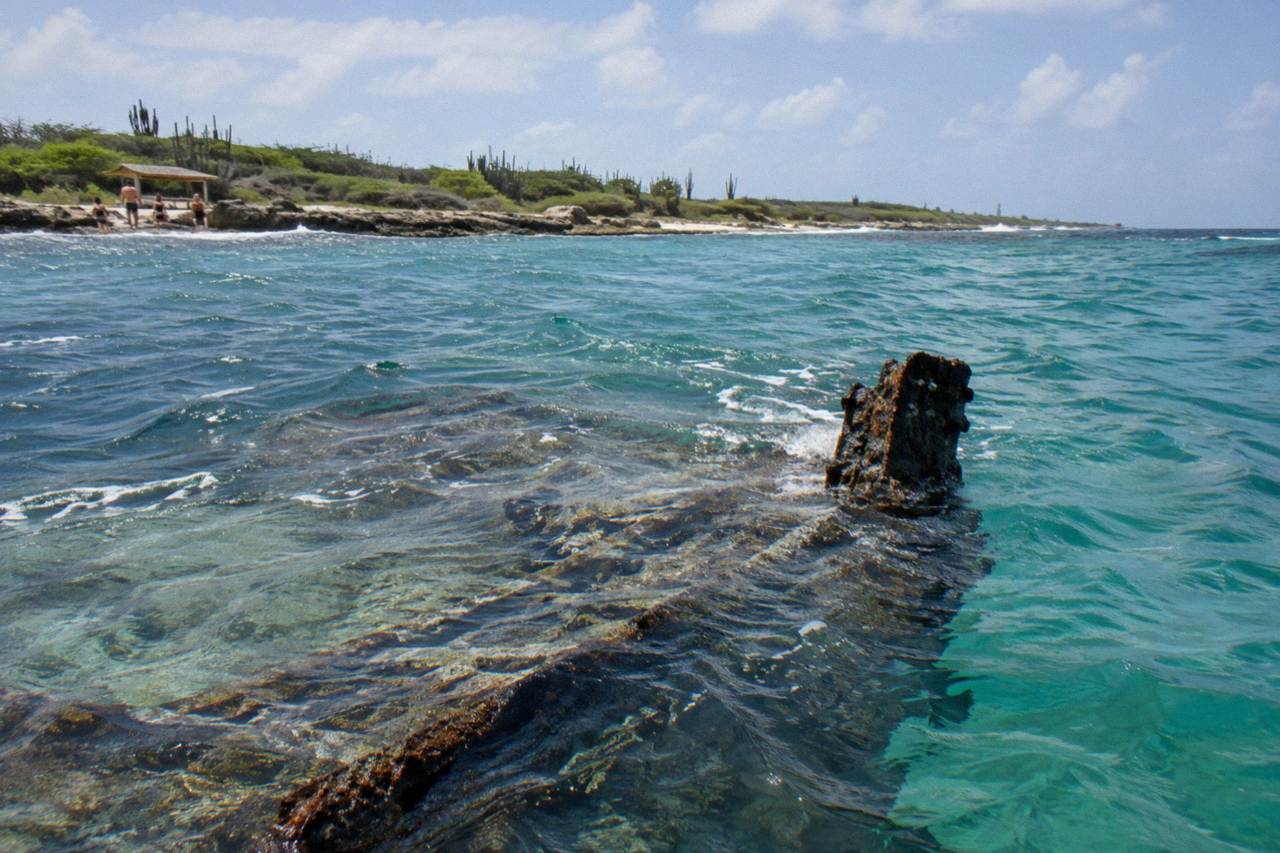
The question sounds like trivia, but in Aruba it has a practical answer: the ship at the center of it sits offshore, close enough to the surface that a snorkeler with fins and a mask can float over it. The SS Antilla is a 398.3 foot German cargo ship, scuttled in January 1940, and it is often described as among the largest shipwrecks in the Caribbean. Across the Aruba Snorkeling Tours covered here, it is also the stop most often named on listings, appearing on the Pelican morning sail, the Octopus afternoon catamaran, the Red Sail Sports afternoon trip and several others.
No single authority crowns one wreck as the largest in the region, and this site makes no ranking claim. The SS Antilla off Aruba, at 398.3 feet long, is often described as among the largest shipwrecks in the Caribbean, and it is unusual for a wreck of that size because its highest points sit roughly 15 feet below the surface, within reach of snorkelers rather than only divers.
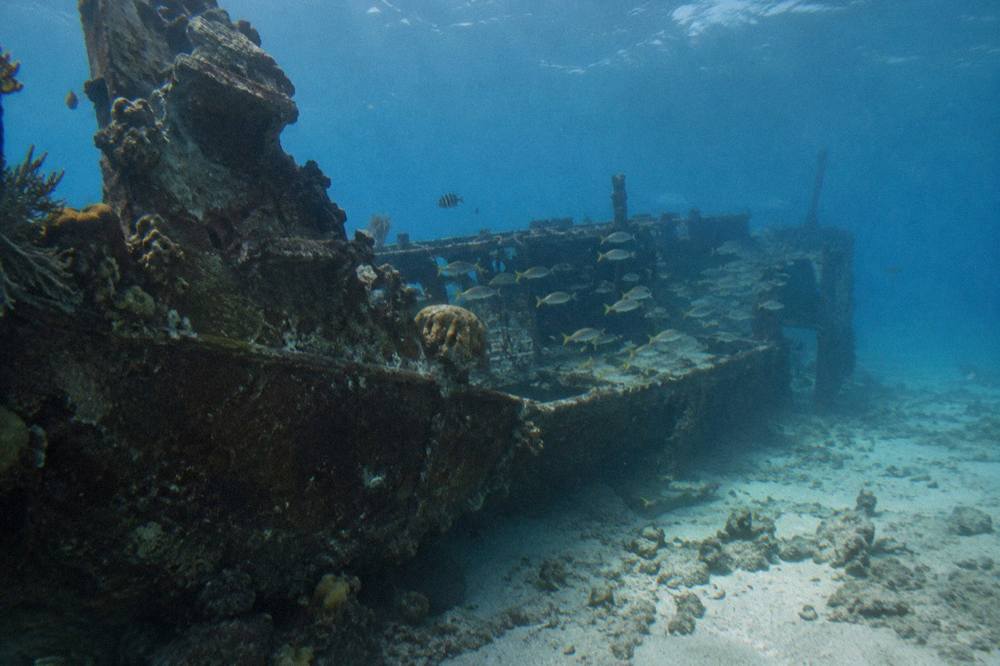
The Antilla was a German Hamburg America Line cargo ship. When the Netherlands entered the war, the ship was cornered in Malmok Bay, where the German ships were anchored, and its crew scuttled it in January 1940 rather than let it be seized. The hull came to rest on its port side on a flat sandy bottom, and there it has stayed for more than eight decades, growing into an artificial reef that draws fish, coral growth and, in season, the snorkel boats of half the island's operators. The story gives the site a strange double life: a wartime wreck on the one hand, and a fixture on Aruba snorkel itineraries on the other. The wreck trips listed here stop at the Antilla, a WW2 shipwreck, so there is a real story behind the dark shape under your fins.
What makes the size worth talking about is not the abstract number. It is that a steel hull of that length creates a long ribbon of shadow, structure and marine habitat in shallow, warm water. According to the Antilla Shipwreck Aruba site, the bow and superstructure rise to about 15 feet below the surface, the hull descends to about 60 feet, and typical visibility runs 50 to 100 feet. A snorkeler drifting at the surface can look down at the Antilla, the wartime wreck that several island snorkel sails name as a stop.
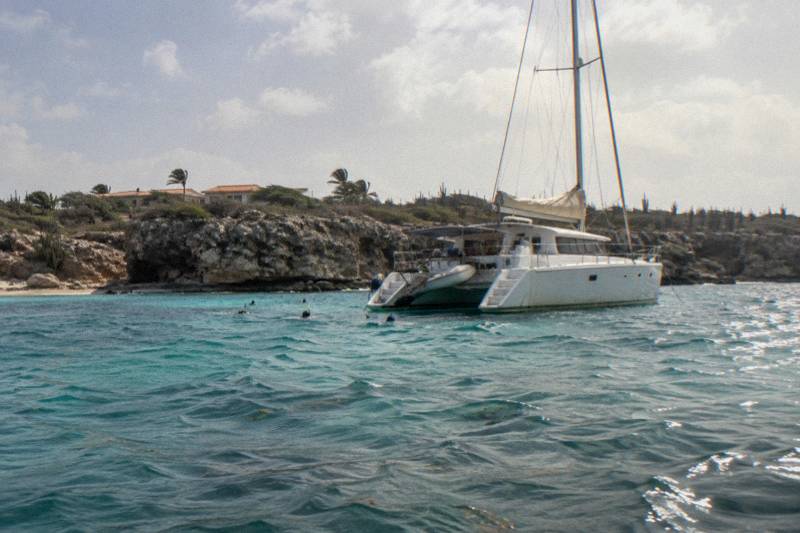
The wreck has become the anchor of Aruba's boat snorkel scene. The Pelican morning sail with champagne brunch, from $85 per person and rated 4.7 from 2,238 reviews, lists Malmok, Boca Catalina and the Antilla as its stops, which makes it the most reviewed listing on this site by count. The Octopus afternoon catamaran, from $74.99 per person, visits the same three stops with a 34 guest cap and an open cocktail bar. The full range of options is laid out in the guide to Antilla shipwreck snorkeling, which covers departures, piers and stop combinations across the operators.
Where Is The Antilla Wreck And How Do You See It?
The Antilla lies off Aruba's northwest coast near Malmok Bay, a short sail from the Palm Beach departure piers used by most of the island's snorkel operators. Boat tours are the standard way to see it, since the wreck sits offshore rather than at a swim-in beach, and trip durations across the listings covered here run from an hour and a half to about four and a half hours.
Nearly every wreck trip departs from the hotel strip. The Red Sail Sports afternoon sail leaves from Piet's Pier on Palm Beach aboard a luxury catamaran, with stops at the Antilla and Boca Catalina, an open bar and appetizers, in three hours and from $79 per person. Pelican and Octopus both run sail-and-snorkel trips in Aruba, and each live booking page lists its exact departure point and check-in details. On the other side of the island, the Spronk Catamarans trips depart from a dock behind Lucy's Retired Surfer Bar in Oranjestad and reach the wreck after stops at Boca Catalina and Tres Trapi.
There are non-sail options too, and they suit different readers. The Malmok Charters glass bottom boat runs just 1.5 hours from $60 per person for up to 10 guests, with the Antilla, Boca Catalina and Tres Trapi on its route, which makes it the shortest wreck option on the site and a reasonable pick for anyone who prefers not to get in the water at all. At the other end, the Segway Aruba Seabob tour, from $120 per person with a 15 guest cap, puts guests on underwater scooters over the wreck, with hotel pickup listed. Neither is a catamaran cruise, and neither should be booked as if it were one.
Aruba's reef rules apply at the wreck as everywhere else. Per the island's official responsible-guest guidance, do not touch or pick up marine life, do not feed fish or turtles, leave shells and coral in place, and use mineral-based reef-safe sunscreen, since sunscreens containing oxybenzone are banned on the island. Visitors arriving by air also pay a $20 Sustainability Fee through the ED Card, with cruise passengers, residents and children under 8 exempt.
How Deep Is The Antilla Wreck For Snorkelers?
Snorkelers see the Antilla from the surface, and the parts that matter are within about 15 feet of it. The bow and superstructure, the wreck's highest points, reach roughly 15 feet below the surface according to the Antilla Shipwreck Aruba site, while the hull descends to about 60 feet, a depth that belongs to divers rather than anyone with a snorkel.
That split is exactly why the wreck works for a mixed group. A confident swimmer can float over the shallow sections and take in the whole silhouette, since typical visibility of 50 to 100 feet means the shape of the ship reads clearly from above. A nervous swimmer stays near the boat and still sees structure and fish, because the shallowest parts are directly under the swim area. The deeper hull is simply out of snorkel range, and no tour covered here suggests otherwise.
Conditions shape the experience. The same source reports the best visibility from March to August, slightly reduced December to February from wind and waves, and water temperatures of 79 to 85 F across the year. The island's own weather profile backs the pattern: the protected west and south coasts, where the wreck sits, run calmer than the north and east coasts that face open sea, and the monthly mean wind speed at the airport peaks in June at 8.7 m/s and drops to its lowest in October and November. The detailed month-by-month numbers are in how deep the Antilla wreck really is, and the seasonal angles are covered in the best time to snorkel.
| Fact | Figure | Notes |
|---|---|---|
| Length | 398.3 ft | Per Lloyd's Register via Wikipedia |
| Scuttled | January 1940 | German Hamburg America Line cargo ship |
| Position | On its port side | Flat sandy bottom near Malmok Bay |
| Shallowest points | About 15 ft below surface | Bow and superstructure, snorkel range |
| Deepest point | About 60 ft | Hull, diver territory |
| Typical visibility | 50 to 100 ft | Best March to August |
| Water temperature | 79 to 85 F | Year round |
Which Tours Actually Stop At The Antilla?
At least a dozen listings on this site name the Antilla as a stop, spanning catamaran sails, a schooner cruise, a glass bottom boat and a Seabob scooter tour, with prices from $60 per person upward. The right pick depends on group size tolerance, whether lunch and drinks matter, and how long you want to be on the water.
The table below compares the main wreck-visiting options by the facts on their own listings. Note the guest caps, which range from 10 to 100 and change the character of the day more than any other single number. The Spronk sunset trip with BBQ, from $119 per person and rated 4.6 from 378 reviews, adds a dinner, with hotel pickup available as an extra-cost option rather than included; the Flagship schooner cruise, from $69 per person with a classic schooner and open bar, is thinly reviewed so far, with only a handful of reviews and no star claim that holds up.
| Tour | Operator | Price | Duration | Guests | Wreck visit |
|---|---|---|---|---|---|
| Antilla Shipwreck and Catalina Bay Snorkel Sail | Red Sail Sports | from $79 per person | 3 hours | up to 75 | Antilla and Boca Catalina |
| Banana Adventure Catamaran Shipwreck Snorkel and Turtle Swim | Segway Aruba | from $65 per person | 3 hours | up to 36 | Antilla and Tres Trapi |
| Antilla Shipwreck Seabob Tour | Segway Aruba | from $120 per person | 2.5 hours | up to 15 | Antilla by underwater scooter |
| Snorkel Cruise with Open Bar and Light Lunch | Delphi Watersports | from $69 per person | 3 hours | up to 45 | Antilla and Boca Catalina |
| Afternoon Snorkel Cruise to SS Antilla Wreck | Flagship-Aruba | from $76 per person | 3 to 3.5 hours | up to 100 | Antilla and Boca Catalina |
| Aruba Snorkel Sites by Glass Bottom Boat | Malmok Charters | from $60 per person | 1.5 hours | up to 10 | Antilla, Boca Catalina, Tres Trapi |
Two of these deserve a closer look because they answer different versions of the same question. The Banana Adventure catamaran is the budget-and-turtles play: from $65 per person, 4.8 from 231 reviews, lunch and alcoholic drinks listed, hotel pickup listed, and a route that pairs the wreck with Tres Trapi, the shoreline spot where green turtles feed. The Seabob tour is the opposite of a sail: 15 guests maximum, two and a half hours, scooters that pull you along the hull, and hotel or port pickup and drop-off listed in the inclusions. Cruise passengers should weigh duration carefully, since several wreck trips run three hours or more, and the standing advice is to check your ship's all-aboard time before booking anything. The Seabob's port pickup is a genuine plus for anyone docking in Oranjestad with a tight window.
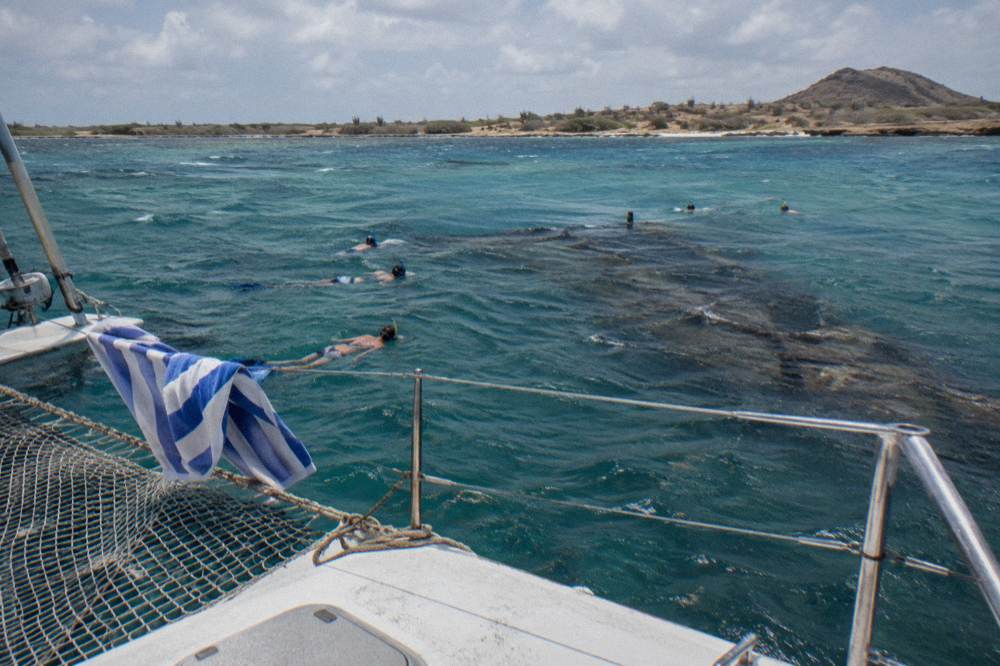
The Pelican morning champagne brunch sail deserves its own sentence, because its review count, 4.7 from 2,238 reviews, makes it the most reviewed listing anywhere on this site, by count and by a wide margin. It is a four hour sail from $85 per person, with snorkeling stops along the way and a premium champagne brunch served on board. Anyone whose interest in the largest shipwreck in the Caribbean is really an interest in a good morning on the water will find it a fit; anyone wanting a small group should look at the Seabob or the glass bottom boat instead. The two Flagship schooner listings, the afternoon wreck cruise from $76 per person and the adults-only sunset version from $69 per person, offer a third flavor, a classic sailing ship with a rope swing and onboard restrooms, though both are new or thinly reviewed listings and carry no star claim here for that reason.
For readers planning around turtle sightings as well as the wreck, the pairing of stops matters. Tres Trapi appears on the Spronk trips, the Banana Adventure catamaran, the Malmok glass bottom boat and the Malmok private charter, so a single outing can cover both the big hull and the turtles, though no listing guarantees a sighting and no honest page should promise one. The dedicated small-group options are compared in the guide to snorkeling with sea turtles in Aruba.
One planning note on the pier geography. The wreck sits off the northwest coast, so the Palm Beach and Hadicurari departures are closest, while the Oranjestad Spronk dock adds sailing time in exchange for a sunset timing that the Palm Beach morning trips cannot offer. No listing here promises a fixed stretch of time at the wreck. Each one publishes a total trip duration only. Weather shapes any day on the water, so a quick forecast check on the morning of your booking is the sensible habit. Weather can still change between June and November, the formal hurricane season, even though the tourism authority notes Aruba has had no direct hurricane hit since 1851.
For a final word on fit: readers who care mainly about the history and the scale of the ship should pick a trip with a guide narrating the wartime story and enough time in the water to swim the length of the hull. Readers who care mainly about comfort should weigh the guest caps in the table above, since an 80 person catamaran and a 10 person glass bottom boat are very different days over the same steel skeleton. Either way, the wreck is close to shore, shallow at its highest points, and reached by more tour styles here than any other single site in Aruban waters.
Common Questions About The Largest Shipwreck In The Caribbean
What Is The Largest Shipwreck In The Caribbean?
No official ranking exists, and this site makes no ranking claim. The SS Antilla off Aruba, at 398.3 feet long, is often described as among the largest shipwrecks in the Caribbean, and it is the one you can snorkel from the surface.
Can You Snorkel The Antilla Wreck Without Diving?
Yes. The wreck's highest points, the bow and superstructure, sit roughly 15 feet below the surface, well within snorkel range, and typical visibility of 50 to 100 feet lets you read the hull's shape from above.
How Did The SS Antilla Sink?
It was a German Hamburg America Line cargo ship anchored in Malmok Bay. After being cornered, the crew scuttled it rather than let it be seized, and it has rested on its port side ever since.
What Is The Cheapest Tour That Visits The Antilla?
Among the listings covered here, the Malmok Charters glass bottom boat runs from $60 per person for 1.5 hours with up to 10 guests, and the Banana Adventure catamaran sails from $65 per person with lunch and drinks listed.
When Is The Best Visibility At The Wreck?
According to the Antilla Shipwreck Aruba site, visibility is best from March to August and slightly reduced from December to February because of wind and waves. Water temperature stays between 79 and 85 F year round.