Reef-Safe Sunscreen In Aruba: What The Rules Say
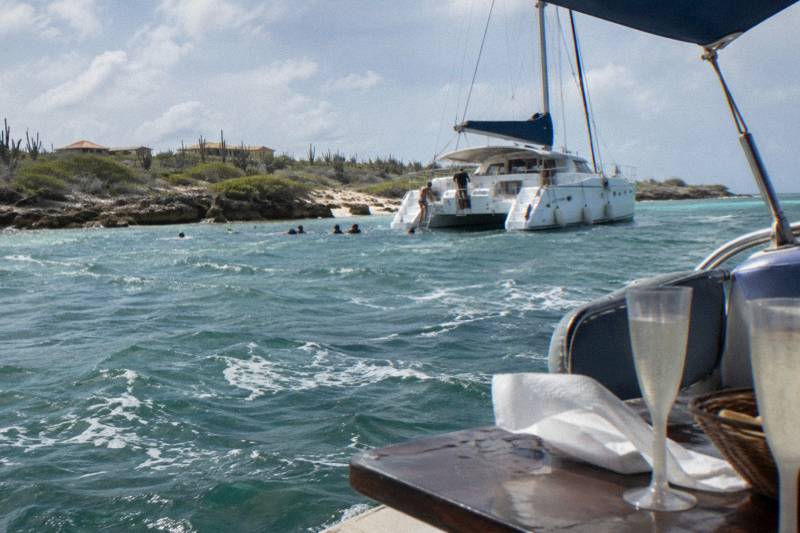
Aruba's reefs sit close to shore and close to the boats that visit them, so what you wear on your skin ends up in the water. The island bans sunscreens containing oxybenzone and advises mineral-based reef-safe sunscreen instead.
Short answer
Aruba bans sunscreens containing oxybenzone and advises mineral-based reef-safe sunscreen. The rule comes from Aruba's own responsible-guest guidance: do not feed fish or turtles, leave shells and coral in nature, and keep the reef healthy. Every booked snorkeler should pack a mineral sunscreen before heading to Palm Beach, Mangel Halto or the Antilla wreck.
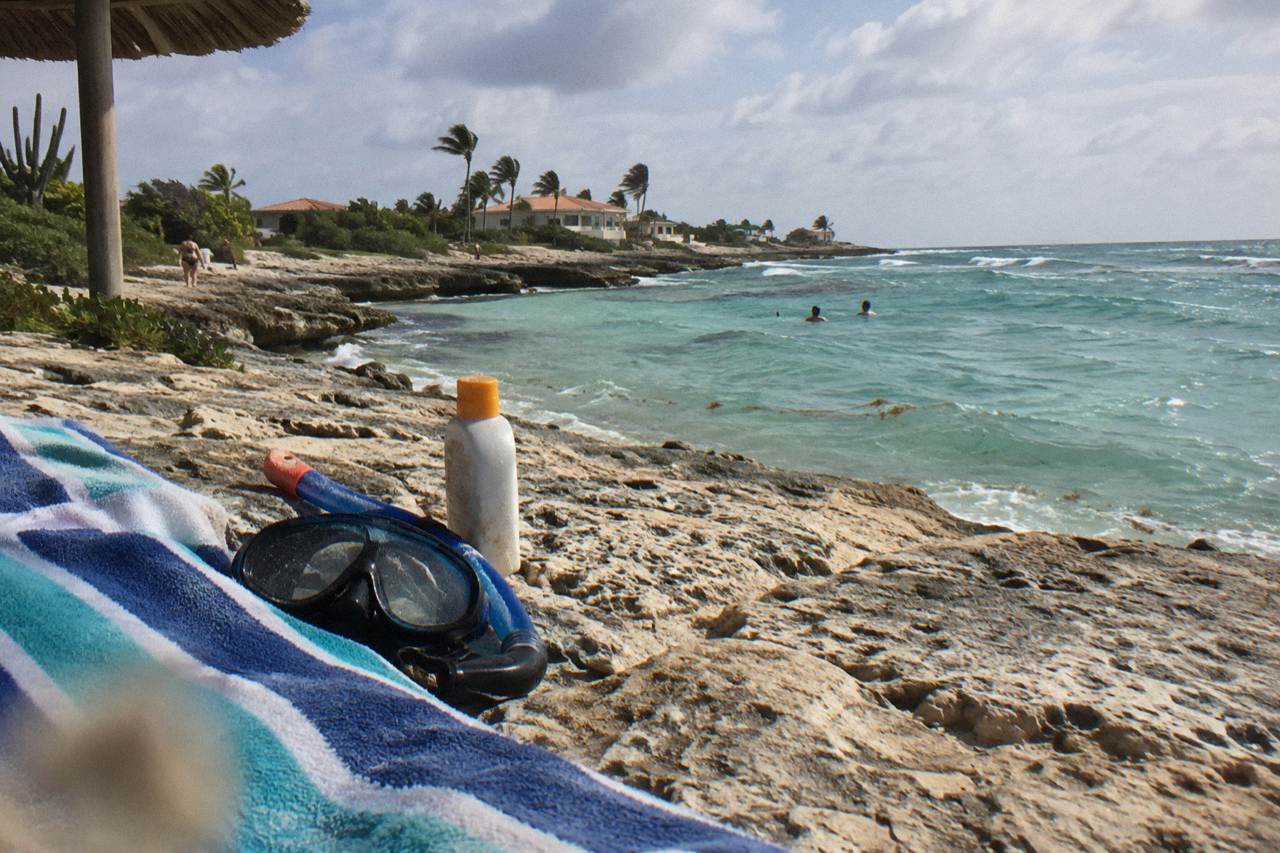
Aruba's west and south coasts hold calm, protected water where most of the island's snorkeling happens, and the reefs there sit shallow enough that snorkelers float directly above them. That closeness is exactly why sunscreen matters here. Whatever sits on your skin when you step off a boat at Boca Catalina or wade in at Mangel Halto rinses into the same water the coral and the reef fish live in. Aruba's own guidance for visitors is direct about this: sunscreens containing oxybenzone are banned, and mineral-based reef-safe sunscreen is advised.
The rule is not an abstract environmental gesture. The island's marine life guidance also asks visitors not to feed fish, turtles or seabirds, not to touch or pick up marine life, and to leave sea shells, sand and coral in nature. Sunscreen is simply the one part of that set of rules a snorkeler controls before the trip even starts. On the Pelican Sail and Snorkel open-bar trip, a 2 hours 30 minutes outing from Pelican Pier that includes snorkel gear, drinks and snacks, the reef is close enough to touch, so what you wear in the water is what you share with it.
Why Does Aruba Restrict Sunscreen For Snorkelers?
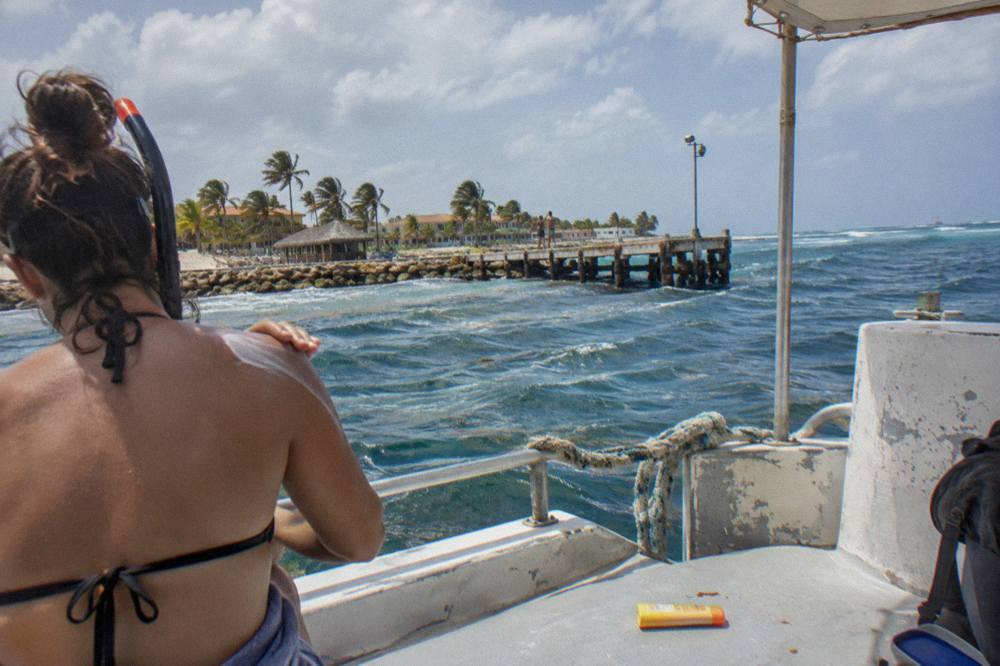
Aruba restricts sunscreen because its snorkeling happens on shallow, near-shore reefs where product washed off swimmers concentrates directly on coral. The island's responsible-guest guidance bans sunscreens containing oxybenzone and advises mineral-based reef-safe sunscreen as the standard for anyone entering the sea.
The geography explains the policy. Aruba's beaches page describes the west and south coasts as calm and protected, good for swimming and snorkeling, while the east and north coasts face open sea with stronger wind. The protected side is where nearly all the listed snorkel trips go: Palm Beach departure piers for the sail-and-snorkel cruises, Malmok and Boca Catalina for the wreck runs, Mangel Halto and Baby Beach for the southern beach-hop tours such as the Mangel Halto and Baby Beach guided tour, which picks up at hotels and runs 5 hours by open-air bus.
Sheltered water means less dilution and less flushing. A bay like Boca Catalina, which Aruba's beaches page calls a small bay with gentle waves and colorful reef fish just offshore, holds its water longer than an exposed shore. Every snorkeler in that bay is contributing whatever is on their skin to a relatively small volume of water sitting directly over living reef. Multiply that across a morning catamaran load of 34 to 80 guests, the typical range on the big shared sails listed here, and the reason for a blanket ingredient rule becomes obvious.
The rule sits inside a wider set of behaviors Aruba asks of visitors. Do not feed marine life including fish and turtles, because bread is not part of their diet. Do not touch or pick up marine life. Leave sea shells, sand and coral where they are. Do not touch or stand on coral or other marine life. Mineral sunscreen is the skincare equivalent of those rules: a small change on your part that removes a known stressor from a reef that is already hosting thousands of visitors a year.
Which Sunscreen Ingredients Are Banned In Aruba?
The named ban covers oxybenzone: sunscreens containing oxybenzone are not permitted, and the official guidance advises mineral-based reef-safe sunscreen instead. No other chemical is named in the ban, no law number or fine is published in the visitor guidance, and the practical rule for travelers is simple, buy mineral sunscreen before you swim.
For a shopper, that translates into reading the active-ingredients line on the label. Mineral sunscreens use zinc oxide or titanium dioxide as their active ingredients, which sit on the surface of the skin and reflect ultraviolet light rather than being absorbed into it. What matters for the reef is that oxybenzone is the filter named in Aruba's restriction, and the island's guidance steers visitors toward mineral sunscreen over conventional chemical lotions. Aruba's guidance asks for mineral-based reef-safe sunscreen, so that is the standard to shop for.
Be careful with the words on the front of the bottle. Reef-safe is a marketing term with no certification behind it, and some products carry the phrase while still listing chemical filters among the active ingredients. The back label is the only part that counts. Check the active ingredients, look for zinc oxide or titanium dioxide, and put back anything whose ingredient list you cannot parse or that lists chemical filter names you do not recognize. A product sold at a resort shop is not automatically compliant just because it is stocked there.
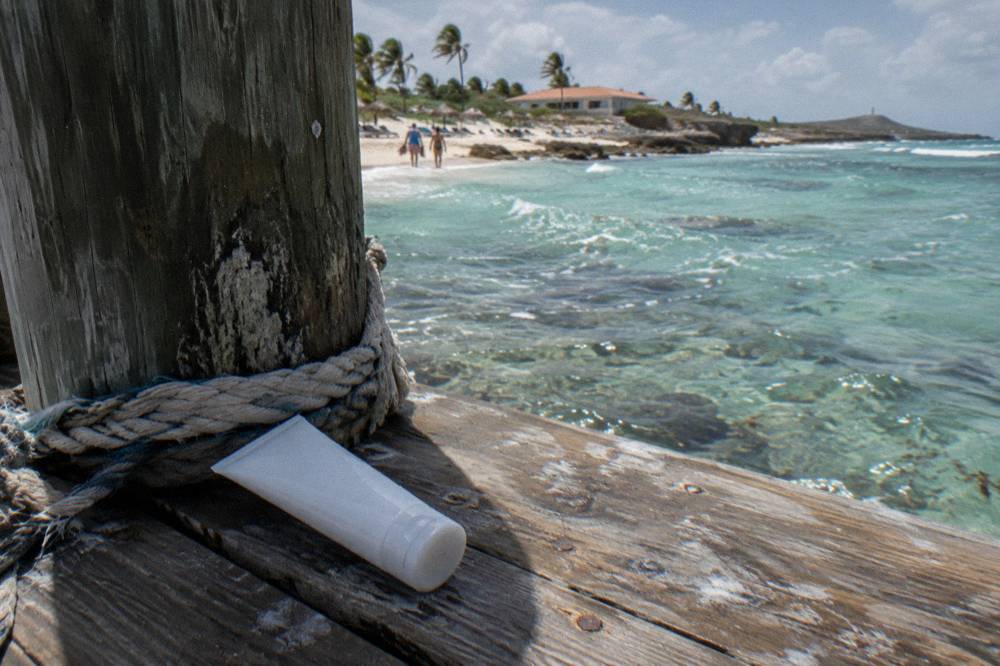
None of the tour listings covered here supply sunscreen for guests as a stated inclusion, though the details vary by operator, so the purchase is yours to make before departure day. That is worth planning around, because the trips leave in the morning: the Pelican Morning Sail with Premium Champagne Brunch departs Pelican Pier for a 4-hour run to Malmok, Boca Catalina and the Antilla wreck, from $85 per person, 4.7 from 2,238 reviews, which makes it the most reviewed listing on this site by count. Guests who arrive at the pier with a chemical sunscreen in their bag have few good options at 9 a.m.
If you are comparing trips while you think about your packing list, these three cover the spread of formats and prices, from a short open-bar sail to a wreck-and-turtle catamaran and a self-powered kayak morning:
The sun exposure differs by format more than most travelers expect. A 2 hours 30 minutes sail keeps you on deck in open sun between stops, while a kayak trip puts you at water level with reflection off the surface for the whole session. Either way, the sunscreen rule is identical.
What Does Reef-Safe Sunscreen Actually Mean?
Reef-safe in Aruba's guidance means mineral-based sunscreen, meaning the active ingredients are zinc oxide or titanium dioxide rather than chemical filters, and specifically not oxybenzone, which is banned. The phrase itself is unregulated marketing, so the ingredient list on the back of the bottle, not the claim on the front, is what decides compliance.
The distinction between mineral and chemical sunscreen is worth understanding because it also explains the application differences. Chemical sunscreens absorb ultraviolet radiation through ingredients that soak into the skin, which is why they spread thin and feel invisible. Mineral sunscreens form a physical layer on top of the skin. That layer is what does the filtering, and it is also why mineral formulas tend to look whitish and need more deliberate rubbing in.
Neither characteristic makes mineral sunscreen worse for a snorkeling day; they just change how you use it. Applied properly, mineral sunscreen holds up well in water, and a water-resistant formula reapplied on schedule protects you through a multi-stop trip. The white cast, which older mineral formulas were notorious for, has been reduced considerably in current products, though fair-skinned snorkelers may still notice it in photographs.
Aruba is not alone in this direction among reef destinations, but you only need to worry about Aruba's own wording here. The island's guidance is plain: sunscreens containing oxybenzone are banned, mineral-based reef-safe sunscreen is advised. There is no published fine, no enforcement procedure described in the visitor guidance, and no other chemical named. Treat it as a packing rule rather than a legal hazard: the point is compliance with what protects the reef, not fear of a penalty.
| Label claim on the front | Active ingredients on the back | Compliant in Aruba? |
|---|---|---|
| "Reef safe" | Zinc oxide only | Yes |
| "Reef safe" | Oxybenzone plus others | No, oxybenzone is banned |
| "Sport" or "water resistant" | Titanium dioxide plus zinc oxide | Yes |
| Often suits sensitive skin | Not banned; mineral advised | Mineral is advised, not required |
| Unbranded bulk bottle | Ingredients not listed in a language you read | Do not risk it, buy a labeled mineral product |
How Do You Apply Mineral Sunscreen So It Works In The Water?
Use mineral sunscreen and cover every exposed area, including ears, hairline, backs of hands and feet. Reapply after each snorkel stop, or whenever the label recommends. Mineral formulas sit on the skin surface, so thorough, even coverage matters more than with chemical lotions.
The schedule of a typical boat day tells you where the reapplication points are. A 4-hour trip with several stops, such as the Red Sail Half-Day with Caribbean lunch and open bar, from $107 per person, 4.8 from 860 reviews, sets a natural rhythm: apply at the pier, reapply after the first stop, and again at the second. The pause between swim stops works as a natural cue to towel off and reapply before you get back in the water. Everything else covered here is indexed on Aruba Snorkeling Tours.
The spots people miss are the spots that burn. Tops of ears, the part line in your hair, the back of the neck under a wet ponytail, the tops of feet inside fins, and the backs of calves and hands all take direct equatorial sun. Aruba sits close to 12 degrees north latitude, so midday ultraviolet intensity is high year-round; there is no month where a snorkeler can skip sunscreen. If you want the month-by-month context for water conditions and crowds, the best time to snorkel guide breaks it down.
Clothing is half the answer. A rash guard with a stated ultraviolet protection factor blocks sun with zero rinse-off, and many regular snorkelers on these trips wear one for exactly that reason. Zinc on the exposed face, neck and hands, plus a rash guard over the torso and arms, cuts your sunscreen needs by more than half and works better in the water than any lotion. A wide-brim hat for the boat deck between stops finishes the kit, along with the items on the what to bring on a snorkel tour checklist.
One tour listed here makes the sunscreen question explicit on its own line: the Tres Trapi Turtle Snorkel with hotel pickup includes reef-safe sunscreen among its stated inclusions, along with premium mask, fins, snorkel jacket and round-trip hotel or Airbnb pickup, from $99 per person, 4.2 from 25 reviews, capped at 6 guests. It is the only listing covered here that names sunscreen as included, which underlines the general rule: on every other trip, the sunscreen is your responsibility.
Which Months Ask The Most Of Your Sunscreen In Aruba?
Every month requires full sun protection in Aruba, but the demand peaks in the late-summer stretch, when sea temperatures run warmest and skies stay bright through long outings. Sea surface temperature off Oranjestad averages 29.2 C in October, the warmest month, against 26.1 C in February, the coolest.
The warmer months change the feel of a snorkel day in two ways. Warm water means longer, more comfortable sessions in the water, so total sun exposure per stop goes up. Warm air means less clothing on deck between stops. Together they push total ultraviolet exposure up even though the sun angle is already high in every month of the year.
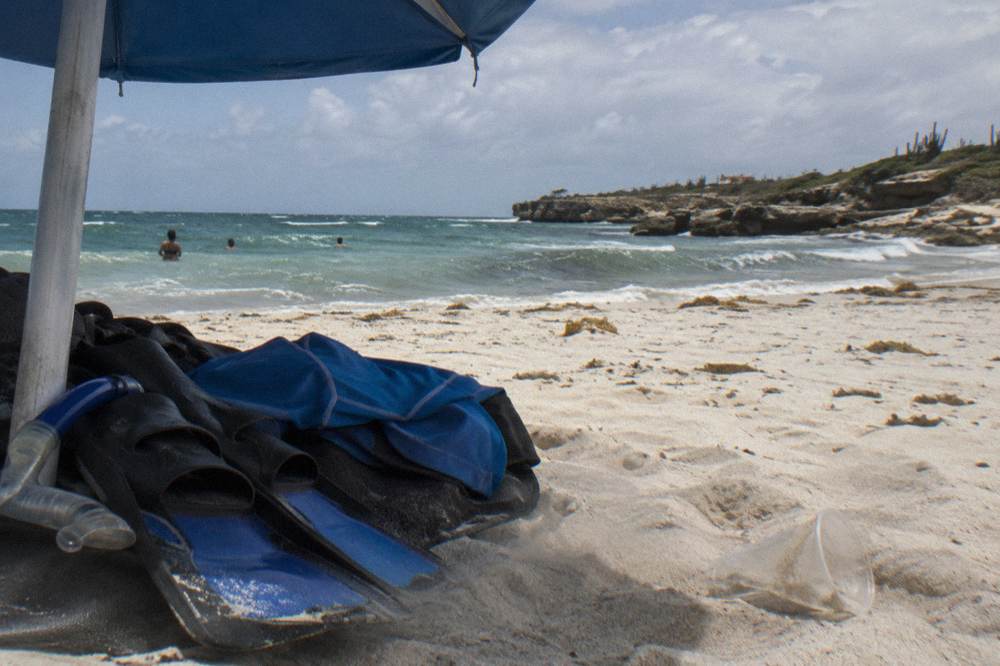
Wind is the quieter variable. Monthly mean wind speed at Beatrix Airport averages 8.7 m/s in June, the windiest month, against 5.8 m/s in October and November. Wind does not reduce ultraviolet, and it actively dries sunscreen off skin between swims, which shortens the effective window of any application. On a breezy June morning aboard the Banana Adventure catamaran, which runs 3 hours from Hadicurari Fishermen Pier to the Antilla wreck and Tres Trapi with lunch and alcoholic beverages included, from $65 per person, 4.8 from 231 reviews, up to 36 guests, the drying effect of the trade wind is real even under a clear sky.
| Month | Avg sea temp (C) | Avg sea temp (F) | Mean wind (m/s) | What it means for sunscreen |
|---|---|---|---|---|
| February | 26.1 | 79.0 | 7.6 | Coolest water, full sun still needed |
| April | 26.7 | 80.1 | 7.7 | Winds building toward their June peak |
| June | 27.9 | 82.2 | 8.7 | Windiest month, wind dries lotion fast |
| September | 28.9 | 84.0 | 6.8 | Long comfortable swims, more exposure |
| October | 29.2 | 84.6 | 5.8 | Warmest water, peak total exposure |
| December | 27.3 | 81.1 | 6.4 | Cooler but still full equatorial sun |

Where Does The Sunscreen Rule Apply, On Boats And From Shore?
The oxybenzone ban and the mineral sunscreen advice apply to anyone entering the sea around Aruba, whether from a tour boat, a kayak launch or the sand at a public beach. All of Aruba's beaches are public and free to enter, and the same marine-life rules cover every snorkel spot, from Boca Catalina to Baby Beach. For a wider look at the island's cautions, our guide to Aruba's beach rules, winds, and snorkel picks covers the gusty north and east coasts and the trips that suit a careful visitor.
There is no sunscreen checkpoint and no separate set of rules for tour guests versus independent snorkelers. The practical reading is that the rule follows the water. Shore snorkelers at Boca Catalina, Arashi Beach and Mangel Halto, where reefs sit close to the beach and snorkelers bring their own gear, are in the same shallow reef water as the boat groups, and the shore snorkeling versus boat tour comparison covers how those two days differ in everything except this rule.
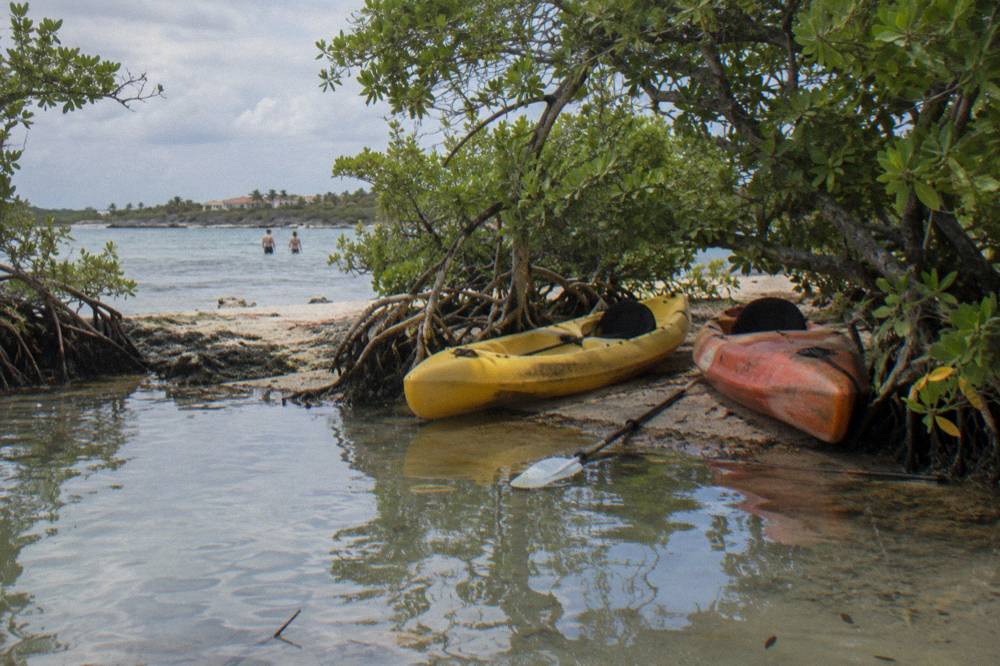
The kayak and small-boat formats deserve a specific mention because they concentrate time at the waterline. The guided kayak and snorkel tour at Mangel Halto, from $99.99 per person, 2 hours 30 minutes, up to 15 guests, with bottled water, local fruit and snorkel gear including kids' fin sizes, keeps paddlers at surface level where reflected sun hits the face continuously. Sunscreen performance there is not a comfort detail, it is the difference between a good morning and a painful evening.
For non-swimmers or anyone staying dry, the rule still applies to anyone entering the water, but a glass-bottom boat offers a way to see the reef without getting in at all. The Malmok Charters glass-bottom boat runs 1 hour 30 minutes past the Antilla wreck, Boca Catalina and Tres Trapi, from $60 per person, 5.0 from 47 reviews, up to 10 guests, with bottled water and sodas included. Sunscreen still matters on glass-bottom trips, since the boat carries snorkel gear and guests may swim, and the non-swimmer glass-bottom options page covers the format in full.
The wider rule set from Aruba's responsible-guest guidance applies everywhere too: do not feed marine life, do not touch or pick up starfish or other animals, leave shells and coral in place, and avoid stepping on seagrass, coral or mangroves. None of these carry a stated fine in the visitor guidance, and none need one to be worth following.
| Aruba marine-life rule | What it means on a snorkel trip |
|---|---|
| Oxybenzone sunscreens are banned | Pack mineral zinc or titanium dioxide sunscreen only |
| Do not feed fish or turtles | No bread, no snacks in the water, ever |
| Do not touch or pick up marine life | Look, do not handle starfish, coral or octopus |
| Leave shells, sand and coral in nature | Nothing comes home in your pocket |
| Avoid stepping on seagrass and mangroves | Enter the water from sand, watch your footing at Mangel Halto |
Do You Need To Worry About Sunscreen On A Short Trip?
Yes, sun damage on a 2 or 3 hour Aruba snorkel trip is a real risk, because equatorial ultraviolet is strong in every month and water reflection adds exposure on top of direct sun. Short trips also tend to skip reapplication, which is exactly where mineral sunscreen applied correctly at the pier does its work.
The shortest listings here still spend most of their duration in open sun. The Pelican two-stop snorkel sail runs 2.5 hours with unlimited open bar and hors d'oeuvres, from $70 per person, 4.7 from 102 reviews, and the Iconic Aruba Sail and Snorkel Experience from the same pier runs 2 hours 30 minutes. Half that time is deck time under a high sun, and the in-water half adds surface reflection to the equation. A single thorough mineral application before boarding covers a trip of this length if you are wearing a rash guard; a bare-shouldered snorkeler should reapply at the turnaround.
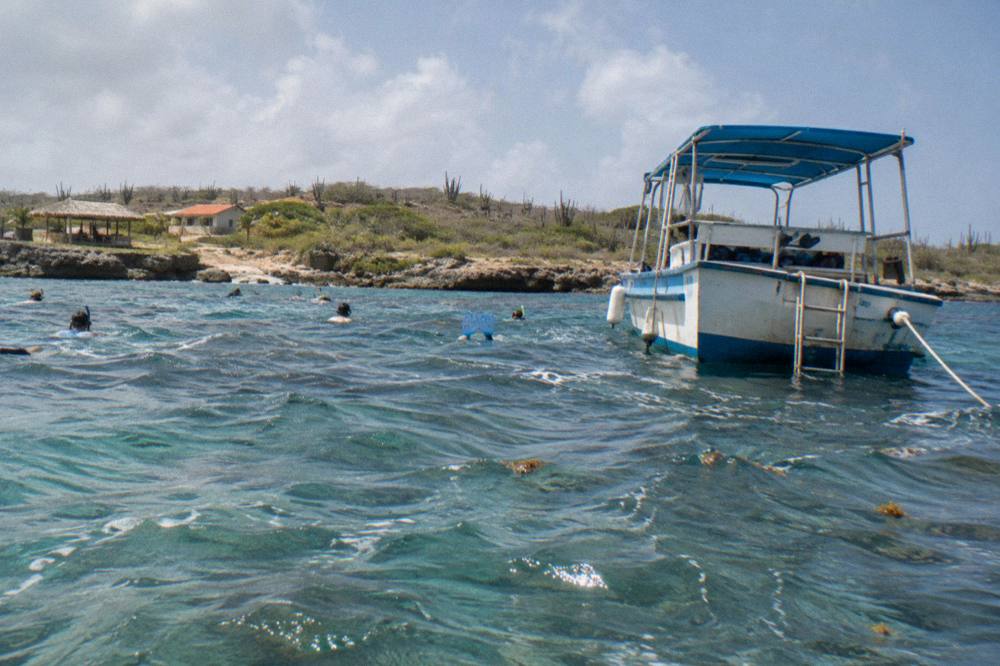
Longer trips raise the stakes rather than change the principle. The Palm Pleasure morning sail, 4 hours from De Palm Pier to the Antilla, Boca Catalina and Arashi with lunch buffet and open bar, from $124 per person, 4.7 from 708 reviews, up to 80 guests, spans the middle of the day entirely. So does the Spronk wreck-and-turtle trip with its sunset barbecue, 4 hours 30 minutes, from $119 per person, 4.6 from 378 reviews. Check the live listing for transport details. On both, plan two reapplications and treat the buffet break as the reminder.
A last note on timing and cancellation, because weather and sunscreen decisions travel together. Check the cancellation terms on the live listing before booking. Trips can be rescheduled when conditions turn, since weather in the hurricane season, 1 June to 30 November, can still change even though Aruba has had no direct hurricane hit since 1851 per the tourism authority. Check the marine forecast from the Aruba meteorological service the morning of your trip for wind and wave conditions by coast, and check your live listing's cancellation terms when you book.
Whether you end up on a short open-bar sail, a wreck-and-turtle catamaran or a kayak morning at Mangel Halto, these three formats show the range of sun exposure and price you are choosing between:
Common Questions About Reef-Safe Sunscreen In Aruba
Which Sunscreen Ingredients Are Banned In Aruba?
Sunscreens containing oxybenzone are banned. Aruba's responsible-guest guidance advises mineral-based reef-safe sunscreen, meaning products whose active ingredients are zinc oxide or titanium dioxide. No other chemical is named in the visitor guidance.
Is Reef-Safe Sunscreen Required For Snorkel Tours In Aruba?
The oxybenzone ban applies to anyone entering the sea, so it covers tour guests and shore snorkelers alike. Only one listing covered here states reef-safe sunscreen as an included item; on every other trip the sunscreen is your own to bring.
Can I Bring Regular Sunscreen To Aruba If I Only Use It On The Boat?
The rule exists to protect the reef, and the reef is where the boats go. Even deck-only use ends in the water when you rinse off or swim at a stop. Pack a labeled mineral sunscreen and use it for the whole trip.
How Often Should I Reapply Mineral Sunscreen While Snorkeling?
Roughly every two hours, and after each in-water stop. Mineral sunscreen sits on the skin surface, so thorough even coverage at the pier plus reapplication at the first stop covers a typical 3 to 4 hour trip.
Do I Still Need Sunscreen In Aruba In Winter?
Yes. Aruba sits close to the equator and ultraviolet intensity stays high year-round. February, the coolest month, still averages 26.1 C sea temperature and full-strength midday sun.
Where Can I Check Conditions Before Choosing A Sunscreen Day?
The Aruba meteorological service publishes a marine forecast with wind in knots, wave height by coast and shower chances, which is worth a look the morning of any trip. Protected south and west coasts run calmer than north-facing ones.