What To Bring On A Snorkel Tour In Aruba
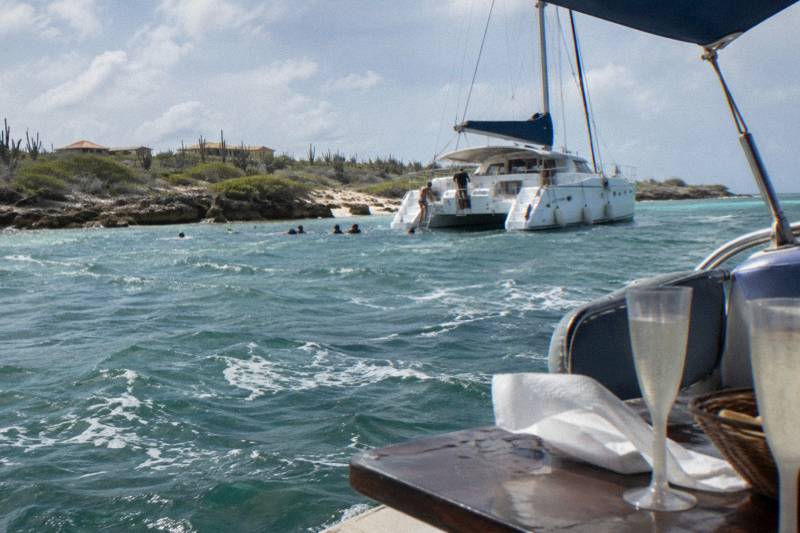
Most snorkel tours in Aruba hand you a mask, fins and a drink the moment you step aboard, so the packing question is less about gear and more about the handful of things the boat will not hand you.
Short answer
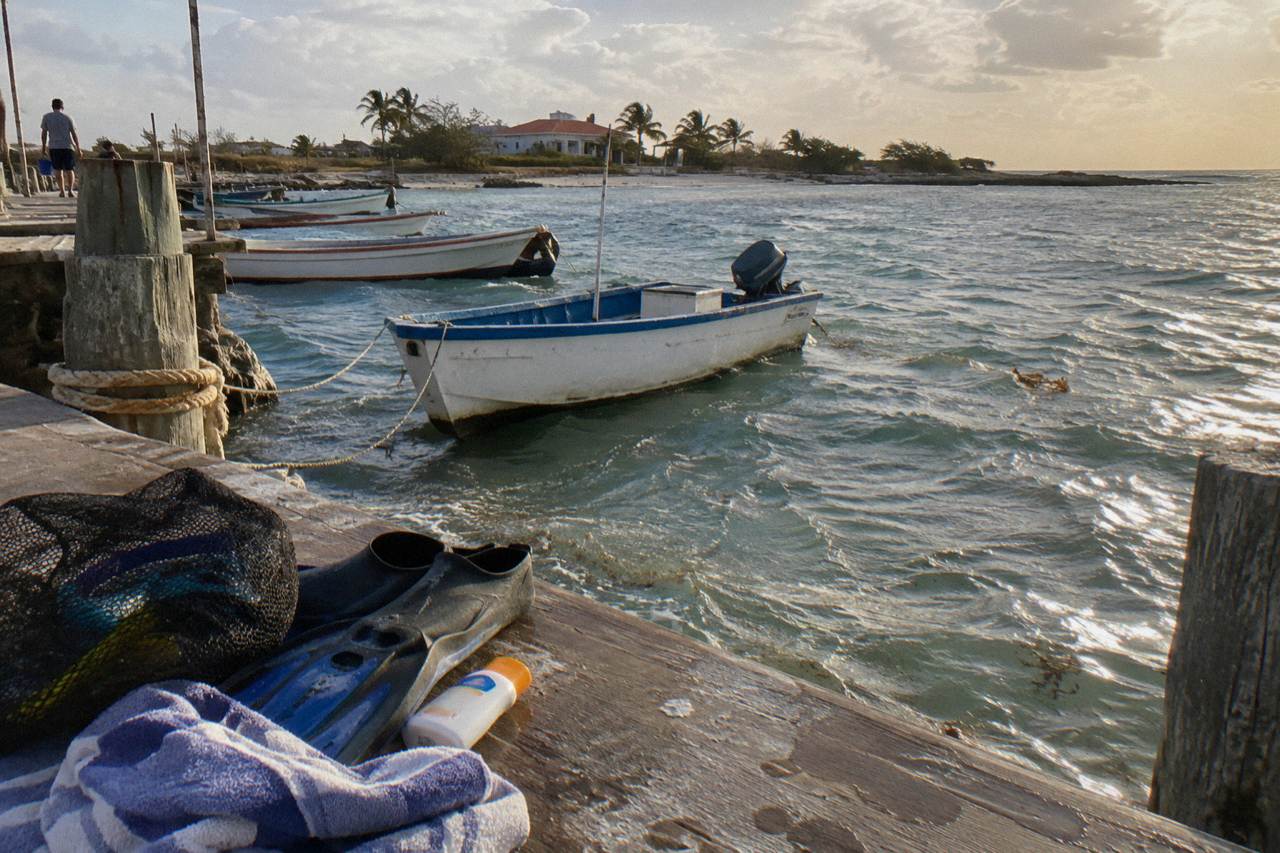
"Bring reef-safe mineral sunscreen, a towel, a dry bag, sunglasses, a hat, a light cover-up, cash or card for tips, and motion-sickness remedy taken before boarding. Masks, fins and snorkels are typically included on the tours on this site, while drinks and meals vary by trip, from $57 to $179 per person for shared outings.
Packing for a snorkel tour in Aruba is a shorter list than most people expect, because the boats carry the heavy equipment. Every shared cruise on this site's listings includes snorkel gear in the price, and most add drinks and often a meal. What the boats do not carry is your sun protection, your towel, your remedies and your documents, and those are the items that decide whether the day is comfortable or a struggle. This guide walks through the full list, section by section, with the reef rules that shape what is allowed in the water.
What Should You Pack For A Snorkel Tour In Aruba?
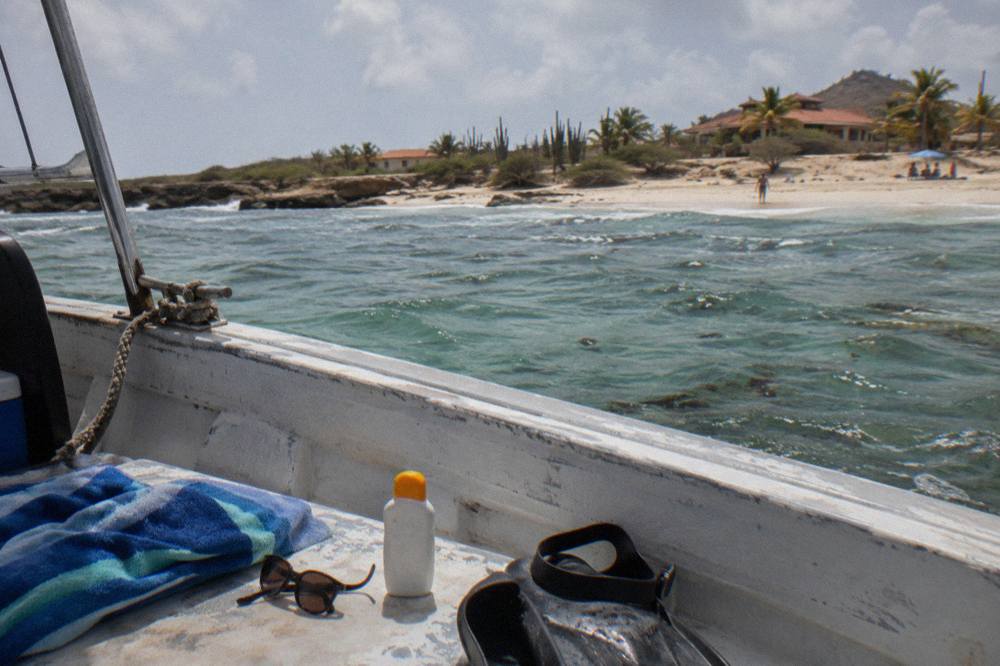
The core packing list is small: mineral reef-safe sunscreen, a towel, sunglasses, a brimmed hat, a dry bag or zippered pouch, a light cover-up, a reusable water bottle, any personal medication including motion-sickness tablets taken before departure, and a payment method for gratuities or extras. Everything else, from masks and fins to drinks and lunch, is already on the covered tours.
That list holds whether you are sailing out of Palm Beach on a large catamaran or boarding a small glass bottom boat at Malmok. The wind is the one variable most first-time visitors underestimate: Aruba's monthly mean wind speed at the airport runs between 5.8 and 8.7 meters per second across the year, so hats need a strap, towels need a clip, and anything loose on an open deck will travel. A dry bag solves most of this for a few dollars, and it doubles as protection for a phone you want at the pier but not in the spray.

A useful way to think about the bag is in three zones: worn, stowed, and left behind. Worn means swimsuit already on, cover-up, hat, sunglasses, reef-safe sunscreen applied at the pier. Stowed means towel, dry bag, medication, water bottle, a change of clothes for after. Left behind means passports and anything you would grieve losing; the piers at Pelican Pier, De Palm Pier and Hadicurari all have enough foot traffic that a locked hotel safe is the better home for documents. Visitors arriving by air pay the $20 Sustainability Fee through the ED Card before travel, so there is no day-of paperwork at the dock for that.
| Item | Why it earns its place | Notes for the boat |
|---|---|---|
| Mineral reef-safe sunscreen | Oxybenzone sunscreens are banned in Aruba | Apply at the pier, reapply after snorkeling |
| Towel | Towels are not listed as included; check the live listing | Quick-dry packs smallest |
| Dry bag or zip pouch | Spray, splashes and wet gear | Phone, card, medication |
| Hat with a strap | Consistent trade wind on open decks | Baseball caps invert constantly |
| Sunglasses with strap | Glare on the water is relentless | Polarized cut surface glare |
| Motion-sickness remedy | Taken 30 to 60 minutes before departure | See the seasickness section below |
| Light cover-up | Sun on a 3 to 4.5 hour sail | Also useful for the ride back |
| Cash or card | Gratuities, souvenirs, incidentals | A waterproof camera is worth packing |
If you're still weighing whether to pack a mask and fins at all, the guide to renting snorkel gear in Aruba compares bringing your own against what tours already provide.
What Do The Tours Themselves Already Include?
Every snorkel listing covered here includes snorkel gear, so a mask and fins never need to travel with you, and free cancellation is listed on every one of them. Drinks are included on most sail cruises, meals on many, and hotel pickup on only a handful, which is the line to read carefully when deciding what else your day requires.
The differences between listings are real and worth a close read before you pack around them. The Red Sail Half-Day Snorkel Sail Tour with Caribbean Lunch, from $107 per person and rated 4.8 from 860 reviews, includes a Caribbean lunch buffet, an open bar, a morning snack and gear for up to 75 guests aboard a luxury catamaran. The Pelican Iconic Sail and Snorkel Experience, from $67 per person and rated 4.8 from 531 reviews, runs 2 hours 30 minutes with an open bar and snacks but no listed meal, so lunch plans belong on your side of the equation. The Octopus Premium Catamaran Afternoon Sail, from $74.99 per person and rated 4.7 from 657 reviews, includes lunch, an open cocktail bar, restroom access and even a souvenir, for up to 34 guests.
Pickup is the inclusion that varies most, and the listing line governs. The Banana Adventure Catamaran, from $65 per person, lists hotel pickup; the El Tours open-air bus to Mangel Halto and Baby Beach, from $57 per person, includes hotel or port pickup and drop-off; the Pelican Turtle Spotting Snorkel Tour, from $99 per person, lists round-trip hotel or Airbnb pickup by bus. Most catamaran sails from the Palm Beach piers list no hotel pickup at all, which simply means budgeting a taxi and factoring that into what you carry, since you will not have a bus to stash a bag on.
| Tour (decision name) | From | Gear | Drinks | Meal | Pickup listed |
|---|---|---|---|---|---|
| Red Sail Half-Day, 3 Snorkel Stops, Lunch | $107 per person | Included | Open bar | Lunch buffet | No |
| Pelican Sail and Snorkel, Open Bar | $67 per person | Included | Open bar | Snacks only | No |
| Octopus Afternoon Catamaran, Lunch | $74.99 per person | Included | Open cocktail bar | Lunch | No |
| Spronk Wreck and Turtle Snorkel, Sunset BBQ | $119 per person | Included | Open bar | Dinner | Yes |
| Glass Bottom Boat, 3 Snorkel Sites, 10 Max | $60 per person | Included | Not listed | Not listed | No |
| Mangel Halto and Baby Beach by Open-Air Bus | $57 per person | Included | Not listed | Not listed | Yes |
What Should You Wear On The Boat?
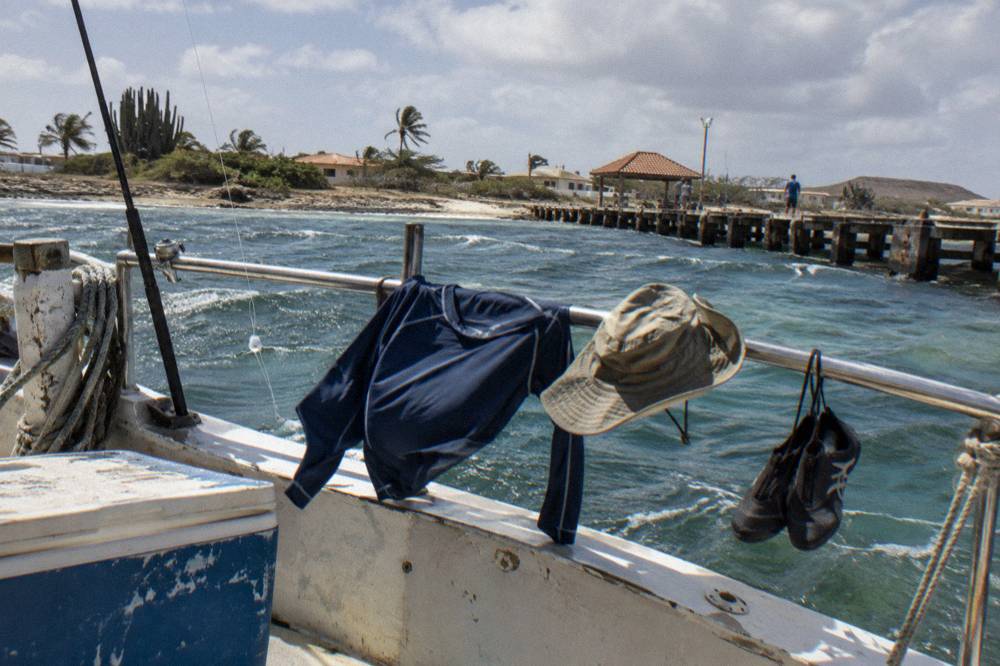
Wear your swimsuit under your clothes, add a rash guard or a quick-dry shirt for sun coverage, and choose sandals or water shoes you can kick off on deck. Many catamaran crews ask guests to go barefoot on deck, so shoes should slip on and off without hands, and a strap or drawstring on hats and glasses matters in Aruba's steady wind.
The swimsuit-under-clothes habit saves the awkward towel dance at crowded piers and shortens boarding, which matters on tight turnarounds. Rash guards deserve a special mention: the sea off Oranjestad averages 26.1 C in February at its coldest and 29.2 C in October at its warmest, warm enough that wetsuits are never needed for snorkeling, but a dry shirt after an hour in the water prevents the sunburn people forget about while they are wet. On longer outings like the 4.5 hour Spronk sunset BBQ trips, a dry layer for the sail home earns its place once the trade wind picks up and the sun drops.
Color and fit are small decisions with real effects. Dark swimwear absorbs the strong tropical sun; loose bright cover-ups reflect it and make you easier for your crew or family to spot in a snorkel group of up to 100 guests on the largest boats. Jewelry is best left at the hotel: it tangles, it heats in the sun, and rings have a habit of sliding off pruned fingers in the water. The same logic applies to expensive watches; a cheap waterproof backup or the phone in the dry bag does the job.
Footwear is the item people overthink. You need shoes for the pier and the taxi, and you need nothing on the deck, where be ready to go barefoot on deck to keep teak and trampoline mesh clean. The Pelican two-stop sail lists sunbathing trampolines among its inclusions, and mesh gets unpleasantly hot underfoot without shade or a quick rinse, another quiet argument for water shoes over flip-flops. Flip-flops, incidentally, are the one item that most reliably goes overboard on any sailing trip; anything with a heel strap stays with you.
If the inclusions above already match what you want, a gear-and-lunch-included trip like the Red Sail half-day is the one worth confirming first.
Do You Need Your Own Snorkel Gear?
No, because the tours on this site include snorkel equipment, and several add instruction on request. Own gear earns its place only for prescription masks, beards that break standard mask seals, or people particular about mouthpieces; otherwise the boat's gear, fitted by the crew, is the lighter and simpler choice.
The inclusion lines are consistent across every category: the Red Sail trips include equipment and instruction, the Octopus trips include snorkel gear; the afternoon catamaran lists instruction, and the small-group options like the Pelican Turtle Spotting tour at Tres Trapi list premium mask, snorkel, fins and a snorkel jacket. For anyone weighing the purchase decision more broadly, including costs and rental realities, the gear rental and packing guide covers the island's rental scene in detail.
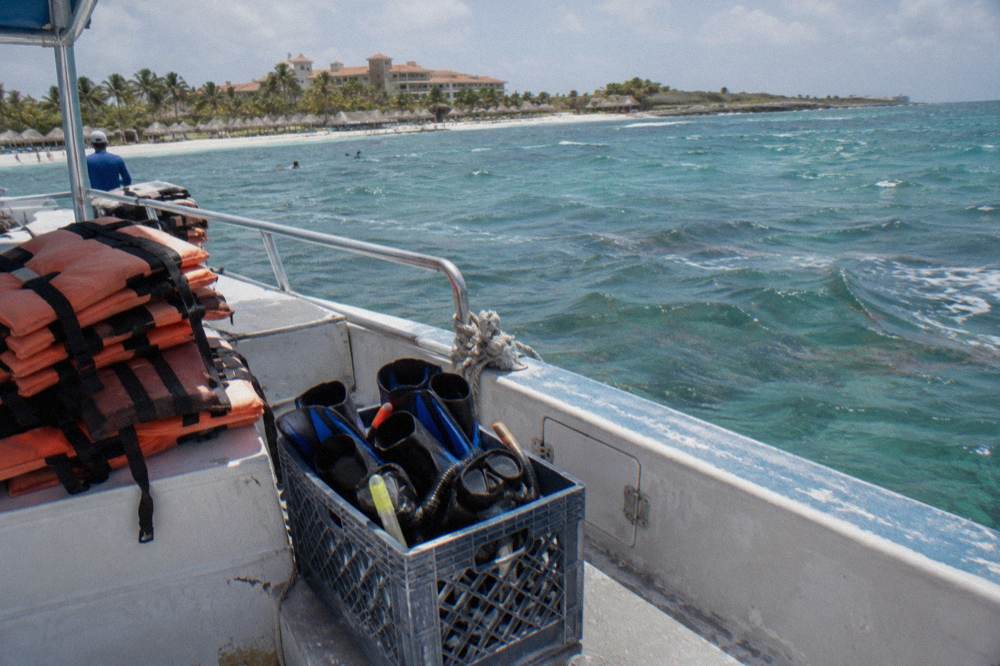
Two exceptions justify own gear. The first is optical: if you wear glasses, a prescription mask turns a blurry reef into a sharp one, and boats rarely stock them, so check with the operator before the day rather than at the pier. The second is comfort: a silicone skirt that fits your face is the difference between a relaxed hour at the Antilla wreck and a leaky half hour. Practice fitting your own mask in a pool before you trust it to the ocean, because a new mask that fogs or seeps is worse than the well-maintained rental the crew hands you.
Defogging is worth thirty seconds of preparation wherever the gear comes from. A drop of baby shampoo spread inside the lens and rinsed once works as well as commercial defog, fits in the corner of a toiletry kit, and costs pennies. Crews often have a defog bottle on board, but on the bigger catamarans the spare gear can run low late in the trip, and the second stop on the Pelican sail is Boca Catalina Bay after the Antilla wreck.
For travelers who want the reef without the swim at all, the Malmok glass bottom boat, from $60 per person and rated 5.0 from 47 reviews, covers the Antilla wreck, Boca Catalina and Tres Trapi in 90 minutes with gear included for those who want a quick dip. It is also the listing non-swimmers and hesitant snorkelers most often fall back on, and the non-swimmer options guide develops that choice further.
What Sunscreen And Sun Protection Are Allowed In Aruba?
Sunscreens containing oxybenzone are banned in Aruba, so bring a mineral-based reef-safe sunscreen, and nothing else chemical on the protected reefs. Pair it with a rash guard, a hat and sunglasses, because a full morning on a boat delivers more sun than any lotion absorbs comfortably, and reapplication after each snorkel stop matters more than the brand.
The rules exist because Aruba's reefs are the product everyone comes to see. Beyond the sunscreen ban, the island asks visitors not to feed fish, turtles or seabirds, not to touch or pick up marine life, to leave shells, sand and coral in nature, and to keep clear of seagrass, coral and mangroves. Those rules come from the island's own guidance for protecting beaches and marine life, and they apply on every trip in this guide's listings, not just the eco-flavored ones.
Practically, mineral sunscreen means zinc oxide or titanium dioxide as the active ingredient, and it means a white cast that fades as it rubs in. Pack enough for the whole party: a family of four on a 4 hour sail will go through more than one tube if application happens properly at the pier, again at the first stop, and again after lunch. Spray sunscreens are convenient but much of a spray misses its target and lands on the deck or the water, so lotions and sticks do the job with less waste. The deeper background on formulations and the ban itself is in the reef-safe sunscreen guide.
What Should You Bring For Sea Sickness?
Ask your pharmacist or doctor when to take motion-sickness medication, not once you feel queasy, and bring ask your pharmacist or doctor about onboard backup options. Aruba's protected west and south coasts run calmer than north-facing sections, but open-water legs to the Antilla wreck can still roll, and prevention works far better than treatment after symptoms start.
The honest starting point is that nobody can predict a day's sea state from a packing article, but anyone can check one. The Aruba meteorological service publishes a marine forecast showing wind direction and speed in knots, wave height by coast and shower chances, and reading it the morning of your trip tells you whether you are in for glass or chop. Protected south and west stretches, where most snorkel stops sit, generally run calmer than the north-facing coasts, which is exactly why the boats cluster at Boca Catalina, Malmok and the Antilla lying off that same sheltered stretch. The same breeze that decides your sea state matters elsewhere on the island too, and our Aruba cautions guide explains the sunscreen rules and coastal habits worth knowing before you board.
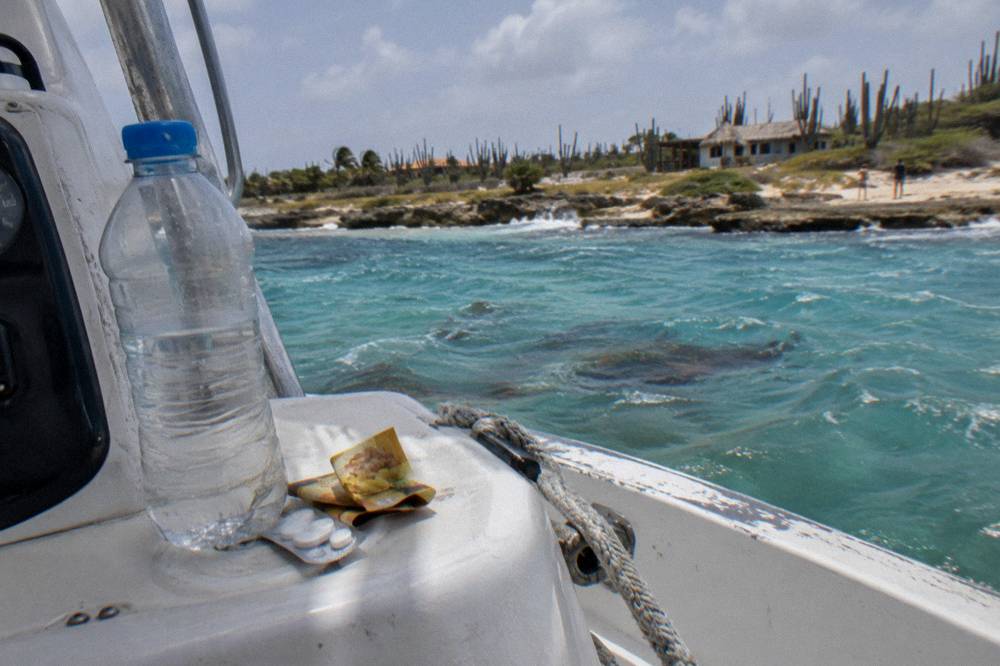
The rest of the toolkit is behavioral. Stay on deck where you can see the horizon, sit mid-ship near the center of motion rather than the bow, keep eyes on the distance rather than a phone screen, and eat a light bland breakfast rather than nothing or a heavy fry-up. Avoid alcohol until you know how the day sits with you, which interacts awkwardly with open-bar inclusions, so the first hour is the honest test window. A full treatment of symptoms, remedies and boat seating appears in the seasickness on snorkel boats guide.
Trip length is the last seasickness variable, because a 90 minute outing and a 4.5 hour sunset BBQ are different exposure profiles. The lengths and what each includes are compared in the tour lengths and inclusions guide, and anyone sensitive to motion should weigh that table before booking rather than after boarding.
What About Money, Documents, And The Sustainability Fee?
Bring a card plus a modest amount of cash for gratuities and small extras, leave passports in the hotel safe, and carry nothing at the pier that cannot survive spray. The $20 Sustainability Fee for air arrivals is paid through the ED Card before travel, so it requires no cash and no paperwork on snorkel day itself.
Gratuities are the main cash question, and crew members on shared sail trips work for them; the amounts are a judgment call this site deliberately does not prescribe, but the mechanism deserves planning, since not every small operator takes cards on a rocking deck. Beyond tips, small extras appear across the listings: the Octopus trips hand out souvenirs, photo and video products exist on the Underdog private turtle tour as an edited video inclusion, and beach vendors cluster near where tours depart at Palm Beach.
Documents deserve one sentence of discipline. A phone photo of your passport data page, travel insurance details and your booking confirmation covers the realistic day-of needs, and the physical versions stay locked at the hotel. Cruise passengers have a stricter constraint entirely: check your ship's all-aboard time against the listing's duration before booking, because no tour can promise it fits a particular ship's schedule, and the half-day sails that include the Antilla wreck commonly list durations around 4 hours. The snorkel tours for cruise passengers guide covers that matching exercise in depth.
| Category | Bring | Leave behind |
|---|---|---|
| Money | Card plus cash for gratuities and extras | Large bills, multiple cards, wallets |
| Documents | Phone photos of passport, insurance, booking | Physical passport and papers |
| Electronics | Phone in a dry bag, GoPro if you own one | Laptops, tablets, expensive cameras |
| Valuables | Nothing beyond the day's needs | Jewelry, watches, anything sentimental |
| Health | Medication, motion remedy, reef-safe sunscreen | Full toiletry kits |
What Should Families And Non-Swimmers Pack?
Families should pack extra reef-safe sunscreen, snacks that survive heat, a spare dry outfit per child, and float-confidence items like swim vests if the children use them, though the listings that cap groups small are the ones where kids get the most attention. Non-swimmers should focus on a well-fitting mask for surface viewing and choose the boat-based options, including glass bottom trips, that keep them in the game without deep water.
The small-group listings are where family packing pays off most. The Aruba Bob sea scooter snorkel at Mangel Halto caps at 6 guests, from $100 per person, with pictures included, which removes the pressure of photographing the trip yourself. The Pelican Turtle Spotting tour at Tres Trapi also caps at 6, from $99 per person, and lists beginner snorkel instruction, a snorkel jacket, reef-safe sunscreen and round-trip hotel pickup, a set of inclusions that reads like a family checklist already solved.
The beach-hop category suits mixed-ability families best, because the day splits between sand and water. The El Tours open-air bus day to Mangel Halto and Baby Beach, from $57 per person and rated 4.5 from 308 reviews, includes gear, water, hotel pickup and transport for up to 45 guests, and Baby Beach is the island's shallow, lagoon-style bay, described by the island's own beaches guide as ideal for kids and beginner snorkelers. The Nautilus version of the same two beaches caps at 8 guests from $115 per person, with pickup, water and a snack, a quieter boat-free alternative.
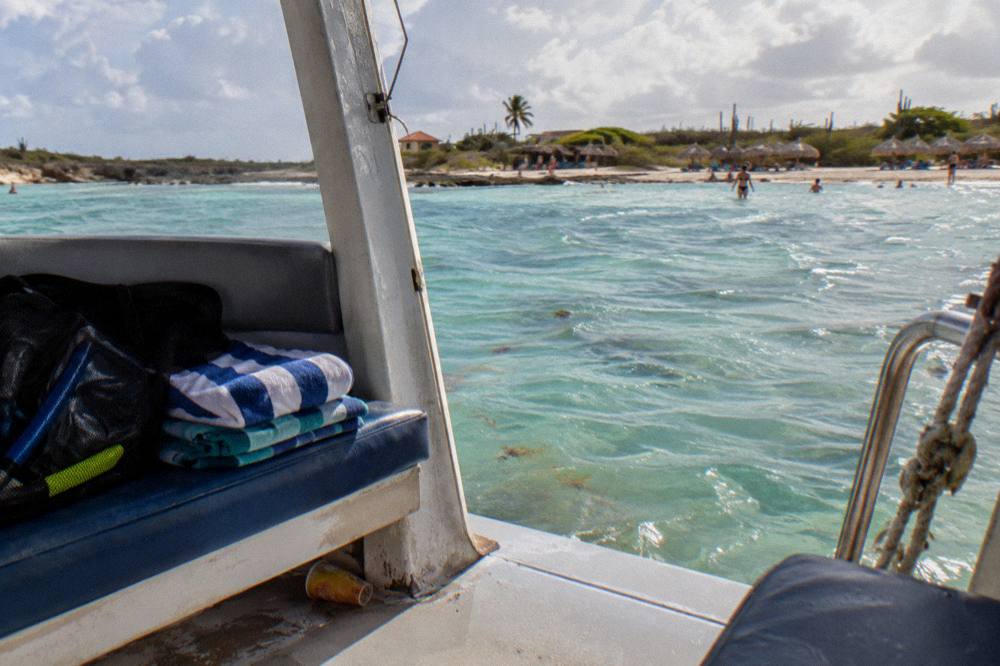
Non-swimmers have real options, and packing for them means packing for viewing rather than swimming. The Malmok glass bottom boat runs over the Antilla, Boca Catalina and Tres Trapi with no swimming needed; De Palm Island publishes what its day pass includes on its own site, so check there before packing gear, with Sea Trek and Snuba available as paid add-ons. None of those require you to bring anything but sun protection and a towel. For the broader picture on ages, life jackets and beach choices, see the snorkeling with kids guide.
The whole packing question shrinks once you match the bag to the listing you actually booked. A gear-included, lunch-included catamaran sail such as the Red Sail half-day needs little more than sun protection, a towel and a dry bag, while a beach-hop day or a small-group turtle swim shifts weight toward water, snacks and spare clothes. Aruba Snorkeling Tours keeps the full listing detail on every tour page so you can read each line's inclusions, pickup flags and durations before a single item goes in the bag, and a quick check availability glance at the live listing settles the last uncertainty about what the crew supplies.
Common Questions About What To Bring On A Snorkel Tour In Aruba
Do I Need To Bring My Own Snorkel Gear On An Aruba Tour?
No. The Iconic Aruba Sail and Snorkel Experience, for example, supplies snorkel sets, fins and life jackets, and instruction is available on request. Bring your own mask only for prescription lenses or fit preferences, and check with the operator ahead of the day if that is your situation.
What Sunscreen Can I Bring To Aruba?
Sunscreens containing oxybenzone are banned. Bring a mineral-based reef-safe sunscreen with zinc oxide or titanium dioxide, apply it at the pier, and well before you get in the water. A rash guard cuts the amount you need.
Do The Boats Provide Towels?
Not on the listings covered here, so pack your own. Quick-dry towels pack smaller and dry faster than cotton, which matters on the ride back when everything else in the bag is damp.
Should I Bring Cash On A Snorkel Tour?
Bring a card plus a modest amount of cash for gratuities and small extras. Not every small operator takes cards on board, and photo or souvenir purchases at the pier are often cash-friendly.
What Should I Do About Seasickness?
Take a remedy 30 to 60 minutes before departure, sit mid-ship where you can see the horizon, eat lightly and hold off on alcohol for the first hour. Check the Aruba meteorological service marine forecast the morning of your trip for wind and wave conditions.
Do I Need To Pay Any Fee On Snorkel Day?
No day-of fee applies to snorkeling. The $20 Sustainability Fee for visitors arriving by air is paid through the ED Card before travel, and the public shore snorkel spots, including Mangel Halto, Boca Catalina, Baby Beach and Arashi, charge no entry fee.