Seasickness On Snorkel Boats: Choosing A Calmer Trip
A nervous stomach should shape which snorkel trip you book, not whether you book one. Boat size, departure point, route and month all change how much a trip rocks, and Aruba's leeward coast gives you unusually good odds.
Short answer
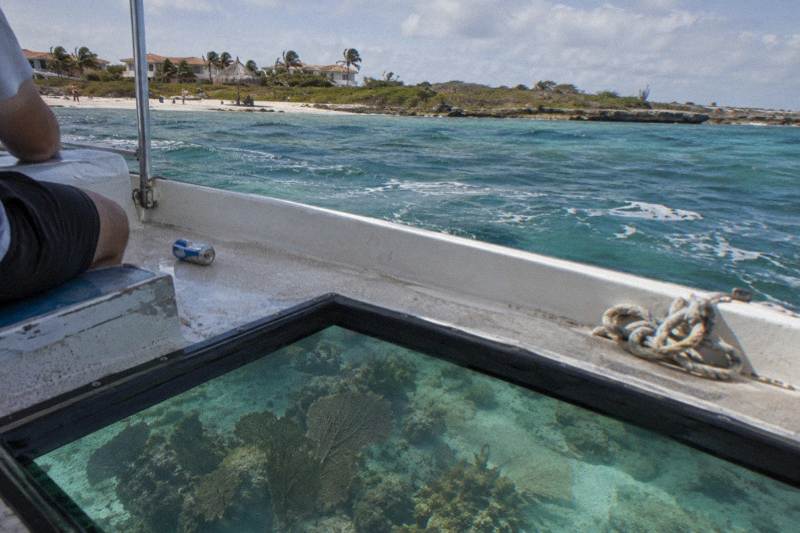
Aruba's west and south coasts sit in the lee of the trade winds, so most snorkel trips run on protected water. Smaller vessels and shorter trips, like a 1 hour 30 minute glass bottom boat trip from Malmok from $60 per person, tend to feel calmer than long open-water sails. Check the marine forecast the morning you sail.
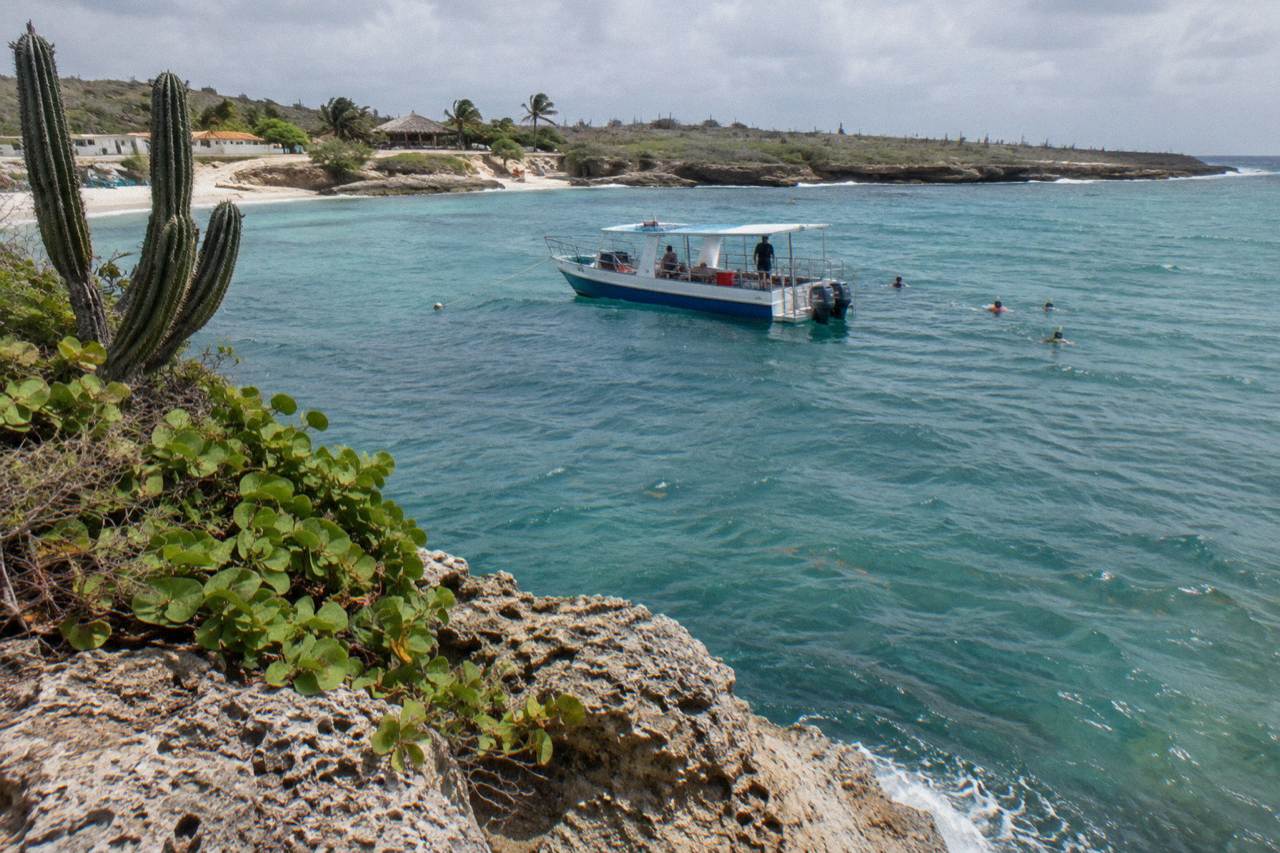
Trade winds blow across Aruba almost constantly, which is why the island feels a few degrees cooler than its latitude suggests, and it is also why a minority of snorkelers spend the first hour of a sail clutching a rail. The good news is geography. Aruba's west and south coasts are described by the tourism authority's own beaches page as calm and protected, good for swimming and snorkeling, while the east and north coasts face open sea with stronger wind. Nearly every snorkel tour on the island departs from those sheltered leeward shores, from Palm Beach piers up north to Savaneta down south, so the default trip is already the calm version. This guide walks through what actually moves a boat, which listings here fit a sensitive stomach, and how to read Aruba's seasons before you commit.
What Actually Causes Seasickness On A Snorkel Boat?
Seasickness comes from conflicting signals: your inner ear feels the boat's rocking while your eyes read a stable cabin, and the mismatch produces nausea. It is not a sign of anything wrong, and it is extremely common among people who boat and snorkel. On an Aruba snorkel trip, three things set how much rocking you feel: the vessel's size and hull type, how exposed the route is to open water, and how steady the wind is that day. A large catamaran with a wide beam moves differently than a small schooner or a rigid glass bottom boat. A trip that hugs the coast between Malmok and Boca Catalina sits in flatter water than one that motors out to a wreck exposed to the channel current. None of that is guesswork, it is on the listings themselves: durations run from 1 hour 30 minutes up to 5 hours, vessels range from kayaks to catamarans, and stops span sheltered bays to the SS Antilla site offshore. For a worried reader the practical takeaway is that you can compare trips on paper before you ever step aboard. Match the vessel, the duration and the stop list against how your stomach has behaved on ferries, small planes or past boat trips, and the choice usually makes itself. If a past experience put you off boats entirely, the shore-based and glass bottom options later in this guide skip the problem altogether.
The trade wind itself is predictable in a useful way. Monthly mean wind speed at Beatrix Airport averages 7.3 meters per second across the year, but it is not even: the breeze runs strongest from May through August, peaking at 8.7 m/s in June, and softest in October and November at 5.8 m/s. Wind does not automatically mean rough water on the leeward side, since the high-rise coast faces west into the shelter of the island itself. What wind does is kick up chop on exposed stretches and make anchor stops bouncier. The Aruba meteorological service marine forecast publishes wind direction and speed in knots, wave height by coast and shower chances, and it is the page worth opening the morning of your trip. September is the quietest wind month of the summer at 6.8 m/s, yet Oranjestad's rainfall climbs from that month onward, peaking in November at 87.1 mm. A useful reminder: wind and rain do not move together in lockstep.
| Month | Mean wind (m/s) | Rainfall (mm) | Sea temp (F) |
|---|---|---|---|
| January | 7.0 | 44.0 | 80.4 |
| February | 7.6 | 19.5 | 79.0 |
| March | 7.7 | 10.0 | 79.2 |
| April | 7.7 | 8.6 | 80.1 |
| May | 8.0 | 14.1 | 81.7 |
| June | 8.7 | 17.4 | 82.2 |
| July | 8.1 | 19.6 | 81.3 |
| August | 7.8 | 31.4 | 82.6 |
| September | 6.8 | 42.9 | 84.0 |
| October | 5.8 | 76.5 | 84.6 |
| November | 5.8 | 87.1 | 83.5 |
| December | 6.4 | 80.1 | 81.1 |
Which Aruba Snorkel Tours Feel Calmest For A Sensitive Stomach?
Shorter trips on smaller vessels, departing from sheltered piers, give you the calmest ride: the 1 hour 30 minute glass bottom boat trip from Malmok, from $60 per person with up to 10 guests, is the steadiest-shaped option on this site's listings, while large catamaran sails trade a smoother motion for longer exposure. There is no single calm winner because two different things matter. A big, wide catamaran rolls less per wave than a narrow hull, but it stays out two to four hours and visits offshore stops. A small boat rocks more per wave but is back at the pier before nausea builds. Motion tolerance is personal, so here is the honest comparison across the formats actually bookable on this site.
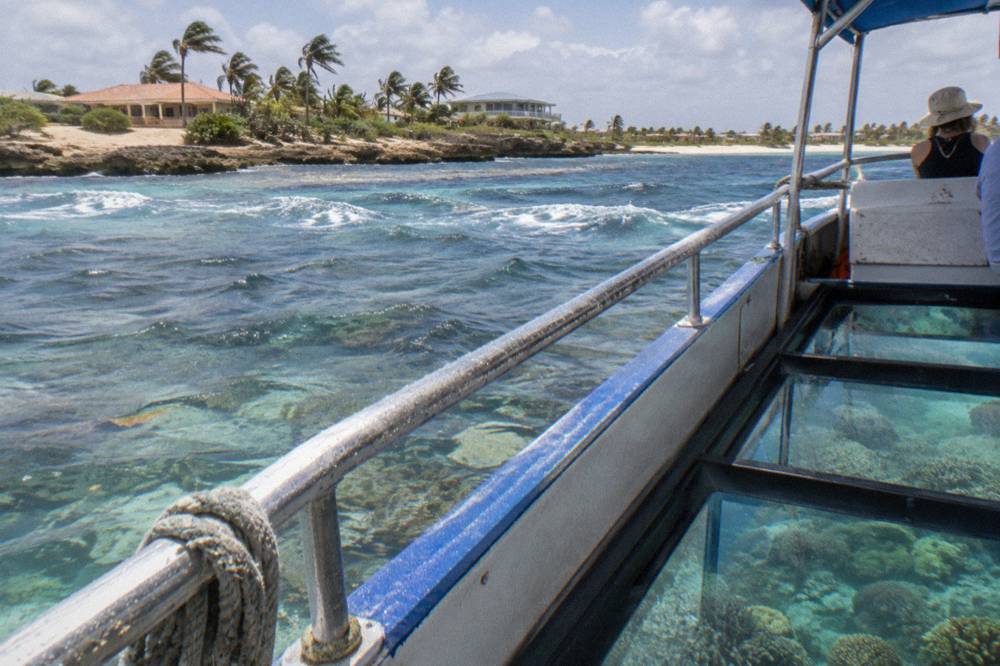
The morning sail aboard the Palm Pleasure catamaran, run by De Palm Tours, is the flagship-style choice: 4 hours, from $124 per person, 4.7 from 708 reviews, up to 80 guests, departing De Palm Pier on Palm Beach with stops at the Antilla, Boca Catalina and Arashi, an open bar and a lunch buffet. That is a lot of boat and a lot of time afloat, and for many nervous guests the size is reassuring: a wide catamaran tends to ride steadier in light chop than a small skiff. The glass bottom boat from Malmok Charters compresses everything into 90 minutes across Antilla, Boca Catalina and Tres Trapi, from $60 per person, 5.0 from 47 reviews, up to 10 guests, and lets non-swimmers and wary swimmers see the reef through the hull without entering the water at all. The non-swimmer glass bottom boat guide on this site covers that format in more depth.
If neither of those fits, the same logic extends down the rest of the listings. The Delphi Watersports catamaran trip from the beach in front of the Hyatt Regency runs 3 hours from $69 per person, 4.7 from 466 reviews, with up to 45 guests, a picnic lunch and open bar, and its Antilla and Boca Catalina route is the standard sheltered loop. At the other end, the Red Sail half-day from Piet's Pier carries up to 75 guests on a luxury catamaran for 4 hours from $107 per person, 4.8 from 860 reviews, with a Caribbean lunch buffet, three stops and an open bar. The listing with the deepest review pool on this entire site is the Pelican morning champagne brunch sail, 4.7 from 2,238 reviews, from $85 per person for 4 hours with stops at Malmok, Boca Catalina and Antilla, and that count means you can read a very large number of first-hand accounts of how the trip actually feels before you commit. A guest review can tell you whether the water was flat or lumpy on the day, which no itinerary can.
Does Boat Size And Departure Point Change How Rough A Trip Feels?
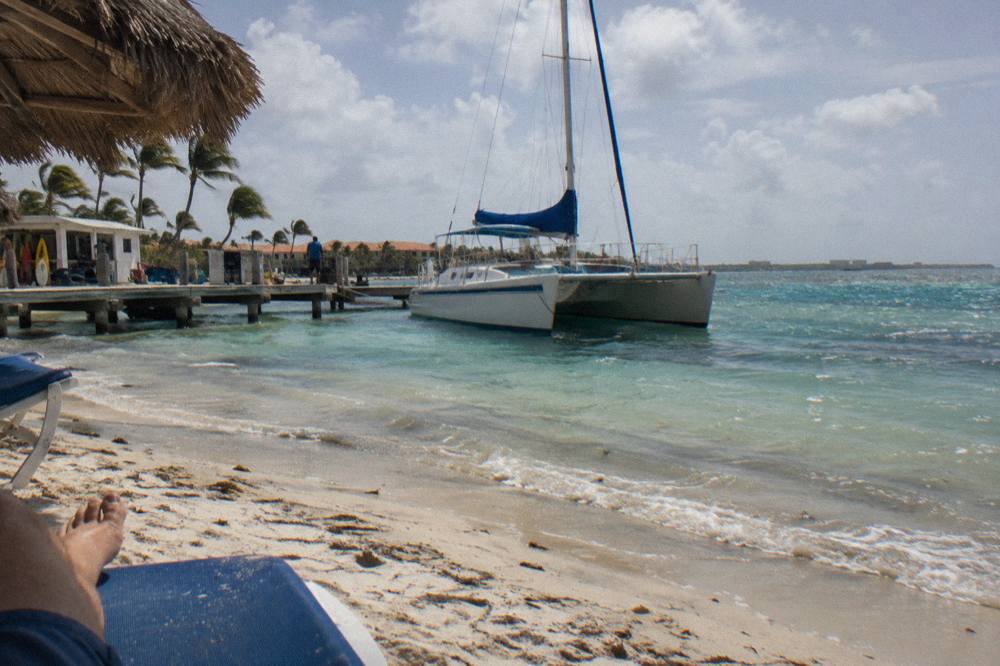
Both matter: most snorkel boats leave from the sheltered west coast around Palm Beach, Hadicurari and Malmok, while some operators depart from marinas in Oranjestad, and boats range from small catamarans to large party sailing vessels. Departure point is the underrated variable. A trip leaving Pelican Pier, De Palm Pier or the Octopus beach hut starts inside the calm high-rise stretch and usually reaches its first stop within minutes. The Spronk Catamarans turtle and wreck sails run 4.5 hours from $119 per person, pairing snorkeling with a sunset barbecue on trips that include both. That does not make them rough trips, but if your concern is motion rather than distance, a Palm Beach departure starts you ahead. If pairing your snorkeling with a sunset sail sounds appealing, the guide to combined snorkel and sunset cruises explains what these trips include and how to weigh one longer outing against booking two separate ones.
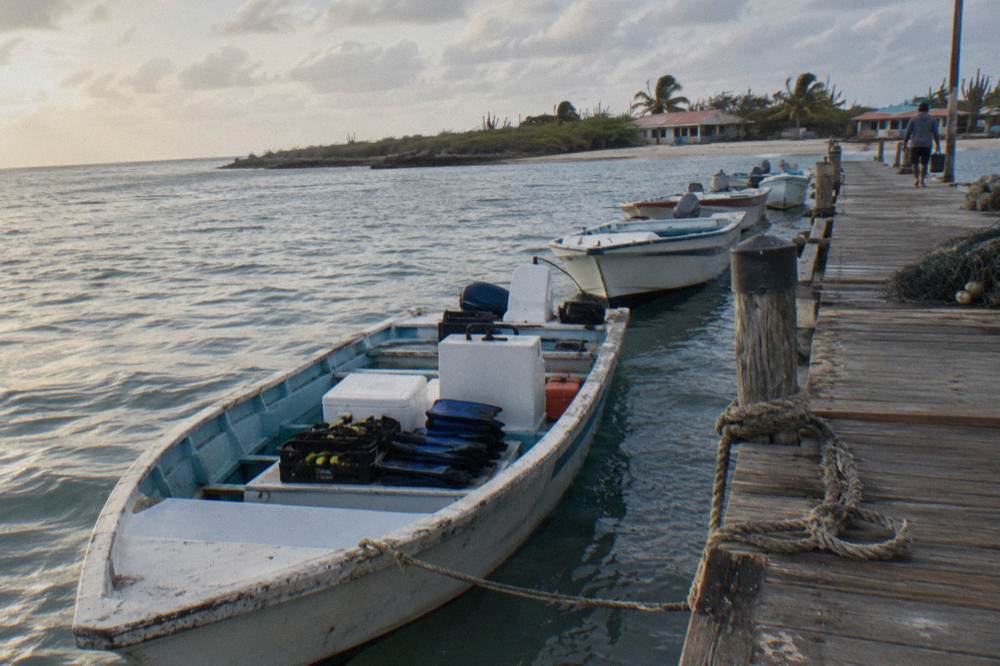
Group size and hull shape do the rest. Here is how the bookable formats compare on the factors a queasy reader cares about.
| Format (example listing) | Duration | Guests | Departure point | Calm profile |
|---|---|---|---|---|
| Glass bottom boat (Malmok Charters) | 1 hour 30 minutes | up to 10 | Island Cabana hut, Malmok | Shortest exposure, smallest swell close to shore |
| Schooner sail (Flagship-Aruba classic schooner cruise) | 3 hours | up to 100 | Hadicurari Fishermen's Pier | Classic hull design, big group |
| Afternoon catamaran (Octopus) | 3 hours | up to 34 | Octopus beach hut, Palm Beach | Mid-size catamaran, sheltered coast |
| Turtle sail (Spronk Catamarans) | 4.5 hours | up to 35 | Dock behind Lucy's, Oranjestad | Longest exposure, open-water crossing |
| Private boat (Octopus private snorkel) | 2 hours | private | Palm Beach hut, hotel pickup | Small group, route can stay close |
| Open air bus beach hop (El Tours) | 5 hours | up to 45 | Hotel pickup | Zero boat motion, two shore snorkel stops |
Two rows deserve a closer look. The Octopus private snorkeling excursion, from $140 per person for 2 hours, 4.9 from 610 reviews, includes rum punch, soft drinks and gear, with hotel pickup available to add at booking, and because it is private you can ask the crew to keep the run short and stay inside Malmok's sheltered water. Private here is priced per person, which matters if you are comparing it against the per-group boats: the Malmok Charters private boat runs from $900 per group for 3 hours with up to 10 guests, and the Delphi private trip is from $398 per group for 2 hours with up to 6 guests, both covered in the private snorkel charters guide. Never line a per-group price against a per-person one as if they were equal. The open air bus row is the sleeper pick for a genuinely bad motion history: the El Tours Mangel Halto and Baby Beach tour, from $57 per person, 4.5 from 308 reviews, includes hotel pickup and snorkel gear, and its only boat is none at all.
When Is Aruba Water Calmest By Month?
The calmest combination of light wind and flat leeward water runs from October through December, when monthly mean wind bottoms out at 5.8 to 6.4 m/s, though November and December also bring the year's highest rainfall averages of 87.1 and 80.1 mm in Oranjestad, so calm and dry do not arrive together. March and April are the compromise months: wind is moderate at 7.7 m/s, rainfall is near its annual low at 10.0 and 8.6 mm, and rainy days drop to 2.0 and 1.5 per month. June is the windiest month at 8.7 m/s, and together with July and August it is the stretch where a sensitive stomach benefits most from a bigger hull or a shorter trip. Water temperature barely enters the equation for motion, but it matters for comfort: the sea runs from a February low of 79.0 F to an October high of 84.6 F, per seatemperature.org's Oranjestad monthly averages.

Hurricane season formally runs 1 June to 30 November, and the Aruba Tourism Authority notes the island sits outside the hurricane belt with no direct hurricane hit since 1851. That history is unusual in the Caribbean, but it is not a promise of flat water: the same authority is clear that storms in the region can still bring rain, gusts or temporarily calm, odd conditions. Translation for a nervous sailor: Aruba's worst day is usually another island's ordinary day, and trips do get rescheduled when the forecast turns. If your tour allows free cancellation, a rough forecast is a rebooking problem rather than a lost payment, so check the listing before booking. The best time to snorkel guide on this site goes deeper on month-by-month planning, and the weather and hurricane season guide covers the storm question in full.
A practical note on choosing a departure time: many of the tours listed here are morning sails, so it helps to decide early whether a morning start or an afternoon departure suits your plans. The Pelican morning sail with champagne brunch departs Pelican Pier for a 4-hour run, from $85 per person, 4.7 from 2,238 reviews, the most reviewed listing on this entire site. The Flagship-Aruba morning schooner trip, from $59 per person for 3 hours, is new and thinly reviewed with 4 reviews so far, so no star claim is offered, but its classic-schooner format with stops at Boca Catalina and Malmok Reef follows the same early, sheltered logic.
What Helps Against Seasickness Before And During The Trip?
Pick the right trip first, then stack the small behaviors: sit mid-ship where motion is least, stay on deck with your eyes on the horizon rather than below, keep something plain in your stomach before boarding, and if you use motion-sickness remedies, ask a pharmacist or doctor which suits you rather than improvising on the pier. The single most effective decision is the one made at booking, not on board. A 90-minute glass bottom loop exposes you to a fraction of the motion a 4.5-hour turtle sail does, and no technique compensates for four extra hours of rolling. After that, the standard suggestions apply: the middle of the boat near the waterline moves least, fresh air and a fixed horizon reference help the eye and inner ear agree, the commonly repeated tip is to keep breakfast light and go easy on alcohol before departure, and the underwater portion of a snorkel trip is often the comfortable part because your head is steady at the surface looking down at reef. For remedies themselves, this site does not give medical advice, and the listings here state no policy on where to store or take medication, so ask the crew. Some travelers use acupressure bands or ginger, and reporting on those ranges widely, but nothing in the verified material here endorses one over another.
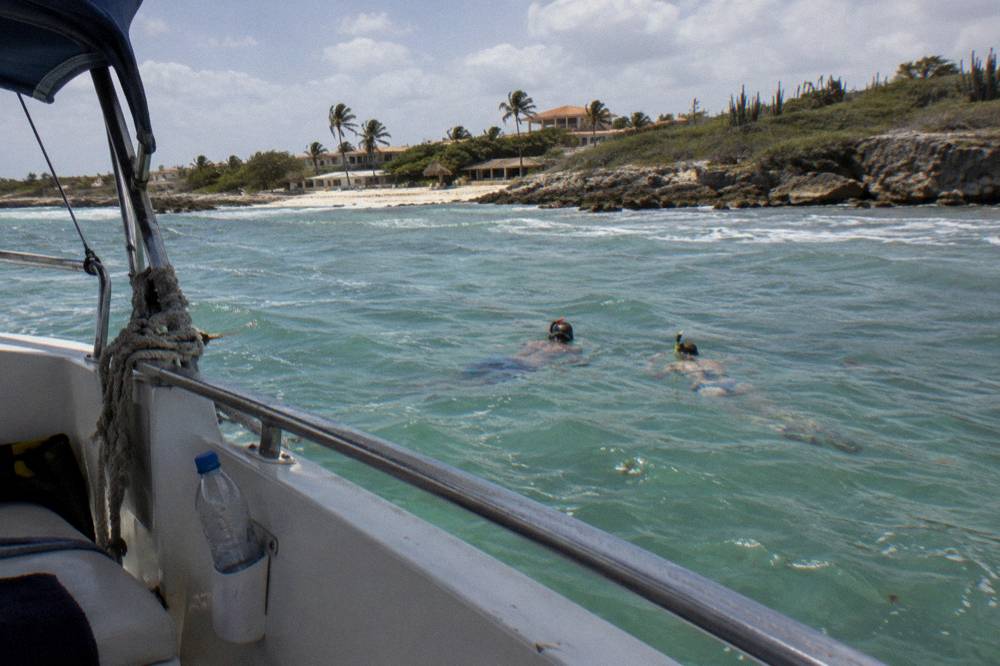
Timing matters around the trip too. Arrive at the pier with time to spare, because hurrying in heat is its own nausea trigger. If your trip departs from Hadicurari Fishermen's Pier or one of the Palm Beach piers, you are boarding inside the calmest stretch of coast the island has. The seasickness question is common enough that crews answer it constantly: guides on the kayak and small-group trips here, like the Aruba Bob sea scooter snorkel at Mangel Halto, work in water shallow and still enough that boat motion is not part of the experience at all. That listing runs 2 hours 30 minutes from $100 per person, 5.0 from 438 reviews, with up to 6 guests, pictures included, and departs from the operator's Savaneta base rather than a boat. What to bring is covered in the what to bring on a snorkel tour guide, including reef-safe sunscreen: sunscreens containing oxybenzone are banned in Aruba and mineral-based sunscreen is advised, a rule worth knowing since a mineral lotion is a different texture than you may be used to.
Can You Snorkel In Aruba Without Ever Boarding A Boat?
Yes, fully: Boca Catalina, Arashi Beach and Mangel Halto all offer shore snorkeling with reefs close to the beach, all Aruba beaches are public and free to enter, and several guided options, from a sea scooter trip to a kayak tour to an open air bus beach hop, put you in the water with no sailing at all. This is the honest answer for anyone whose motion sickness is severe rather than mild. The aruba.com beaches page describes Boca Catalina as a small bay with gentle waves and colorful reef fish just offshore, Arashi as having great visibility for snorkeling near the California Lighthouse, and Mangel Halto as a quiet mangrove-fringed area with calm water and snorkeling without crowds. You bring your own gear, and the free snorkeling in Aruba guide on this site covers the public-beach angle in detail, including the beach guidelines that keep set-up hotel palapas off limits while the sand and swimming stay open to everyone.
| Boat-free option | Location | Duration | Price basis | Motion level |
|---|---|---|---|---|
| Shore snorkeling, bring your own gear | Boca Catalina, Arashi, Mangel Halto | Your own schedule | Free, beaches are public | None |
| Sea scooter snorkel (Aruba Bob) | Mangel Halto, Savaneta base | 2 hours 30 minutes | From $100 per person | None |
| Kayak and snorkel (Vale's Rambo Adventures) | Mangel Halto launch | 2 hours 30 minutes | From $99.99 per person | Mild, shallow protected water |
| Open air bus beach hop (El Tours) | Mangel Halto and Baby Beach | 5 hours | From $57 per person | Road only |
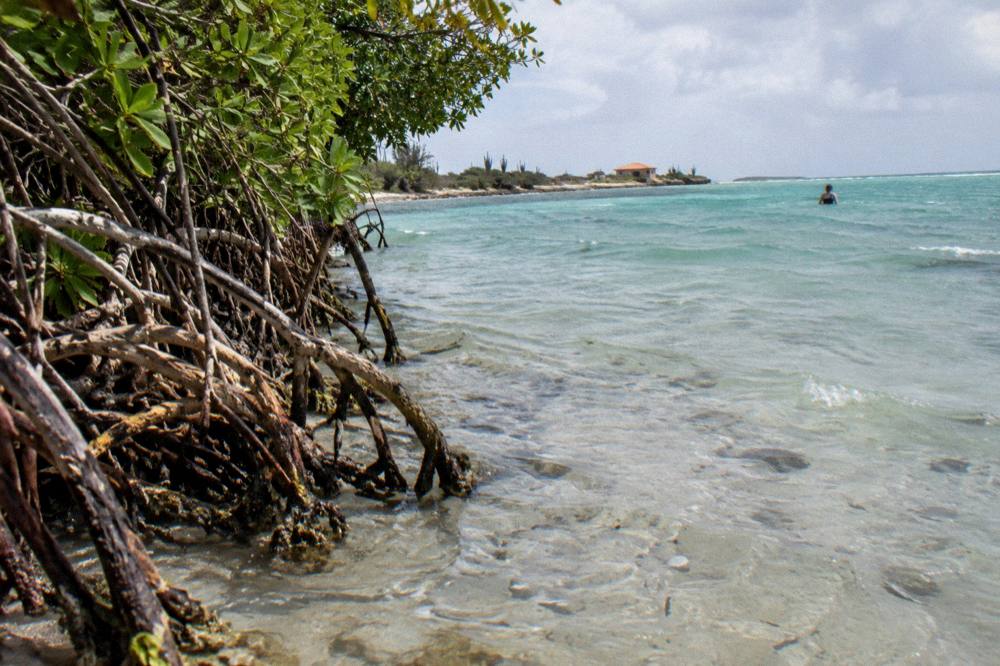
Guided, boat-free options exist in three formats. The sea scooter trip above keeps you at Mangel Halto. The Vale's Rambo Adventures kayak and snorkel tour at Mangel Halto, 2 hours 30 minutes from $99.99 per person with up to 15 guests, is new and thinly reviewed with 1 review so far, and uses ocean kayaks with an English, Spanish and Papiamento speaking guide, bottled water and local fruit. The Aruba Nature Adventures kayak trip at Reef Island, from $105 per person, 4.5 from 20 reviews, with hotel pickup available to add at booking and snorkeling stops along the way. Kayaks do move, so they suit mild rather than severe motion sensitivity, but they stay inside shallow, mangrove-protected water. The open-air bus beach hop is still the zero-motion pick, and it belongs to El Tours & Transfers: 5 hours from $57 per person, 4.5 from 308 reviews. Nautilus Dive Center runs its two Mangel Halto and Baby Beach tours by private transportation instead, 4 hours from $115 per person at 4.6 from 76 reviews, or 5 hours from $95 per person at 4.6 from 112 reviews. Both are covered alongside the rest in the shore snorkeling versus boat tour guide.
For a family split between a confident sailor and a nervous one, the glass bottom format solves the split neatly, and the snorkeling with kids guide builds on it. The Malmok Charters glass bottom boat covers Antilla, Boca Catalina and Tres Trapi in 90 minutes from $60 per person, 5.0 from 47 reviews, up to 10 guests, with gear, bottled water and sodas; a second listing of the same trip carries 13 reviews and the same $60 price, so read both live listings before choosing one. Half the party can swim at each stop while the other half watches the reef pass under the glass. No one has to justify choosing the trip that suits them.
What Should You Do If You Feel Queasy Mid-Trip?
Tell the crew immediately, move to the center of the boat facing the horizon or into fresh air, and follow whatever the crew suggests, including whether to stay out of the water. Mentioning it early beats toughing it out, and asking to change seats or sit still for a while is a normal request on any snorkel trip. Avoid the cabin below deck, keep your eyes off phones and books, and settle in a spot with fresh air. At the snorkel stop, being in the water with your mask down is genuinely the relief position for many people: your head is supported, your eyes see a fixed reef, and the boat's motion stops reaching you. The listings here include instruction on request or beginner instruction in several cases, including the Red Sail half-day and the Pelican turtle spotting tour, so a nervous first-timer is not improvising alone. One cruise-port caution that cuts both ways: half-day sails that include the Antilla wreck are common, and the cruise passenger snorkel guide on this site repeats the standing advice to check your ship's all-aboard time before booking anything, since no listing can promise it fits a particular ship's schedule.
After the trip, the recovery is usually quick once your feet are on solid ground, and most people are themselves again within hours. If you have already decided that boat days are simply not your days, the beach-hop and shore-snorkel routes above deliver the same reefs with the horizon as the only thing that moves. Whatever you choose, the Aruba Snorkeling Tours trip picker sorts every covered listing by format, duration and price, so you can filter toward the short, small and sheltered end without reading thirty pages. The forecast is published every day, the piers are on the calm side of the island, and the water is 79 to 85 F year round, which is a good set of conditions to be nervous in.
Common Questions About Seasickness On Aruba Snorkel Boats
What Actually Causes Seasickness On A Snorkel Boat?
Your inner ear senses the boat's rocking while your eyes read a stable cabin, and the conflicting signals produce nausea. It is common, and it usually fades as your body adapts to the motion. Minimizing the rocking by choosing a shorter trip, a bigger hull or a sheltered route reduces the mismatch at its source.
Which Aruba Snorkel Tour Is Calmest For A Nervous Stomach?
The Malmok Charters glass bottom boat trip is the shortest and smallest: 1 hour 30 minutes, up to 10 guests, from $60 per person, 5.0 from 47 reviews, covering Antilla, Boca Catalina and Tres Trapi close to shore. For a full sail instead, a wide catamaran like the 80-guest Palm Pleasure morning trip moves gently but stays out 4 hours, so choose by how long you tolerate motion.
Do Bigger Catamarans Reduce Seasickness?
Each listing names its vessel type and group size: a wide, heavy catamaran rolls less sharply than a narrow hull. The tradeoff is time, since large catamaran trips here run 3 to 4 hours versus 90 minutes for a small boat. Some stomachs do better with less motion per wave, others with less total time afloat.
What Are The Calmest Months For Snorkeling In Aruba?
October through December bring the lightest mean winds, 5.8 to 6.4 m/s, but also the year's heaviest rainfall averages of 76.5 to 87.1 mm in Oranjestad. March and April are the balanced choice, with moderate wind and only 1.5 to 2.0 rainy days per month. Water stays between 79 and 85 F all year.
Can I Snorkel In Aruba Without Getting On A Boat?
Yes. Boca Catalina, Arashi Beach and Mangel Halto all have reefs close to shore, all beaches are public and free to enter, and guided boat-free options include a sea scooter trip at Mangel Halto, kayak snorkel tours, and open air bus tours to Mangel Halto and Baby Beach with hotel pickup.
What Should I Do If I Feel Sick During The Trip?
Tell the crew right away, move to the center of the boat in fresh air with your eyes on the horizon, and avoid going below deck or reading. At the snorkel stop, getting in the water with your mask on steadies many people, since the deck's rolling no longer reaches you. Ask a pharmacist or doctor before travel about remedies, since no listing here states a medication policy.