Snorkeling With Kids In Aruba: Ages, Vests And Calm Spots
Aruba's west and south coasts give families shallow, protected water, and the tour styles on offer range from glass bottom boats and turtle swims to catamaran snorkel sails. Here is how the ages, the gear and the calm spots actually line up.
Short answer
Aruba's calmest kid-friendly water sits on the protected west and south coasts: Baby Beach, Boca Catalina, Mangel Halto and Arashi. Family tours run from $57 per person for an open air bus beach hop to $124 for a catamaran sail, and sunscreens containing oxybenzone are banned island-wide.
Aruba sits outside the hurricane belt, its west and south coasts are the calm and protected side of the island according to the Aruba Tourism Authority's beaches page, and its shallow bays hold reef fish close enough to shore that children can see them without a boat. That combination is why families keep ending up here with masks and fins in their carry-ons. The planning questions that follow, ages, vests, spots and costs, are the ones parents ask most before booking, and the answers below come from what the tour listings themselves state plus the island's official beach guidance.
One thing worth settling early: this is a paid-activity island. The beaches are public and free to enter, but every guided snorkel product covered here is a commercial tour, and the calmest experiences for children tend to be the smallest-group ones. The Banana Adventure catamaran, for instance, is a 3 hour turtle-and-wreck sail capped at 36 guests, from $65 per person with lunch, alcoholic beverages and snorkel gear listed, and it is one of the few tours covered here that includes hotel pickup. Check availability if that format appeals, and read on for how it compares with gentler options.
What Age Can Kids Start Snorkeling In Aruba?
Most listings covered here do not state a minimum age, so the age question comes down to format and group size rather than a printed rule, and parents should confirm ages directly on each live booking page before booking. The listings state no weight limits, pregnancy restrictions or mobility policies; the reader should ask the operator about those directly. What the listings do state is capacity, and capacity is a useful proxy for how a trip will feel with a child on board.
Small caps mean more crew attention. The glass bottom boats run up to 10 guests, the Mangel Halto kayak trip up to 15, the sea scooter snorkel up to 6, and the private turtle tour from Underdog Divers takes one family at a time. At the other end, the Palm Pleasure catamaran carries up to 80 and the Red Sail half-day up to 75, which is a very different day out with a nervous seven-year-old. Neither end is wrong, but the trade is real, and it maps onto attention, boarding time and how quickly a child who struggles gets help.
A practical reading of the lineup for parents of younger children: shore snorkeling at a calm bay or a short glass bottom boat trip keeps things gentle, small-group turtle swims and kayak-and-snorkel combos suit confident swimmers, and a half-day catamaran sail works best for kids happy to spend a few hours out on the water. That is a planning framework from formats and durations, not an operator promise. For building confidence before any boat, the beginner snorkeling guide covers shallow-water basics that apply to kids as much as adults.
The Turtle Spotting Snorkel Tour from Pelican Adventures deserves a specific mention for this question, because it is built around first-timers: beginner snorkel instruction, premium mask, snorkel, fins and a snorkel jacket, reef-safe sunscreen, GoPro media, fresh fruit and chilled water, round-trip hotel or Airbnb pickup, from $99 per person, up to 6 guests, 4.2 from 25 reviews. A snorkel jacket is the vest answer for many parents, and this is one of the few listings that names one in its inclusions.
Which Aruba Snorkel Tours Work Best For Families?
The best family format depends on the child's swimming confidence: glass bottom boats and open air bus beach hops suit non-swimmers and tentative swimmers, small-group turtle swims suit confident kids, and half-day catamarans suit families with older children who can handle three stops and open water. The three formats below are the ones this site highlights for families, a turtle-swim catamaran, a glass bottom boat and a kayak trip, and they cover that whole confidence range.
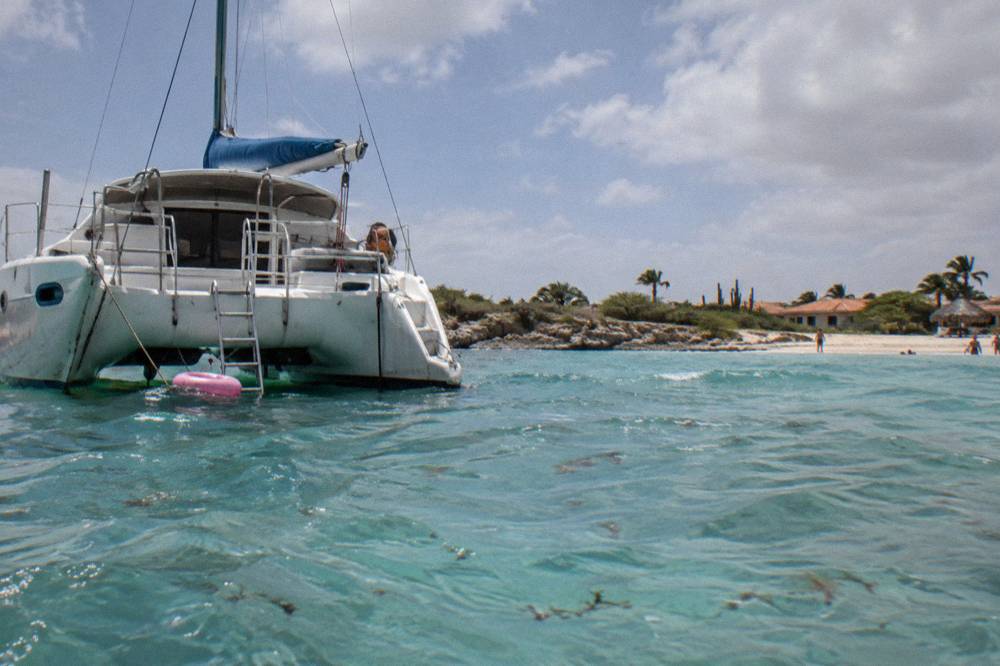
The Banana Adventure Catamaran, from Segway Aruba, is the featured family pick here: 3 hours, up to 36 guests, from $65 per person, 4.8 from 231 reviews, stops at the Antilla wreck and Tres Trapi, with lunch, alcoholic beverages, snorkel gear and private transportation listed, plus hotel pickup. Turtles are the draw for children, and the listing's turtle swim is a snorkel stop, not a guarantee; the island's rules also forbid touching or chasing them, which is worth rehearsing with kids beforehand. See snorkeling with sea turtles for how these swims work in practice.
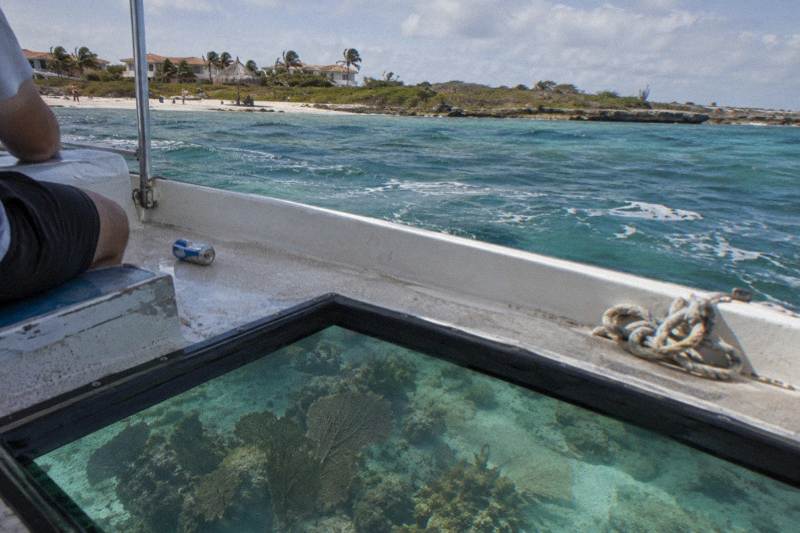
The glass bottom boat from Malmok Charters is the gentlest boat product on the site: 1 hour 30 minutes, up to 10 guests, from $60 per person, 5.0 from 47 reviews, visiting the Antilla wreck, Boca Catalina and Tres Trapi with snorkel gear, bottled water and sodas included. Children who peer through the glass can see the wreck and the reef without getting wet, then snorkel at the calmest stop if they want to. For families weighing that against a bigger sail, the shore snorkeling versus boat tour guide walks the trade-offs.
The kayak option, Vale's Rambo Adventures at Mangel Halto, is a 2 hour 30 minute paddle-and-snorkel for up to 15 guests from $99.99 per person, with fins in all sizes including kids, a live guide speaking English, Spanish and Papiamento, bottled water and local fruit. It is a new listing with a single review, so treat it as unproven rather than popular. A comparison of the three formats:
| Tour | Format | Duration | From | Group cap | Kid-relevant inclusions |
|---|---|---|---|---|---|
| Banana Adventure Catamaran (Segway Aruba) | Catamaran sail, wreck and turtle stops | 3 hours | $65 per person | 36 | Lunch, snorkel gear, hotel pickup |
| Aruba Snorkel Sites by Glass Bottom Boat (Malmok Charters) | Glass bottom boat, 3 snorkel sites | 1 hour 30 minutes | $60 per person | 10 | Snorkel gear, water, sodas |
| Kayak and Snorkel at Mangel Halto (Vale's Rambo Adventures) | Ocean kayaks, one beach stop | 2 hours 30 minutes | $99.99 per person | 15 | Kids' fin sizes, live guide, water and fruit |
Two more formats fill out the family picture. The open air bus tour from El Tours & Transfers visits Mangel Halto and Baby Beach in 5 hours from $57 per person, 4.5 from 308 reviews, with hotel pickup and snorkel gear included; it is the cheapest covered way to reach the calm south-coast bays. And the Nautilus dive-center version of the same beach pairing runs up to 8 guests from $115 per person, 4.6 from 76 reviews, a small-group alternative with pickup, water and a snack. Families with non-swimmers aboard should also read the non-swimmer glass bottom options page, and the cruise-specific caveats live in snorkel tours for cruise passengers.
Where Are The Calmest Snorkel Spots For Kids In Aruba?
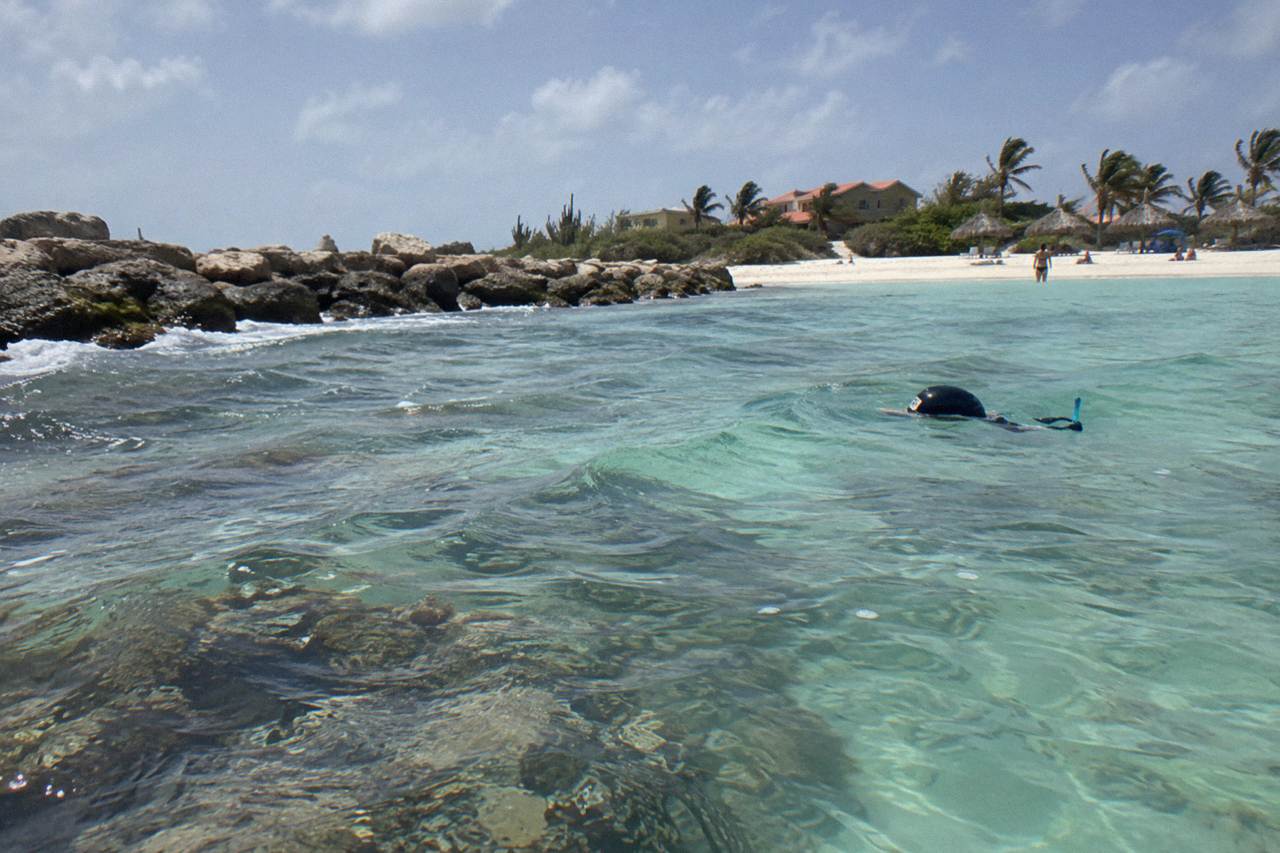
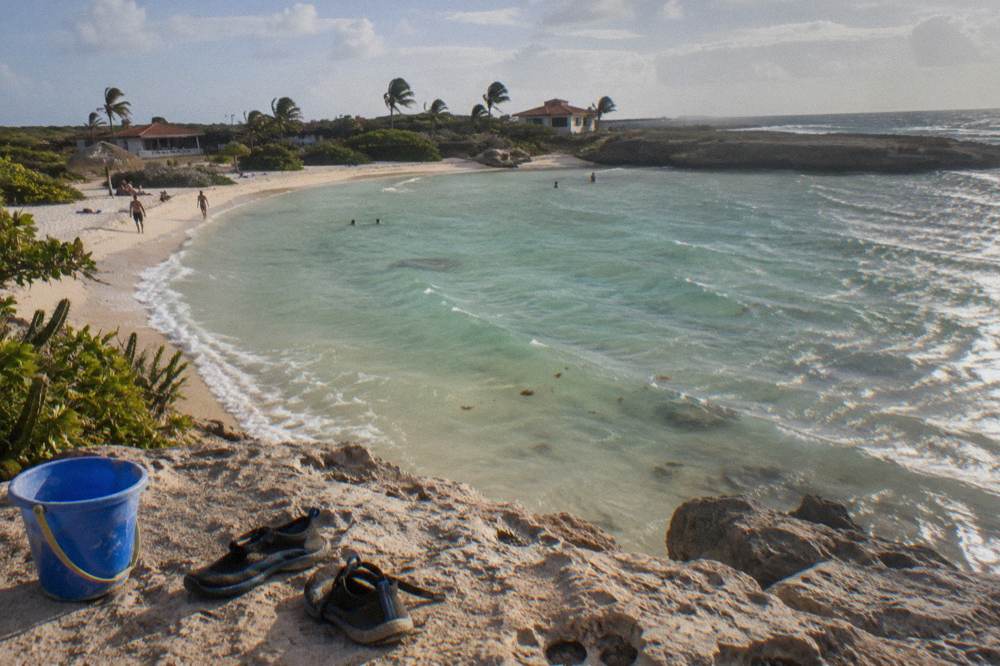
The calmest kid-suitable water is on the protected west and south coasts: Baby Beach, Boca Catalina, Mangel Halto and Arashi, all public, all free to enter, with reefs close to shore at Boca Catalina, Arashi and Mangel Halto for shore snorkeling with your own gear. The Aruba Tourism Authority describes the west and south coasts as calm and protected, good for swimming and snorkeling, while the east and north coasts face open sea with stronger wind, which is why every family product on this site departs from or visits the protected side. If you care about scenery as well as calm water, the guide to Aruba's prettiest beaches compares Baby Beach, Arashi and the other spots above on looks alone.
Baby Beach is the flagship for young children: per the official beaches page it is a shallow, lagoon-style bay on the southeast tip, ideal for kids and beginner snorkelers. Mangel Halto is described as a quiet area surrounded by mangroves with calm water and snorkeling without crowds. Boca Catalina is a small bay with gentle waves and colorful reef fish just offshore, and Arashi Beach, near the California Lighthouse, is noted for great visibility. All four appear in tour itineraries too, so a family can sample them from a boat or a bus before committing to a shore day.
| Spot | Coast | What the official beaches page says | Covered tours that visit it |
|---|---|---|---|
| Baby Beach | Southeast | Shallow, lagoon-style bay, ideal for kids and beginner snorkelers | El Tours open air bus, both Nautilus beach tours |
| Mangel Halto | South | Quiet, mangroves, calm water, snorkeling without crowds | Vale's Rambo kayak tour, sea scooter trip, beach tours |
| Boca Catalina | Northwest | Small bay, gentle waves, colorful reef fish just offshore | Most catamaran sails, turtle tours, glass bottom boat |
| Arashi | Northwest | Great visibility for snorkeling | Palm Pleasure morning sail |
Two shore-access notes from Aruba's temporary 2026 beach guidelines: beaches are public but shared, hotel palapas and loungers that are set up and in use are respected, and leasehold areas are for hotel guests only, while the beach itself, swimming and finding your own spot in the sand stay open. Families spreading a towel near a resort should know that boundary. Deeper spot-by-spot detail lives on the Baby Beach, Boca Catalina and Mangel Halto pages.
For the calmest guided half-day on the water with children, the Banana Adventure catamaran pairs the Antilla wreck with Tres Trapi, the turtle beach, in 3 hours from $65 per person with hotel pickup listed.
What Should Kids Wear And Bring For Snorkeling In Aruba?
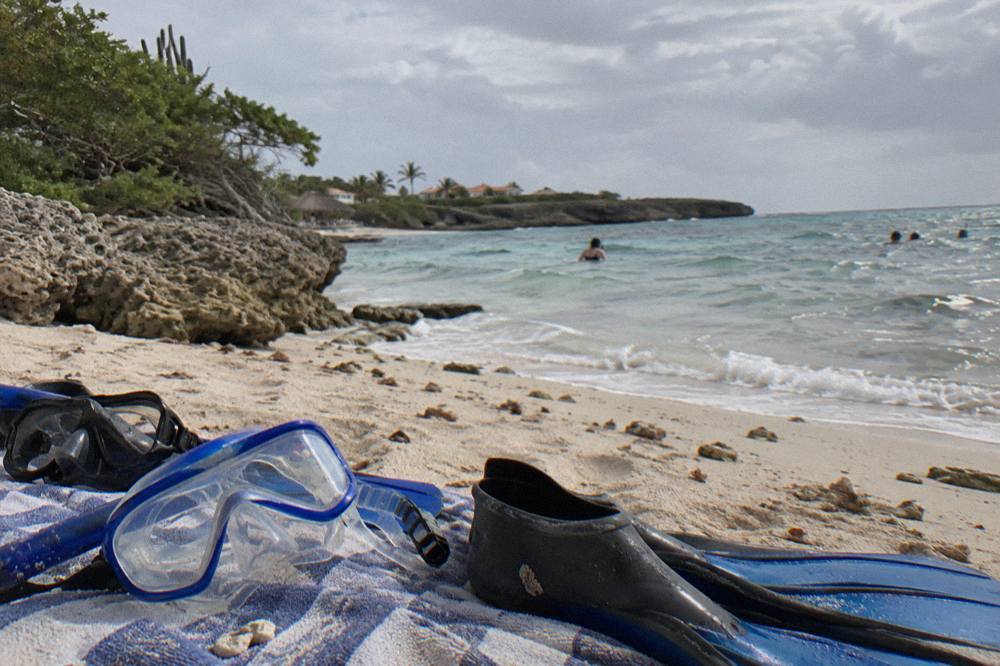
Every covered tour lists snorkel gear in its inclusions, so families do not need to buy masks and fins to book, but the island's sunscreen rule is the one thing that can genuinely derail a day: sunscreens containing oxybenzone are banned in Aruba, and mineral-based reef-safe sunscreen is advised. Bring reef-safe sunscreen from home, because the banned chemical formulations are exactly the cheap sprays many families pack by default. The official guidance also asks visitors not to feed fish, turtles or seabirds, to leave shells, sand and coral in nature, and not to touch or pick up marine life, rules worth teaching children before the first stop.
Vests are a mixed picture across the tours covered here, and parents should not assume one is provided. The Turtle Spotting tour lists a snorkel jacket by name. The Pelican snorkel sail includes life jackets per its operator listing. The private Malmok boat includes a life jacket. Most other listings say only "snorkel equipment" without naming a vest, so if a child needs flotation support, ask the operator before booking rather than discovering the gap at the pier. That question takes thirty seconds on the live listing's message channel. Everything else covered here is indexed on Aruba Snorkeling Tours.
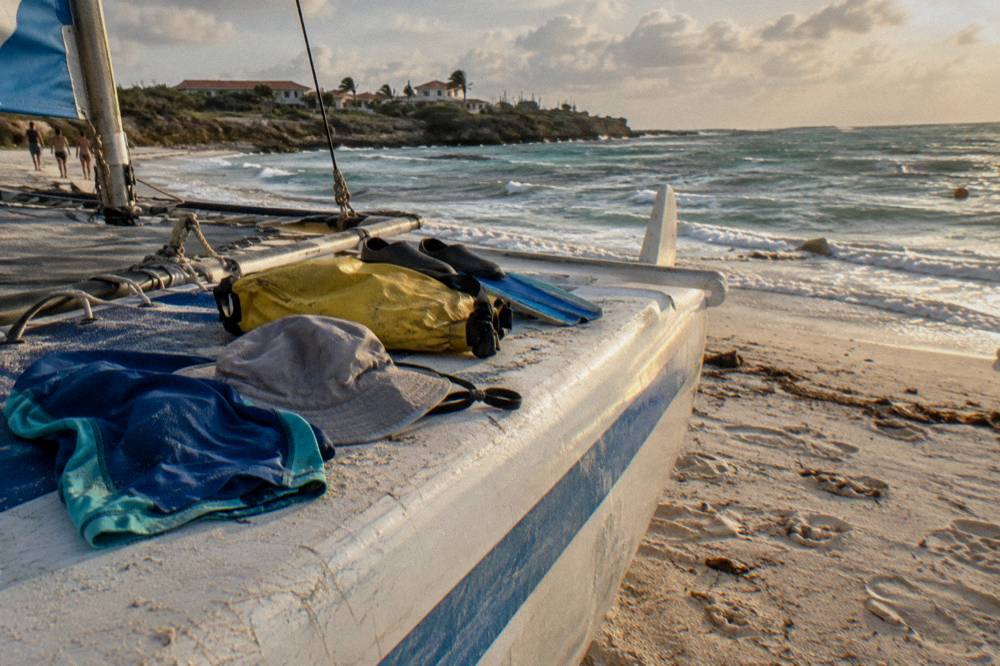
Beyond that, the packing list is ordinary beach kit: rash guards beat repeated sunscreen for small backs, water shoes make getting in and out of the water easier on small feet, a dry bag for the boat, and motion-sickness planning if the child has never been on the water, covered fully in seasickness on snorkel boats. The full item-by-item version, including what changes for boat versus shore days, is in what to bring on a snorkel tour. Note that no covered listing states a dress code, an age limit beyond what is printed above, or a kid price; children generally pay the adult rate on shared trips, and the listing is the final word.
The reef rules themselves come from the island's responsible-visitor guidance, which families can read together on the Aruba.com marine life protection page. Children take these rules seriously when they are framed as protecting the animals they came to see, and the no-feeding rule in particular changes fish behavior for everyone else on the reef.
How Warm Is Aruba's Water For Young Swimmers?
Aruba's sea temperature stays between 79 and 85 degrees Fahrenheit across the year, coldest in February at 79.0 F and warmest in October at 84.6 F, warm enough that children rarely need wetsuits though a rash guard helps on windy days. That range comes from monthly averages for Oranjestad. For families, it means no month is ruled out by cold water, and the planning question shifts to wind and rain instead.
| Month | Sea temp (F) | Month | Sea temp (F) |
|---|---|---|---|
| January | 80.4 | July | 81.3 |
| February | 79.0 | August | 82.6 |
| March | 79.2 | September | 84.0 |
| April | 80.1 | October | 84.6 |
| May | 81.7 | November | 83.5 |
| June | 82.2 | December | 81.1 |
Wind matters more than temperature for kids. Monthly mean wind speed at the airport runs from 5.8 m/s in October and November to 8.7 m/s in June, and the trade wind is constant enough that exposed northern spots feel it hardest while the protected bays stay calm. Rain is modest year-round: March and April average under 10 mm each, while November, December and October are the wettest months at 87.1, 80.1 and 76.5 mm. None of this makes a month bad; it makes mornings on the calm side the smart family slot.

Weather can still change: hurricane season runs 1 June to 30 November, and while the tourism authority states Aruba has had no direct hurricane hit since 1851, storms nearby can bring rain, gusts or flat calm. Weather can always change a day on the water, and every family-suitable listing here shows free cancellation, the kind of protection a trip with children wants. The Aruba meteorological service publishes a marine forecast with wind in knots, wave height by coast and shower chances, worth a look the morning of any boat day. Month-by-month detail is in best time to snorkel and Aruba water temperature by month.
Are Glass Bottom Boats And Kayaks Good Alternatives For Kids?
Yes, and for different children: the glass bottom boat lets a non-swimmer see the Antilla wreck and the reef dry, while the Mangel Halto kayak trip gives stronger kids a paddle-and-snorkel adventure in the calmest south-coast bay, both in small groups under 16 guests. They are also the two cheapest dedicated small-group formats on the site after the open air bus.
The glass bottom boat from Malmok Charters, 5.0 from 47 reviews, from $60 per person, 1 hour 30 minutes, up to 10 guests, visits the Antilla wreck, Boca Catalina and Tres Trapi with snorkel gear, bottled water and sodas included. Half of its value for families is the viewing itself: the SS Antilla, a 398.3 ft German cargo ship scuttled in January 1940, lies on its port side with its bow and superstructure about 15 feet below the surface according to the Antilla Shipwreck Aruba site, close enough to be seen through glass on a calm day. The wreck's full story is on the Antilla shipwreck snorkeling page.
The kayak alternative is a newer product and should be booked as such. Vale's Rambo Adventures runs Mangel Halto by ocean kayak, up to 15 guests, 2 hours 30 minutes, from $99.99 per person, with fins in all sizes including kids, a trilingual guide, bottled water and local fruit. It has a single review, so it is untested rather than proven. The calmer small-group alternative at the same bay is the sea scooter snorkel from Aruba Bob, 5.0 from 438 reviews, from $100 per person, up to 6 guests, 2 hours 30 minutes with pictures included, where you hold a motorized scooter and let it pull you over the reef.
Between those two poles sits the Turtle Spotting tour described earlier, whose beginner instruction, snorkel jacket and hotel pickup make it the most parent-proofed product among the tours covered here, at 4.2 from 25 reviews the trade-off is a smaller review pool than the big catamarans. Families who want the turtle experience with older children can graduate from it to the Spronk sunset-and-BBQ trips, which combine Boca Catalina, Tres Trapi and the Antilla in 4.5 hours from $119 per person.
What Do Family Snorkel Tours Cost In Aruba?
Family snorkel pricing in Aruba runs from $57 per person for the open air bus beach hop to $124 per person for the Palm Pleasure catamaran sail, with most family-suitable formats clustered between $60 and $100 per person, and the two private options priced per group or per person depending on the listing. Child rates, where a tour offers them, appear on the live booking page, so budget by headcount and check the listing before you book.
| Tour | From | Basis | Duration | Rating |
|---|---|---|---|---|
| Mangel Halto and Baby Beach by open air bus | $57 | per person | 5 hours | 4.5 from 308 reviews |
| Glass Bottom Boat, 3 snorkel sites | $60 | per person | 1 hour 30 minutes | 5.0 from 47 reviews |
| Banana Adventure Catamaran, wreck and turtles | $65 | per person | 3 hours | 4.8 from 231 reviews |
| Turtle Spotting Snorkel Tour with pickup | $99 | per person | 2 hours | 4.2 from 25 reviews |
| Sea Scooters at Mangel Halto | $100 | per person | 2 hours 30 minutes | 5.0 from 438 reviews |
| Private Boat for 6, snorkel and coast tour | $398 | per group, up to 6 | 2 hours | thinly reviewed, no star claim |
Read the basis column carefully, because the private category mixes the two. The Delphi private boat is $398 per group for up to 6 guests, while Octopus runs a private snorkel excursion at $140 per person and Aruba Xtreme Vibes a private scooter-and-snorkel at $270 per person; a per-group price split six ways is a different arithmetic from a per-person one, and the two should never be compared as equal. The full breakdown of private options is in private snorkel charters.
For a family of four on a mid-range budget, the realistic sweet spot is the $60 to $100 band: a glass bottom morning, a turtle swim with pickup, or the Banana Adventure catamaran at $65 each with lunch included. Whatever the choice, book early for high season, keep an eye on the free-cancellation terms every family-suitable listing here carries, and confirm ages, vests and pickup details on the live listing before you pay. More on whether the island itself earns the spend is in is snorkeling in Aruba worth it.
Common Questions About Snorkeling With Kids In Aruba
What Age Can Kids Start Snorkeling In Aruba?
Most listings do not state a minimum age, so confirm on each live listing before booking. The Pelican snorkel sail is documented as having no minimum age. In practice, format decides: glass bottom boats and calm-bay shore snorkeling suit the youngest children, small-group turtle trips suit roughly six and up, and half-day catamarans suit older kids.
Is Baby Beach Good For Children?
Yes, by the official description. The Aruba Tourism Authority calls Baby Beach a shallow, lagoon-style bay on the southeast tip, ideal for kids and beginner snorkelers. It is public and free to enter, and covered beach-hop tours from El Tours and Nautilus both include it.
Do Aruba Snorkel Tours Provide Life Vests For Kids?
Some do and it is listing-specific. The Turtle Spotting tour includes a snorkel jacket, the Pelican snorkel sail includes life jackets, and the private Malmok boat lists a life jacket. Most other listings say only snorkel equipment, so ask the operator before booking if your child needs flotation support.
Which Sunscreen Can Kids Use In Aruba?
Sunscreens containing oxybenzone are banned in Aruba, and mineral-based reef-safe sunscreen is advised. Bring a reef-safe formulation from home, and pair it with a rash guard so children need fewer applications across a boat day.
How Warm Is The Water For Kids In Aruba?
Monthly averages range from 79.0 F in February to 84.6 F in October, warm enough that wetsuits are rarely needed. Wind matters more than temperature: October and November are the calmest months by mean wind speed, while June is the windiest.
What Is The Cheapest Family Snorkel Tour In Aruba?
Among covered listings, the open air bus tour to Mangel Halto and Baby Beach from El Tours starts at $57 per person for 5 hours with hotel pickup and snorkel gear, followed by the glass bottom boat at $60 per person. No covered listing prints a reduced child price, so budget the same rate for children on shared trips.